


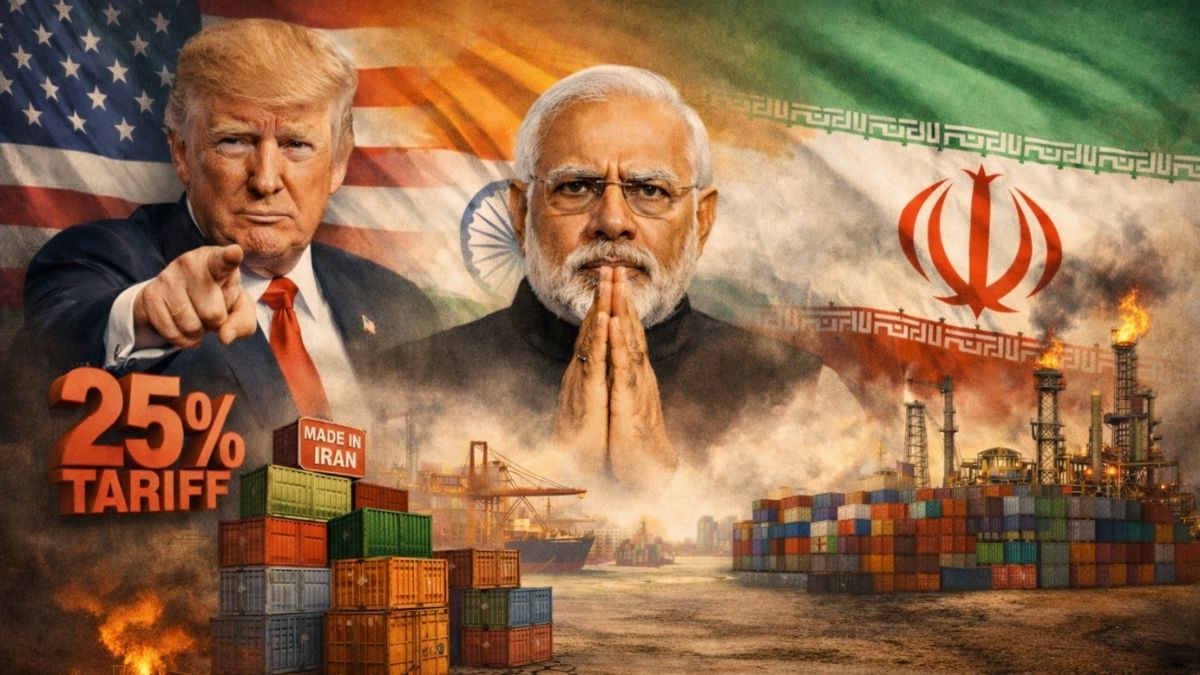
India enjoys a historically strong diplomatic and cultural ties with Iran, and this could come under renewed pressure as US President Donald Trump on Tuesday (January 13, 2026) issued a trade threat of imposing an additional 25% tariff for doing business with Tehran.
Trump’s announcement, posted on his social media platform Truth Social, warns all nations with trade ties with Iran, and thus, sharpens a diplomatic dilemma for India.
However, the overall impact of the additional tariff on New Delhi could be limited, as far as its bilateral trade with the US, affecting only certain exports in the short-term.
What did Trump’s warning say about trade with Iran?
“Effective immediately, any Country doing business with the Islamic Republic of Iran will pay a Tariff of 25% on any and all business being done with the United States of America,” Trump posted on Truth Social.
The US President called his executive order “final and conclusive,” following his policy of staunch support for domestic unrest inside Iran, as Tehran unleashed a crackdown on citizens protesting the governance failures on the streets.
Trump’s move is a familiar pressure tactic against Iran, which had earlier seen phases of American sanctions. This time, the US is applying indirect pressure by targeting all nations globally that are doing business with Tehran.
How does the Trump announcement impact India?
In the case of India, the Trump warning reopens a historic fault line: the choice of doing business regionally with Iran while safeguarding its access to its largest export market in the US.
Since 2019, India has scaled back its trade with Iran, owing to external pressures due to US sanctions, and displayed hesitation in doing business with Tehran, even though the bilateral trade has remained sector-specific and narrow.
What does data show about India’s trade with Iran?
India’s Ministry of Commerce and Industry data showed that New Delhi would easily navigate the sanctions minefield. It would recalibrate its business to effectively blunt the sanctions impact, as Iran accounted for only 0.26% of India’s total exports estimated to be $764.5 million in 2025-26 till November.
Since 2019-20, the India-Iran trade figures have witnessed a steep fall from the 1.1% it boasted at the beginning of this period over the last seven years. This is the period of stiff US sanctions on Iran that resulted in India’s disengagement with the West Asian nation.
This shrinking exposure aids India to bear the sanctions shocks that Trump has now administered through his tariff warning, by essentially routing the shipments between the two nations through alternative markets.
Which Indian exports would be affected?
All export sectors of India would not bear the brunt of the sanctions. India’s exports to Iran are dominated by its Basmati rice, making up about 60% ($756 million) of the shipments, as per this fiscal data.
Iran significantly lifts about 13% of India’s Basmati rice from the export market. Any halt of the Basmati rice export by India in the immediate aftermath of Trump’s sanctions would adversely impact Indian farmers and rice exporters from Punjab and Haryana.
Other sectors that could face impact are India’s tea exports, as Iran accounts for 5.6%, essential oils (5.4%), and fresh fruits (5.3%). These are India’s top-ranked products bought by Iran. The sanctions could hit these exports temporarily before India finds alternative buyers.
Which Indian imports could be hit?
Iran’s trade significance for India has already diminished, as previous data showed. Tehran’s share in India’s total imports went down from 2.7% in 2016-17 to just about 0.04% in November 2025.
At present, the Indian imports from Iran are focused on petroleum products, which account for 46.6%, and fresh fruits (39.8%). There could be minor disruptions in the fresh fruit supply to India. This adverse impact could be short and limited, according to Indian officials.
What energy supplies challenge could Iran face?
Iran was once delivering nearly 7% of India’s crude oil needs. That was in 2012-13. Today, though, crude supplies have shrunk to almost nothing. India stopped importing crude from Iran in 2019-20.
In effect, Trump’s tariff threat is more a diplomatic signal than an economic disruptor for India. New Delhi’s low exposure to Iran gives it immunity from the sanctions, mostly. Only some niche sectors could feel a squeeze, as the real challenge would lie in trade numbers as New Delhi balances its strategic autonomy with Trump’s transactional pressures.