


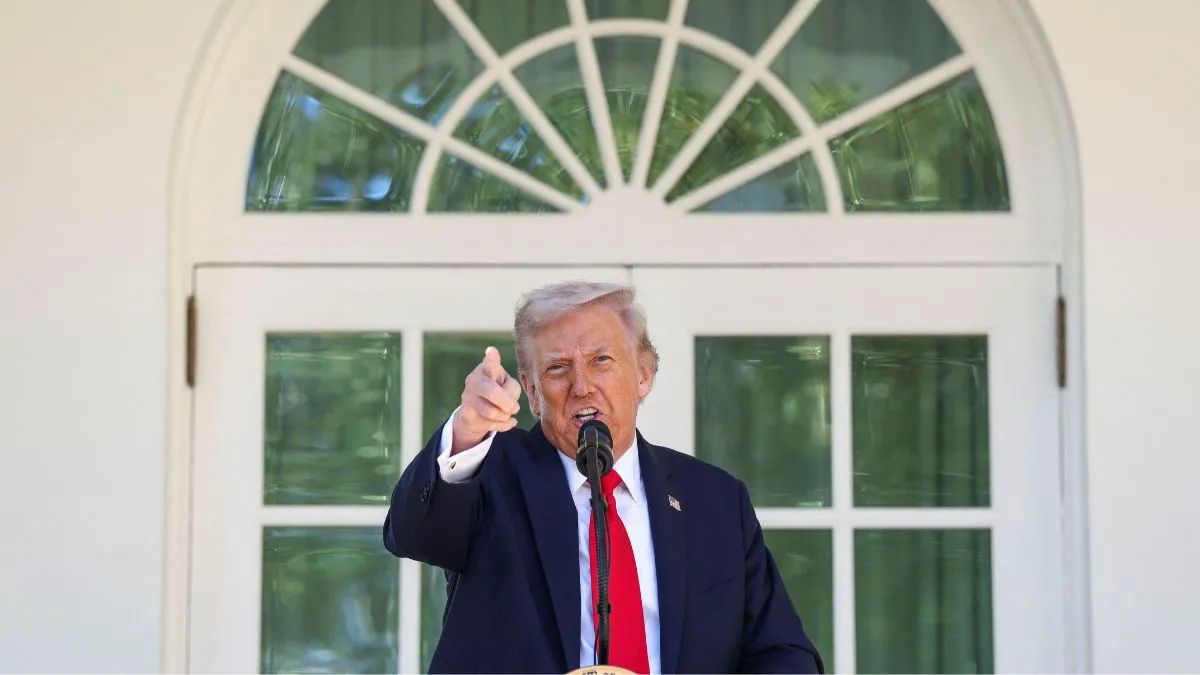
As the West Asia conflict enters a critical phase, a complex mix of military escalation, economic disruption, and conflicting political messaging is shaping the trajectory of the Iran war. US President Donald Trump has offered sharply contrasting signals on the state of the conflict. While he recently suggested that the war is “coming to an end” and claimed Iran’s military has been “decimated,” he also indicated that US operations could continue for another 2-3 weeks.
Trump has made it clear that the US exit will depend on ensuring Iran is unable to rebuild its nuclear capabilities, warning that Washington will only withdraw once Tehran is effectively pushed “back for a long period of time.” It’s been over a month now since the start of the US-Israel-Iran war.
This dual messaging reflects a broader uncertainty. On one hand, Washington is projecting military success; on the other, it is preparing for a prolonged engagement if strategic objectives, particularly curbing Iran’s nuclear ambitions, are not fully met.
The Strait of Hormuz remains the most critical flashpoint in the conflict. Iran’s de facto blockade of the narrow waterway, through which nearly 20% of global oil supplies pass, has disrupted shipping and driven global energy prices sharply higher. The crisis has exposed deep fractures among Western allies.
Trump has openly criticised countries like the United Kingdom for not participating in military operations, urging them to “fight for themselves” and secure their own energy supplies. In a post on Truth Social, the US president took aim at countries, “like the United Kingdom”, which have “refused to get involved in the decapitation of Iran”, telling them to either buy US fuel or get involved in the rapidly escalating war.
“You’ll have to start learning how to fight for yourself, the U.S.A. won’t be there to help you anymore, just like you weren’t there for us. Iran has been, essentially, decimated. The hard part is done. Go get your own oil!” he said.
What is happening on the ground militarily?
The battlefield remains active and volatile. Recent US strikes near Isfahan, home to one of Iran’s key nuclear and military complexes, have intensified the pressure on Tehran, with reports of major infrastructure damage. At the same time, the US is reinforcing its military presence in the region.
A third aircraft carrier strike group, led by the USS George H.W. Bush, is now heading towards the Middle East, underscoring Washington’s readiness to sustain or escalate operations if required. This deployment comes after the temporary withdrawal of the USS Gerald R. Ford due to technical issues, ensuring that US naval dominance in the region remains intact during a critical phase of the conflict.
Is diplomacy still on the table?
Despite ongoing hostilities, diplomatic channels remain active, albeit fragile and indirect. Iran has firmly denied that any formal negotiations with the US are underway, contradicting earlier claims from Washington about ongoing talks. However, Iranian President Masoud Pezeshkian has signalled conditional openness to ending the conflict.
Tehran has stated it is ready to conclude hostilities if it receives firm guarantees against future attacks, particularly from the US and Israel. Iran has also called for an immediate cessation of strikes as a prerequisite for normalising the situation, while criticising the European Union for what it sees as a failure to uphold international law.
European leaders, in turn, have emphasised the need for de-escalation, highlighting concerns over the growing political and economic fallout of the war.
What does this mean for the global economy and geopolitics?
The implications of the conflict extend far beyond the battlefield. The disruption in the Strait of Hormuz has sent oil prices soaring and triggered ripple effects across global markets, including rising fuel costs in major economies. The US push for greater burden-sharing among allies, Iran’s outreach to Europe, and the broader uncertainty in energy flows are all contributing to a rapidly evolving strategic landscape.
For countries heavily dependent on Gulf energy supplies, including India and much of Asia, the stakes are particularly high, with energy security emerging as a central concern.
With military pressure intensifying, diplomatic signals diverging, and economic risks mounting, the Iran war stands at a crossroads. The conflict has already rattled the global energy market, with several countries facing oil and gas shortages, while others announcing rationing measures.