


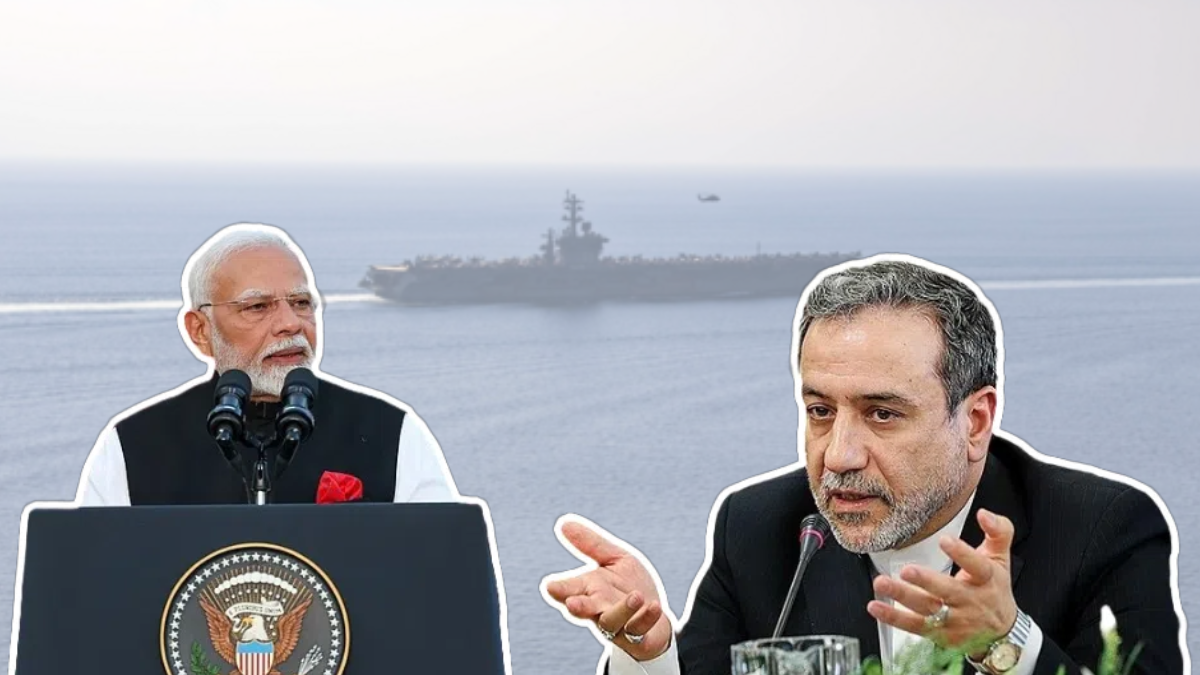
India is believed to have sought the release of three seized tankers by India as a quid pro quo for allowing safe passage to Indian-flagged cargo ships through the Hormuz Strait.
Iran wanted the tankers — Asphalt Star, Al Jafzia, and Stellar Ruby — seized by India earlier on charges of concealing identities and conducting illegal ship-to-ship transfers to be freed.
While Stellar Ruby flew the Iranian flag, the other two tankers were registered to Nicaragua and Mali.
Iran also sought supplies of medical equipment and medicines for the crew members of the three tankers, according to an Iranian official, as reported by a foreign news platform.
The official claimed Iran’s Ambassador to India met with Ministry of External Affairs officials on Monday (March 16, 2026) to discuss the release of the three tankers and medical supplies, the Iranian official told the media platform.
Earlier in the day, Indian LPG carrier Shivalik, carrying 40,000 metric tonnes, docked at Gujarat’s Mundra port after transiting the now blockaded Strait of Hormuz.
At a media briefing of Inter-Ministerial officials, Ministry of Ports Special Secretary Rajesh Kumar Sinha said the government’s priority was berthing and documentation for Shivalik to expedite cargo discharge without delays.
Jag Laadki, an Indian-flagged vessel carrying 81,000 tonnes of Murban crude oil, had sailed from the United Arab Emirates’ Fujairah port and was now en route to India.
All the Indian seafarers were now safe in the Gulf region, and there had been no incident in the last 24 hours, the officials said. There were now 22 cargo vessels in the Persian Gulf with 611 seafarers on board.
India’s External Affairs Minister Dr. S. Jaishankar had on Saturday (March 14) said India had no blanket arrangement with Iran on allowing a safe passage to all India-bound cargo ships.
He said India got a safe passage for its cargo ships on a “case-by-case” basis.
Jaishankar said India was talking to Iran and other Gulf nations directly on an arrangement for allowing the Indian-flagged ships to transit the Hormuz Strait safely.
In a Financial Times interview, he also advocated direct talks with Tehran as the swiftest way to restore maritime traffic through the narrow maritime choke point in the Gulf region.
Around 20% of the world’s oil supplies flow through the Hormuz Strait, and many of the nations in Asia, including China and India, depend on the maritime traffic in West Asia for their energy security.
Jaishankar said India’s discussions with Iran were “already yielding some results,” noting that New Delhi finds it more effective to “reason and coordinate” with Tehran rather than disengage.