


Iran has changed its war strategy against the US-Israel combine, now relying on heavy warheads instead of its earlier calibrated attacks for a sustained high-intensity military conflict in West Asia.
An Indian media report claimed Iran’s elite Islamic Revolutionary Guard Corps (IRGC) commander General Mousavi announced the shift in the war strategy of his nation, to focus on high-impact missile strikes to overwhelm the regional airspace.
The report quoted intelligence sources to claim Tehran moved away from a mixed payload use to standard heavy warheads over one ton to inflict maximum damage to the US-Israel assets in the region.
“The shift indicates that future strikes are intended to cripple hardened military infrastructure, including airbases, bunkers, ports, logistics hubs, and command centres, rather than target symbolic or limited tactical objectives,” it said.
The one-ton and more warheads would enable deeper impact on US and Israeli assets in West Asia, increasing the blast overpressure and major penetration against reinforced military structures.
Under this strategy shift, Iran plans to use its warhead-carrying platforms, such as the Khorramshahr-4, as the main weapon system in its military campaigns.
Such weapons would be used to target the US and Israel air defence systems such as the Arrow, Iron Dome, and David’s Sling, the intelligence sources were quoted as saying.
Meanwhile, the IRGC claimed it struck a US military asset in Kurdistan in northern Iraq.
In a statement, IRGC’s public relations office said it hit the headquarters of the US Army in Harir air base in Erbil in Kurdistan.
It said five missiles were launched against the US Army site in Erbil, representing a significant escalation in the West Asian military conflict since the US-Israel airstrikes on February 28, 2026, that killed Iran’s then Supreme Leader Ayatollah Ali Khamenei.
Harir air base is a key hub for the international coalition forces, making its targeting a deliberate strike against US assets in the region.
In an extension of the military tensions in the region, a United Arab Emirates (UAE) diplomatic premises was hit by a drone on Tuesday (March 10, 2026).
Just ahead of the attack, the UAE had said it was “unfairly” targeted in the ongoing West Asia military conflict.
The UAE’s diplomatic compound in Iraq’s Kurdistan sustained major structural damage in the IRGC drone attack, though no casualties were reported.
In response to the drone strike, the UAE’s Ministry of Foreign Affairs said the attack was “a dangerous escalation and a threat to regional security and stability.”
It said the “targeting of diplomatic missions and premises constitutes a flagrant violation of all international norms and laws,” strongly condemning the attack.
Meanwhile, Australia announced the deployment of military assets to the UAE, as Prime Minister Anthony Albanese said Canberra would send missiles and aircraft to the region as a precautionary measure.
Australia will send a Boeing-manufactured E-7A Wedgetail airborne early warning and control system aircraft for an initial four-week period.
Canberra would also supply advanced medium-range air-to-air missiles to the UAE, after a phone call between Albanese and UAE President Mohammed bin Zayed Al Nahyan.
“Our involvement is purely defensive,” Albanese told reporters, explaining that the decision was made “in defence of Australians who are in the region, as well as in defence of our friends in the United Arab Emirates.”
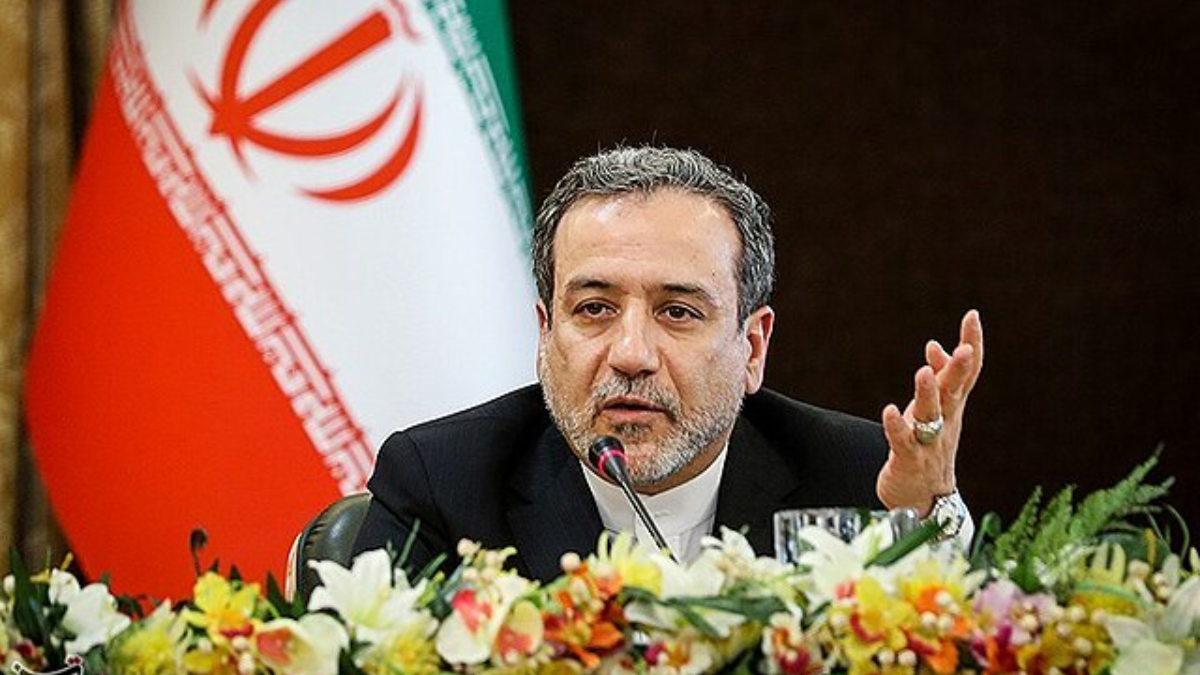
On Tuesday (March 10), Iran’s Foreign Minister Abbas Araghchi dismissed the possibility of diplomatic talks with the US, saying his nation had faced “a history of failed promises and military aggression.”
“…I don’t think the question of talking with Americans or negotiation with Americans once again would be on the table because we have a bitter experience of talking with Americans,” Araghchi told a media outlet in an interview.
He said Iran had engaged in diplomatic talks in good faith only to face renewed attack from the US and Israel on February 28.