


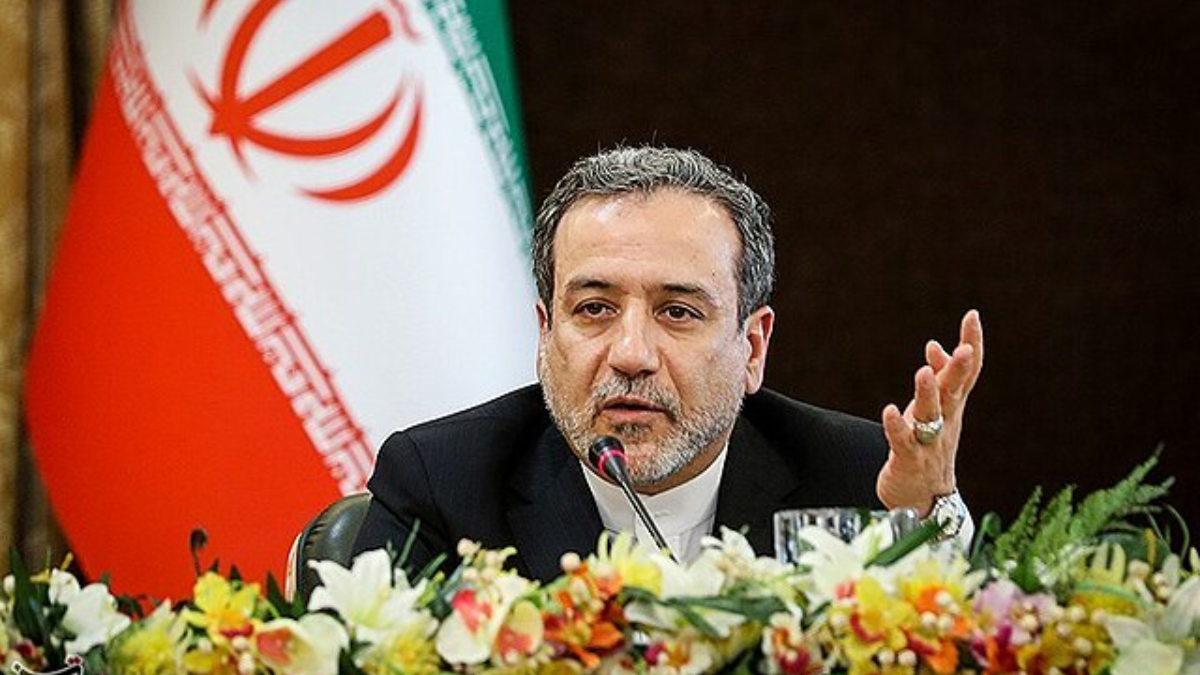
Iran’s Foreign Minister Abbas Araghchi reached Pakistan on Friday (April 24, 2026) along with a delegation of senior officials, signalling that a renewed diplomatic push to restart stalled peace talks with the US may succeed anytime soon.
Araghchi-led Iranian delegation included Foreign Ministry spokesperson Esmaeil Baqaei, who, in a social media post, clarified that the visit did not include any meetings with the US, and that the visit was to express Tehran’s views and concerns to be conveyed to Washington through Pakistan.
Ahead of his departure from Tehran, Iranian Foreign Minister Araghchi said he was travelling to Pakistan, Oman, and Russia to closely coordinate with them on bilateral matters and consult on regional developments. Araghchi said he will hold bilateral consultations and discuss current developments in the region, as well as the latest situation in the US-Iran war.
Meanwhile, the US too was preparing a diplomatic outreach, with Special Envoys Steve Witkoff and Jared Kushner arriving in Islamabad soon for discussions with Pakistan on the possible second round of peace talks with Iran.
White House Press Secretary Karoline Leavitt confirmed the development, stating that talks would be conducted directly, adding that Vice President J. D. Vance would remain engaged from Washington, coordinating with Secretary of State Marco Rubio and the national security team.
On Thursday (April 23), US President Donald Trump, after announcing an indefinite extension of the ceasefire with Iran, said Tehran was preparing an offer aimed to meet American demands to end the war.
He reiterated that any potential agreement must include Iran giving up its enriched uranium and ensuring free movement of oil shipments through the Strait of Hormuz. Trump also raised concerns over Iran’s leadership, with US officials suggesting internal divisions within the power structure.
He, however, did not concede on Iran’s demand to lift the US Navy blockade of maritime movement to and from Iranian ports, stating that the military operations would continue to stop any cargo vessel from entering and exiting the region.
In view of the expected arrival of diplomatic corps from Iran and the US to Islamabad, Pakistan stepped up security across its capital. The Iranian Foreign Minister held a phone call with Deputy Prime Minister Ishaq Dar amid hopes for another round of talks between Washington and Tehran.
Islamabad is pushing for the resumption of negotiations after hosting initial talks on April 11 that ended without agreement, but the expected visit of both Iranian and American delegations signals potential progress even as uncertainty persisted over Tehran’s participation in direct talks with Washington.
The diplomatic efforts follow a fragile ceasefire between the United States and Iran announced earlier this month after weeks of conflict, creating a window for negotiations that Pakistan has sought to facilitate.
In his conversation with the Iranian foreign minister, Dar discussed regional developments, the ceasefire, and Islamabad’s efforts in the context of US-Iran engagement. Araghchi also held a telephone conversation with Pakistan Army chief Asim Munir on “regional developments and issues related to the ceasefire.”
As diplomatic efforts intensified, the United States Central Command (CENTCOM) said a US Navy destroyer intercepted an Iranian‑flagged vessel amid enforcement of Washington’s maritime restrictions. In a statement on X, CENTCOM confirmed that the guided‑missile destroyer USS Rafael Peralta acted on April 24 to stop a ship flying the Iranian flag that was attempting to sail towards a port in Iran.
The action, the US Navy said, was part of the ongoing US naval blockade of Iranian ports, which began earlier in April to restrict shipping to and from Iran. The US has been expanding enforcement of the blockade, with dozens of ships already turned back or intercepted.
Shipping traffic in the Strait of Hormuz has dropped sharply, with only a handful of vessels passing through the narrow chokepoint amid fears of confrontation. Between April 22 and early April 23, seven vessels transited the strait, six of which were involved in Iran-related trade.