


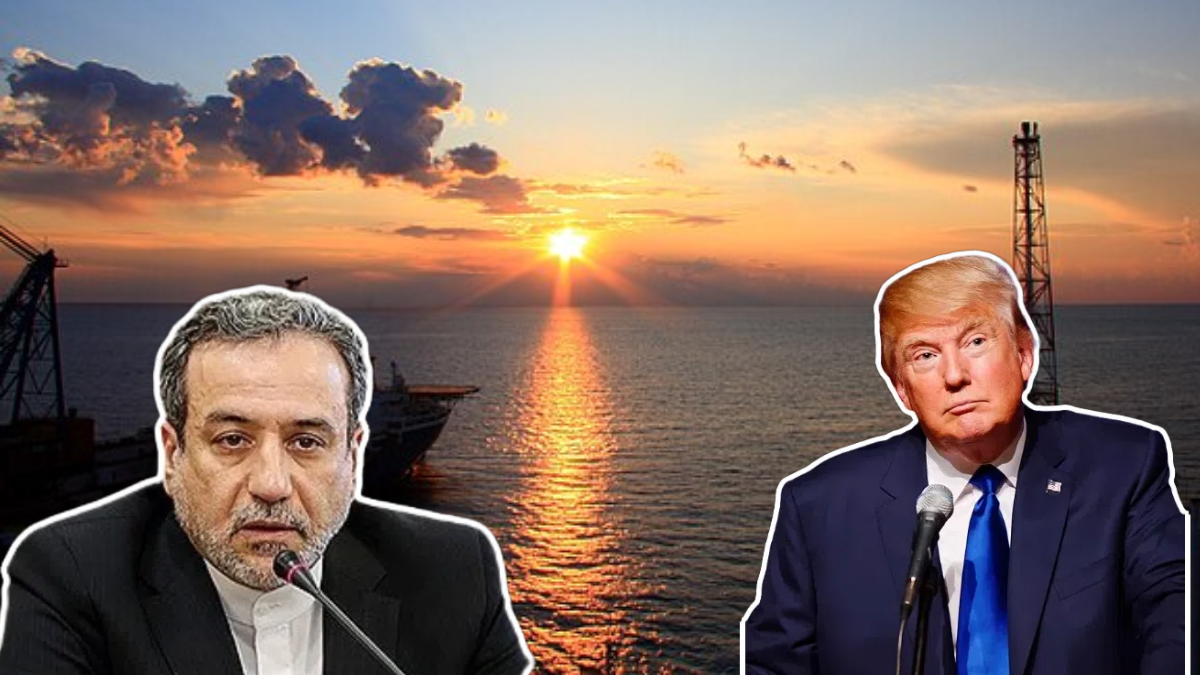
Israel on Wednesday (March 18, 2026) struck Iran’s South Pars gasfield, inviting an immediate retaliatory attack from Tehran on West Asian energy sites.
US President Donald Trump claimed he “knew nothing” about Tel Aviv’s military actions, and these developments in the West Asian war immediately sent oil prices soaring 5% under the Brent crude index, an international standard.
The Israeli airstrike on the offshore South Pars field, the largest in the world, was acknowledged by Iranian state media in a report.
Immediately after, Iran’s Islamic Revolutionary Guard Corps said it would respond with its own strikes on energy sources in Qatar, Saudi Arabia, and the United Arab Emirates, further escalating the West Asian war that has carried on for 20 days already.
Later, Qatar said its Ras Laffan gas facility went up in flames after an Iranian ballistic missile hit the plant, though later the fire was brought under control.
Qatar immediately ordered Iranian security and military attaches as persona non grata and asked them to leave at the earliest.
The United Arab Emirates verbally targeted Iran for its attacks on the Habshan gas facility and Bab oil field as a “dangerous escalation,” with authorities saying operations were shut after drone interceptions over the sites.
Saudi Arabia said two of its refineries in Riyadh were attacked by Iran, in retaliatory strikes to Israel’s attack on its South Pars gas field.
Saudi Arabia said it “reserved the right to take military actions” against Iran if deemed necessary. It said, “The little trust that remained in Iran has been completely shattered.”
Saudi Foreign Minister Prince Faisal bin Farhan told reporters Thursday (March 19) that Iran’s message was quite clear when several Arab and Islamic foreign ministers were in Riyadh for a diplomatic meeting.
“It doesn’t believe in talking to its neighbours. It tries to pressure its neighbours. And what I can say, categorically, that’s not going to work,” bin Farhan said.
Saudi Arabia “is not going to succumb to pressure,” he added, saying the pressure will “backfire.”
Before the missile attacks on energy sites in West Asia, Iran accused the US and Israel of the strike on the South Pars gas field.
Trump said the US wasn’t aware of the Israeli strike on South Pars, warning Iran not to retaliate further against its West Asian neighbours.
The US president said its ally had “violently lashed out” at Iran “out of anger for what has taken place in the Middle East”.
Oman and Kuwait joined the other West Asian nations to condemn Iran for the attacks on gas facilities in Qatar, the UAE, and Saudi Arabia.
Meanwhile, in response to Ali Larijani’s killing in Israeli strikes earlier this week, Iranian Foreign Minister Abbas Araghchi said his nation’s political and military infrastructure remained “very solid: and would not suffer even after “fatal blows” to Iran’s leadership.
Larijani, the secretary of the Supreme National Security Council, was a key security leader of Iran.
In a television interview on Wednesday (March 18), Araghchi asserted that the US and Israel had not yet realised that Iran “does not rely on a single individual” for leadership.
He said the “presence or absence of a single individual does not affect this structure,” noting that while “individuals are influential, and each person plays their role–some better, some worse, some less–but what matters is that the political system in Iran is a very solid structure.”
“We have not had anyone more important than the Supreme Leader (Ali Khamenei) himself, and even the leader was martyred, yet the system continued its work and immediately provided a replacement,” the minister said.
“I will repeat: This war is not our war,” the minister stated. “We did not start it. The United States started it and is responsible for all the consequences of this war — human and financial –whether for Iran, for the region, or for the entire world,” Araghchi said, adding that “the United States must be held accountable.”