


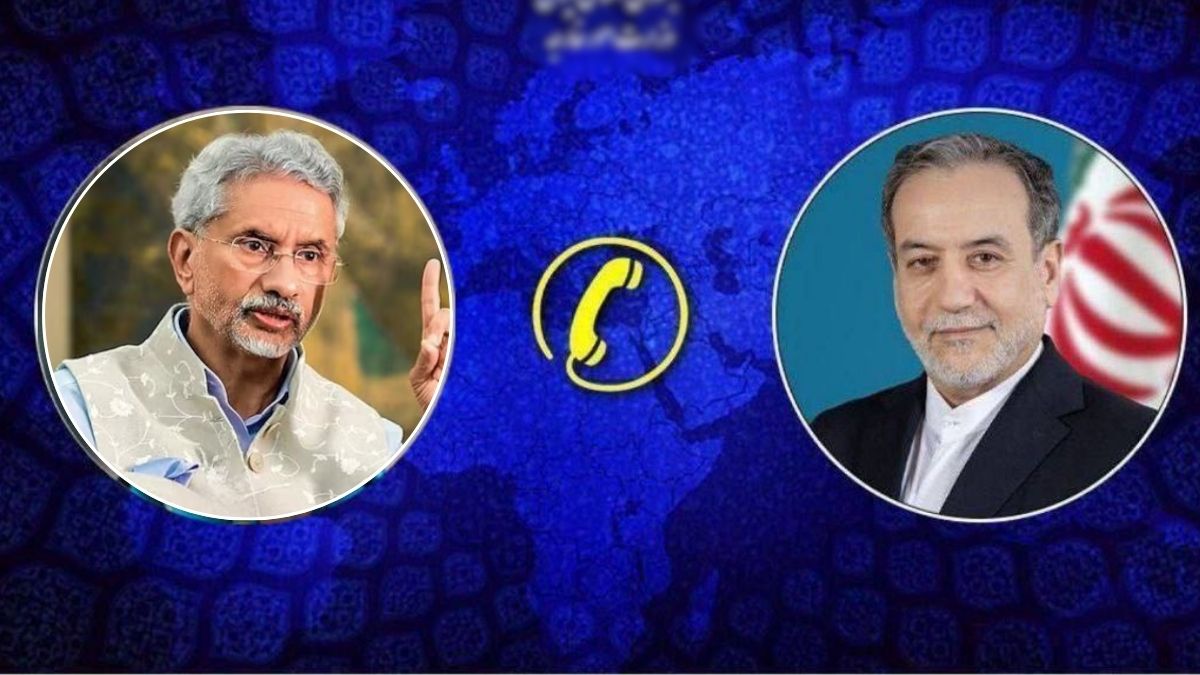
As Iran grapples with its most intense unrest in over a decade, External Affairs Minister S Jaishankar on Wednesday (January 14, 2026) received a call from Iranian Foreign Minister Seyed Abbas Araghchi, amid concerns over a possible military intervention by the US following Tehran’s crackdown on nationwide protests.
“Received a call from Iranian Foreign Minister Seyed Abbas Araghchi. We discussed the evolving situation in and around Iran,” EAM Jaishankar acknowledged in a brief post on X, signalling sustained diplomatic engagement even as conditions on the ground deteriorate sharply.
Iran FM’s call to Jaishankar came against the backdrop of nationwide protests in Iran, which has claimed over 2,500 lives, and mounting regional tensions that have begun to ripple far beyond Iran’s borders. Protests in the gulf national started over increasing inflation and economic collapse but have now turned deadly.
India issues exit advisory for nationals in Iran as situation worsens
Shortly before the high-level call, the Indian Embassy in Tehran advised all Indian nationals – including students, pilgrims, businesspersons and tourists – to leave Iran at the earliest using available means, including commercial flights. The advisory urged Indians to remain vigilant, avoid protest zones, keep travel and identity documents ready, and stay in close contact with the embassy.
Families in India were also asked to remain alert, amid concerns that connectivity could be disrupted if the unrest deepens. According to estimates, a little over 10,000 Indians, including students, are currently living in Iran.
Why is Iran seeing these protests?
The current unrest in Iran, now in its third week, erupted amid soaring inflation, a collapsing currency, which reportedly touched 1.4 million rials to the US dollar, coupled with years of economic strain under international sanctions. Deadly clashes have been reported across nearly 280 locations, turning the protests into the most serious challenge to Iran’s clerical leadership in a decade.
Further, international pressure also intensified on Iran after US President Donald Trump publicly urged Iranian protesters to “take over their institutions” and asking people to keep protesting, claiming that help is on its way! Washington, on the other hand, reportedly advised some personnel to evacuate the Al Udeid Air Base as a precaution.
Iran, in turn, has warned neighbouring countries hosting US bases of possible retaliation if American strikes are launched.
India-Iran relations: Why the gulf nation matters to New Delhi?
For India, turmoil in Iran is not a distant West Asian crisis, but rather strikes at the heart of New Delhi’s strategic calculus. For those wondering what puts India in the picture, New Delhi has never viewed Iran as an ideological partner, instead the relationship has been driven by hard geography and strategic necessity.
Iran provides India its most viable land bridge to Afghanistan and Central Asia, bypassing Pakistan, which has consistently denied overland access. This very strategic logic gave rise to the Chabahar Port project, which is India’s flagship connectivity initiative aimed at securing alternative trade and transit routes.
JNU professor Rajan Kumar told The Times of India that Iran remains “India’s most important land bridge to Central Asia.”
Chabahar and beyond: What’s at stake for India?
The protests aren’t just affecting the Iranian leadership but also causing giving some sleepless nights to its strategic partners as well. India, with Chabahar and a big investment already in the gulf nation, has a lot to worry. India-Iran annual trade hovers between $1.3 and $1.7 billion, a tiny fraction of India’s global commerce.
But what matters the most is the Chabahar project which was envisioned as more than just a port. It symbolised India’s ability to shape regional outcomes despite geopolitical constraints. While sanctions, funding delays and Afghanistan’s political upheaval have slowed progress, the project’s strategic relevance remains intact.
On the other hand, New Delhi has already invested over $1 billion in Iranian infrastructure through funding and credit lines. Despite diplomatic headwinds, India continues to rank among Iran’s top ten export partners. A prolonged breakdown of order in Iran would jeopardise these investments.
Why Jaishankar-Araghchi call was significant
Viewed in this lens, EAM Jaishankar’s conversation with Iranian Foreign Minister Araghchi was not merely a diplomatic courtesy call. It was a signal that India is closely watching developments that could reshape regional connectivity, energy security, and strategic access to Eurasia.
As unrest deepens and external pressure mounts on Tehran, India faces a delicate balancing act of protecting its citizens, safeguarding long-term strategic interests, and navigating an increasingly volatile West Asian landscape.