


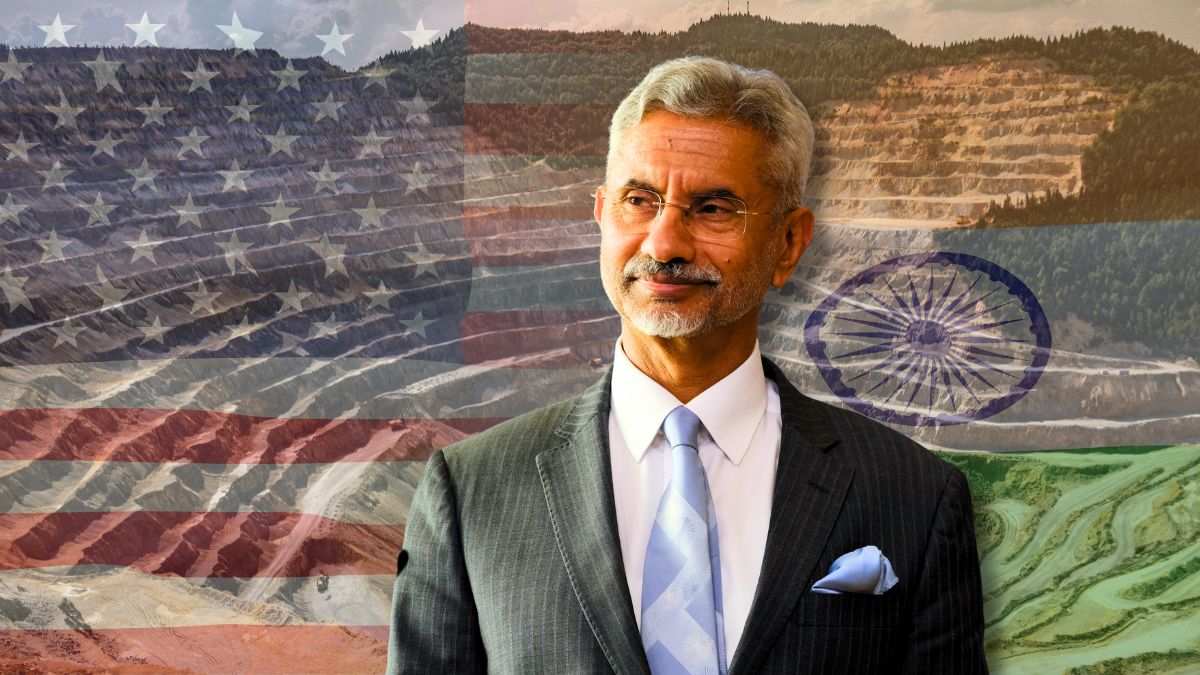
External Affairs Minister S Jaishankar is on a three-day visit to the United States, which comes at a pivotal moment in India-US relations, which were marred by tariffs and trade deal delay for around a year. However, the ties seem to be improving with US President Donald Trump making a surprise trade deal announcement.
On the day that Washington and New Delhi announced a surprise trade deal slashing US tariffs on Indian goods to 18%, from 50% earlier (25% reciprocal plus 25% additional tariff), EAM Jaishankar embarked on a visit to Washington. His visit is centred on the inaugural Critical Minerals Ministerial convened by US Secretary of State Marco Rubio.
It is now being widely seen as a signal of renewed momentum and a broader strategic thaw between the two largest democracies of the world.
S Jaishankar US visit: What makes critical minerals so crucial for India?
The inaugural ministerial on critical minerals is expected to focus on building resilient and trusted supply chains for critical minerals, a sector increasingly viewed as the backbone of economic security, clean-energy transitions and next-generation technologies.
Critical minerals like lithium, cobalt, rare earths and silicon are essential for electric vehicles, semiconductors, artificial intelligence, defence platforms and renewable energy. For India, which is rapidly expanding manufacturing under the “Make in India” push, access to secure and diversified mineral supply chains has become a strategic imperative.
According to the External Affairs Ministry, the discussions will examine supply-chain resilience, clean-energy transitions and strategic collaboration, placing India at the heart of a global effort to reduce over-dependence on vulnerable or coercive supply sources.
How does Jaishankar’s Washington visit connect to India-US trade deal?
Jaishankar’s visit coincides with the India-US trade pact announced by President Trump after a phone call with Prime Minister Narendra Modi on Monday night (February 2, 2026). The agreement, which reduces reciprocal tariffs on Indian goods, marked a notable reset after a period of trade friction.
Welcoming the announcement, Jaishankar said the deal would create jobs, spur economic growth, strengthen Make in India, and deepen trusted-technology partnerships.
How Pax Silica is a big strategic prize for India?
Worth mentioning is that the EAM’s latest visit also comes against the major backdrop to of the US-led “Pax Silica” framework, launched in December 2025 to secure silicon and semiconductor supply chains critical to AI and advanced manufacturing. US officials have described Pax Silica as a coalition designed to ensure that trusted nations retain access to critical technology inputs, free from coercive dependencies.
US Under Secretary of State for Economic Affairs Jacob Helberg confirmed last month that India is set to formally join Pax Silica in February 2026, calling India’s inclusion essential to covering the full AI supply chain, from minerals and hardware to software and infrastructure.
Helberg and other US officials have highlighted India’s software talent, expanding electronics manufacturing base, and growing role in global supply chains as key reasons for its inclusion. US Ambassador to India Sergio Gor has also publicly backed India’s entry, calling it critical for building a secure, innovation-driven silicon ecosystem.