


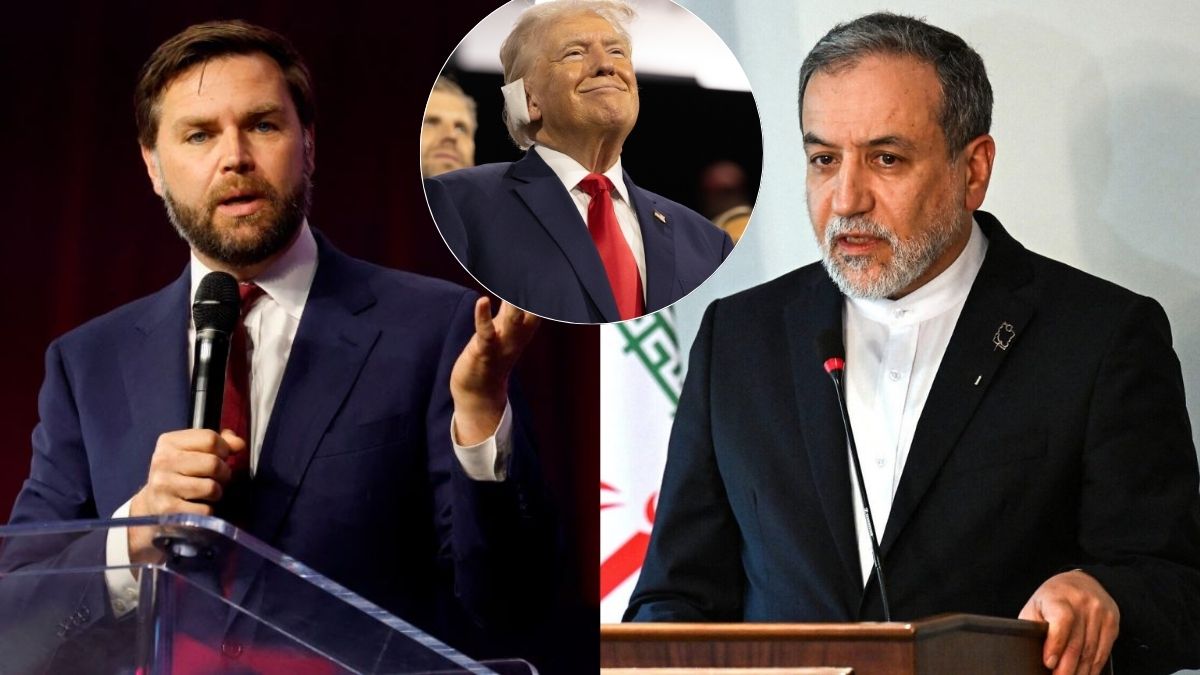
In a high-stakes diplomatic push following the Iran-Israel-US conflict, Pakistan is set to host US and Iranian delegations for historic direct talks in heavily fortified Islamabad starting Saturday (April 11, 2026), aimed at ending the war that has disrupted energy supplies, businesses, and daily life across the region, including Gulf.
The talks come just days after a two-week ceasefire, marking the first real opening for dialogue after 40 days of conflict triggered by US and Israeli strikes on Iran beginning February 28.
US Vice President JD Vance left Washington Friday (April 10, 2026) aboard Air Force Two, leading a delegation that includes President Donald Trump’s Special Envoy to the Middle East Steve Witkoff and Trump’s son-in-law Jared Kushner. The US delegation is expected to land in Islamabad, which is under a strict lockdown as part of security measures, early Saturday.
On the other side, the Iranian delegation, likely led by parliament speaker Bagher Qalibaf and including Foreign Minister Abbas Araghchi, is expected to arrive Friday night, with technical teams from both countries already on the ground.
What are the key fault lines ahead of the negotiations?
Despite the ceasefire, deep disagreements have already surfaced, particularly over its scope and interpretation. One major flashpoint is whether the truce extends beyond Iran to conflict zones like Lebanon. Iran’s Foreign Minister Abbas Araghchi made Tehran’s position clear, “The Iran–US Ceasefire terms are clear and explicit: the US must choose, ceasefire or continued war via Israel. It cannot have both.”
Iran maintains that the ceasefire framework, based on a 10-point proposal accepted in principle by Washington, includes a halt to attacks across all fronts, including Lebanon.
MB Ghalibaf, Speaker of Iran’s Parliament, also said two of the measures mutually agreed upon between the parties have yet to be implemented: a ceasefire in Lebanon and the release of Iran’s blocked assets prior to the commencement of negotiations.
“These two matters must be fulfilled before negotiations begin,” he posted on X.
What is the US’ stand on including Lebanon in ceasefire?
However, the United States has rejected this interpretation. Speaking in Budapest, JD Vance said the agreement applies only to Iran, the United States and its allies, including Israel and Gulf states, and described the disagreement as a “legitimate misunderstanding.”
He added a warning, “If Iran wants to let this negotiation fall apart, in a conflict where they were getting hammered, over Lebanon, which has nothing to do with them and which the United States never once said was part of the ceasefire, that’s ultimately their choice. We think that would be dumb, but that’s their choice.”
Where does Iran stand on its nuclear programme?
Even before formal negotiations begin, Iran has drawn a firm red line on one of the most contentious issues – uranium enrichment. The head of Iran’s nuclear energy agency, Mohammad Eslami, categorically ruled out any restrictions saying, “The claims and demands of our enemies to restrict Iran’s enrichment programme are merely wishes that will be buried.”
He noted that all the conspiracies and actions of their enemies, including this brutal war, have yielded no results. Now they seek to achieve something through negotiations.
This stance directly contradicts US President Donald Trump’s position, who has insisted that “there will be no enrichment of uranium” by Iran after the war.
Why is uranium enrichment such a critical sticking point?
The issue lies at the heart of decades-long tensions between Iran and the West. The US and its allies have long accused Tehran of pursuing nuclear weapons, while Iran insists its programme is strictly for civilian purposes. Before the latest conflict, Iran had been enriching uranium to 60%, far above the 3.67% cap set by the now-defunct 2015 nuclear deal and close to weapons-grade levels of 90%, according to the International Atomic Energy Agency.
Despite US-Israeli strikes targeting nuclear facilities during the conflict, the whereabouts of several hundred kilogrammes of highly enriched uranium remain unknown, raising fresh concerns ahead of the talks.
US-Iran ceasefire: Can it hold amid rising tensions elsewhere?
The ceasefire itself remains fragile. Israel’s recent large-scale strikes in Lebanon, which reportedly killed at least 254 people and wounded over 1,100, have further complicated the situation. Iran insists the ceasefire must apply across all fronts, while Washington maintains it is limited in scope.
This disagreement is emerging as an early test for the credibility and durability of the truce.
Meanwhile, the outcome of the Islamabad talks could shape the future of West Asia’s security architecture. The conflict has already rattled global energy markets and disrupted critical supply chains. It is to be seen what would be the outcome of these crucial talks and if it would hold.