


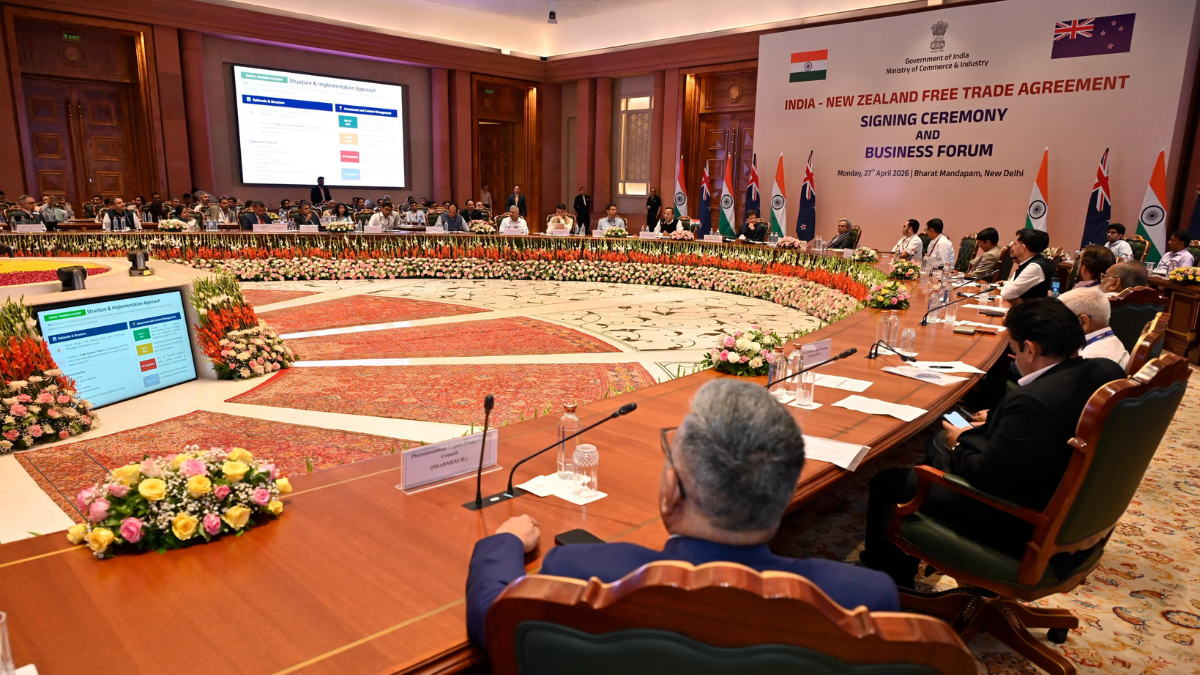
Indian Prime Minister Narendra Modi and his New Zealand counterpart Christopher Luxon described the Free Trade Agreement (FTA) between the two nations, signed on Monday (April 27, 2026), as a “landmark” and a “historic milestone”, ensuring duty-free export access to inject unprecedented momentum into the developmental partnership.
In an X post, Modi, calling the FTA a landmark moment in the bilateral relations, said it would inject unprecedented momentum into the developmental partnership between the two countries
He said the agreement reflected the deep trust, shared values, and a common ambition between the two nations, emphasising that the FTA would benefit a wide spectrum of stakeholders, including farmers, youth, women, MSMEs, artisans, startups, students, and innovators, while opening new avenues for growth and strengthening cross-sectoral synergy.
Highlighting the economic dimension of the deal, Modi pointed to New Zealand’s commitment to invest $20 billion in India over the next 15 years, noting that it would significantly boost cooperation in agriculture, manufacturing, innovation, and technology.
He said the agreement aligned with India’s broader push to integrate into global supply chains and support initiatives such as “Make in India,” while fostering entrepreneurship, job creation, and innovation-led growth. The FTA, Modi added, will “open new avenues for growth, create opportunities and deepen our synergy across sectors.”
Modi also underscored the importance of talent mobility and skills development under the agreement, stating that it expands opportunities for Indian professionals and students in emerging sectors.
He noted that the FTA brought together New Zealand’s advanced agricultural expertise with India’s development priorities through initiatives such as agricultural productivity partnerships and Centres of Excellence, aimed at improving farmer incomes and rural infrastructure.
Modi highlighted the agreement’s role in promoting traditional knowledge systems, including AYUSH, yoga, and organic products, positioning them for greater global relevance.
He said the FTA would help build resilient supply chains and enable the production of competitively priced goods and services, creating new engines of growth for both economies.
Earlier, Luxon described the agreement as a historic milestone that would unlock significant opportunities for trade, investment, and innovation.
He noted that the FTA opens access to one of the world’s fastest-growing major economies and supports New Zealand’s goal of diversifying export markets and doubling export value over the next decade.
Luxon said the agreement would ensure tariff-free access for Indian exporters to the New Zealand market from the outset, while also providing Indian consumers greater access to New Zealand’s high-quality products.
He highlighted that the deal would deepen collaboration in areas such as agricultural productivity, leveraging New Zealand’s expertise in agri-technology and food production.
Emphasising the broader significance of the pact, Luxon said it signaled a shared commitment to stable, predictable, and rules-based trade at a time of global uncertainty.
He also pointed to the role of the Indian diaspora as a vital bridge strengthening ties between the two countries across sectors, including business, education, science, culture, and sport. The FTA with India will open a new and “dynamic” market for New Zealand, he added.
“This deal will help diversify New Zealand’s export markets, support the goal of doubling the value of our exports over 10 years, and put New Zealand exporters on a more level playing field with competitors already enjoying preferential access in India,” Luxon wrote on X.
Both leaders described the agreement as not just an economic milestone but the beginning of a new phase in India-New Zealand relations, with deeper engagement expected across trade, investment, innovation, and people-to-people connections.
India and New Zealand signed their historic Free Trade Agreement after teams from New Delhi and Wellington completed negotiations in December 2025. The agreement covers 20 chapters, including trade in goods, remedies, dispute settlement, legal provisions, and more.
Following the signing of the FTA, Union Minister of Commerce and Industry Piyush Goyal said the deal was concluded in nine months, adding that the pace reflects “depth of trust and shared ambition between our nations.”
“Signing of this FTA marks another defining milestone in India’s engagement with the developed world and brings us closer to PM Modi’s vision of Viksit Bharat 2047,” he said, noting that the FTA is the seventh trade agreement signed by India in nearly four years.
A key feature of the FTA with New Zealand was to eliminate 100% duty on Indian exports. It will also allow temporary employment for Indian professionals in New Zealand. Under the FTA, Opens Skilled Employment Pathways, at least 5,000 visas, called the ‘Temporary Employment Entry Visa’, will be guaranteed for Indian professionals in skilled occupations, with a stay of up to three years.
Duty-free wine and spirits from India and wines from New Zealand will enter the domestic market at concessional duties, which will be gradually reduced over 10 years. Indian goods, including labour-intensive sectors such as textiles, plastic items, leather, and engineering goods, will enter New Zealand at zero duty.
Meanwhile, India has opened 70.03 per cent of its tariff lines to New Zealand, which covers 95 per cent of current imports. The Oceanic country is expected to benefit from exports of its wool, wine, wood, coal, and fruits such as avocados and blueberries.
The FTA will also allow cooperation in agriculture and include a plan to support Indian farmers in growing kiwis and apples, as well as in the production of honey.