


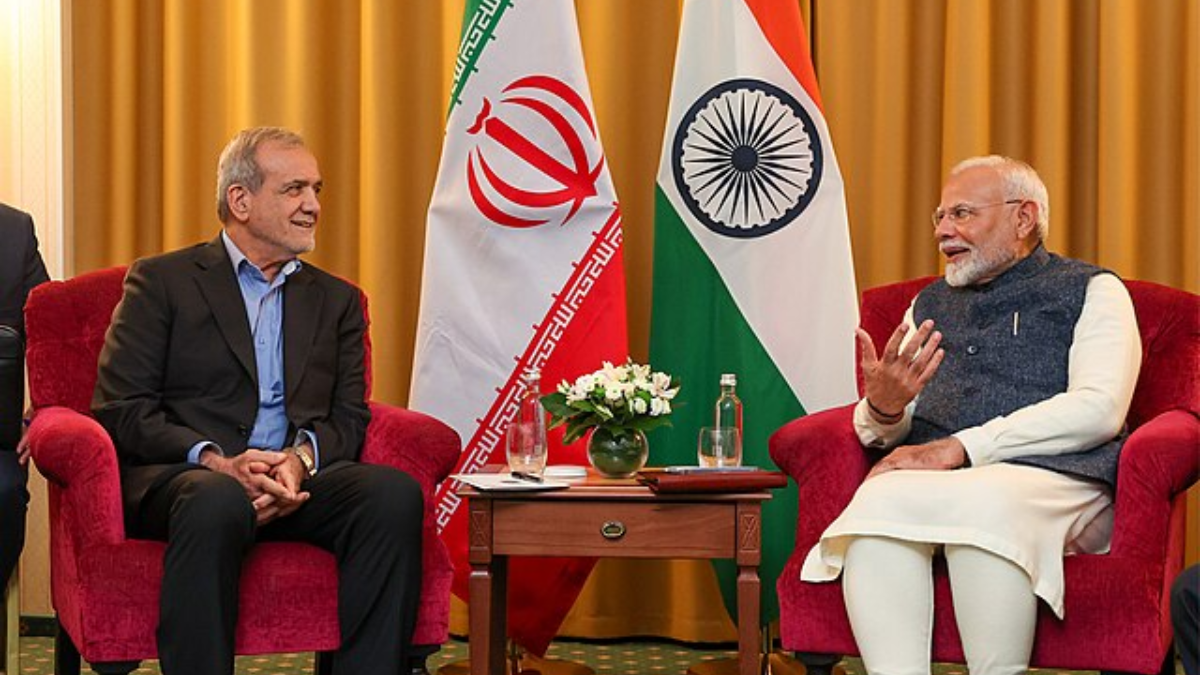
Prime Minister Narendra Modi held his second telephonic conversation with Iranian President Masoud Pezeshkian in ten days on March 21, on the occasion of Eid-ul-Fitr and Nowruz, as fresh strikes on critical infrastructure, including Iran’s Natanz facility, and retaliatory missile launches continued to roil the region.
Prime Minister Modi condemned attacks on critical infrastructure, warning they “threaten regional stability and disrupt global supply chains,” and reiterated the importance of safeguarding freedom of navigation and keeping shipping lanes open. In a post on X, Prime Minister Modi said, “Spoke with President Dr. Masoud Pezeshkian and conveyed Eid and Nowruz greetings. We expressed hope that this festive season brings peace, stability and prosperity to West Asia. Condemned attacks on critical infrastructure in the region, which threaten regional stability and disrupt global supply chains.”
Pezeshkian urged Modi to leverage India’s role as the current BRICS chair to halt “aggressions” against Iran and help restore regional stability. The Iranian President also put forward a broader vision–a regional security framework led by West Asian nations without external interference, alongside an immediate halt to US and Israeli military operations with guarantees against their recurrence.
The Embassy of Iran issued a press statement about the phone call after the two leaders spoke.
Jaishankar’s Call with Araghchi
External Affairs Minister S. Jaishankar spoke with Iranian FM Seyyed Abbas Araghchi, focusing on the evolving situation and its regional implications.
In a post on X, Jaishankar said, “Spoke this evening to FM @araghchi of Iran. Conveyed greetings for Navroz and Eid. Our conversation was on the latest developments regarding the conflict. And its implications for the larger region.”
Modi has also spoken to the leaders of Jordan, Malaysia, Oman, and France in recent days, with New Delhi’s mediation potential drawing growing international attention.
The diplomatic calls unfolded the day hostilities on the ground sharply escalated. Iranian missile attacks broke through Israeli defences in the south of the country, making direct impacts in the cities of Dimona and Arad, wounding nearly 100 people.
The IRGC said it targeted Israeli military installations and security centres across Arad, Dimona, Eilat, Beersheba and Kiryat Gat. Iran’s national broadcaster claimed the Dimona strike was a direct response to Israel’s earlier attack on Natanz, framing the tit-for-tat as deliberate escalation management.
In addition, President Donald Trump threatened to “hit and obliterate” Iranian power plants if Tehran does not reopen the Strait of Hormuz within 48 hours, while Israel said US and Israeli strikes would “increase significantly” in the days ahead.