


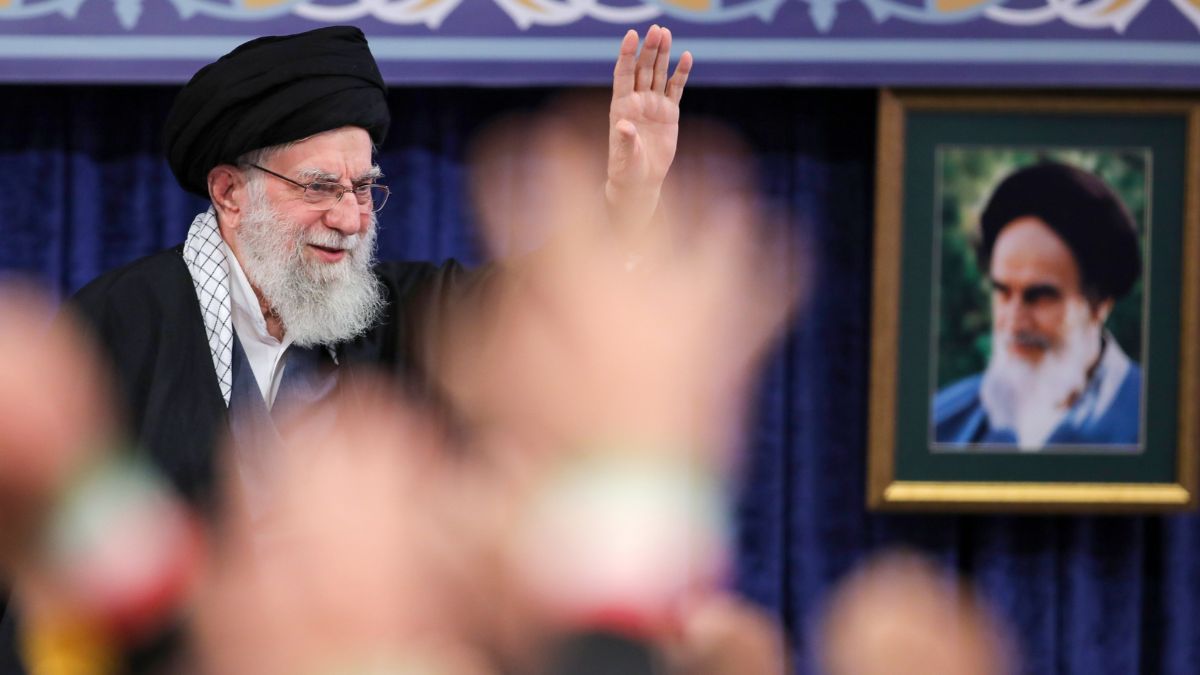
After Supreme Leader Ayatollah Khamenei’s assassination last week, the biggest question remains – who will lead Iran now, as the country continues to battle concentrated strikes by Israel and the United States? As West Asia braces for further escalation, reports are now indicating that Khamenei’s successor could be his own son Mojtaba Hosseini Khamenei.
Several media reports claimed that Mojtaba has been elected as the new Supreme Leader of Iran, triggering intense speculation, even as Iranian authorities have formally denied any such decision.
56-year-old is late Khamenei’s eldest son and has been chosen to take charge of the country by Iran’s Assembly of Experts, Iranian International reported on Tuesday (March 3, 2026). It further added that Mojtaba was elected under pressure from the Iranian Revolutionary Guard Corps (IRGC), citing sources.
Has Mojtaba Khamenei been chosen as Iran’s next Supreme Leader?
Several media outlets reported that Iran’s powerful Assembly of Experts had selected Mojtaba Khamenei, the late leader’s son, as his successor. However, the Iranian government swiftly rejected the claim.
In a statement issued via the Consulate General of Iran in Mumbai on X, authorities said, “Reports circulating on media regarding potential candidates for leadership selected by Iran’s Assembly of Experts have no official source and are officially denied.”
Who currently holds power in Tehran?
With no formally designated successor at the time of his death, an interim Leadership Council has assumed the Supreme Leader’s responsibilities. The three-member council includes Ayatollah Alireza Arafi, President Masoud Pezeshkian, Chief Justice Gholamhossein Mohseni Ejei.
Under Iran’s constitutional framework, the Assembly of Experts, an 88-member clerical body, is tasked with selecting the Supreme Leader. The process typically involves internal deliberations and consensus-building within the religious and political establishment. For now, no official announcement confirming a permanent successor has been made.
Why is Mojtaba Khamenei’s name significant?
Mojtaba has long been viewed by some analysts as a potential heir due to his reported influence within Iran’s security and clerical networks. However, his possible elevation would mark a controversial shift, potentially fuelling accusations of dynastic succession within a system that officially rejects monarchy.
The swift government denial suggests either that deliberations are ongoing, or that public speculation is outpacing formal decision-making.
Leading to the big leadership vacuum in Iran was Ayatollah Ali Khamenei’s killing during joint US–Israel strikes under the operation reportedly named “Operation Epic Fury.” He ruled Iran for nearly four decades. The strikes targeted multiple Iranian cities, including Tehran, following stalled nuclear negotiations and Western claims that Tehran had resumed sensitive nuclear activities.
According to reports, more than 700 people were killed in the attacks, Khamenei was killed at his compound, and several members of his family also died in the strike.
Iran has announced that Khamenei will be buried in the holy city of Mashhad, with a large farewell ceremony planned in Tehran. The burial date has not yet been disclosed.
How has the region reacted?
Within hours of the strikes, Iran launched retaliatory missile and drone attacks targeting Gulf regions, including Dubai and Abu Dhabi (UAE), Qatar, Bahrain. Drone and missile strikes reportedly hit oil facilities and US diplomatic sites in the Gulf. A drone attack also caused a fire at the US consulate in Dubai, though US Secretary of State Marco Rubio confirmed that staff were safe.
Meanwhile, Israel has expanded ground operations in Lebanon against Hezbollah. US President Donald Trump has warned it was “too late” for Iran to seek talks to “escape a war”. Tehran has also vowed revenge for the killing of its Supreme Leader.
What does Iran’s succession battle mean for the conflict?
The uncertainty surrounding Iran’s leadership comes at a moment of unprecedented military pressure and internal strain. The next Supreme Leader will inherit a direct confrontation with the United States and Israel, ongoing missile exchanges across the Gulf, a fragile domestic environment, and a heightened scrutiny over Iran’s nuclear programme.
Meanwhile, there has been only one other transfer of power in the office of supreme leader of Iran, the paramount decision-maker since the country’s 1979 Islamic Revolution. Ayatollah Khamenei died at age 86 after being the figurehead of the revolution and leading Iran through its eight-year war with Iraq.