


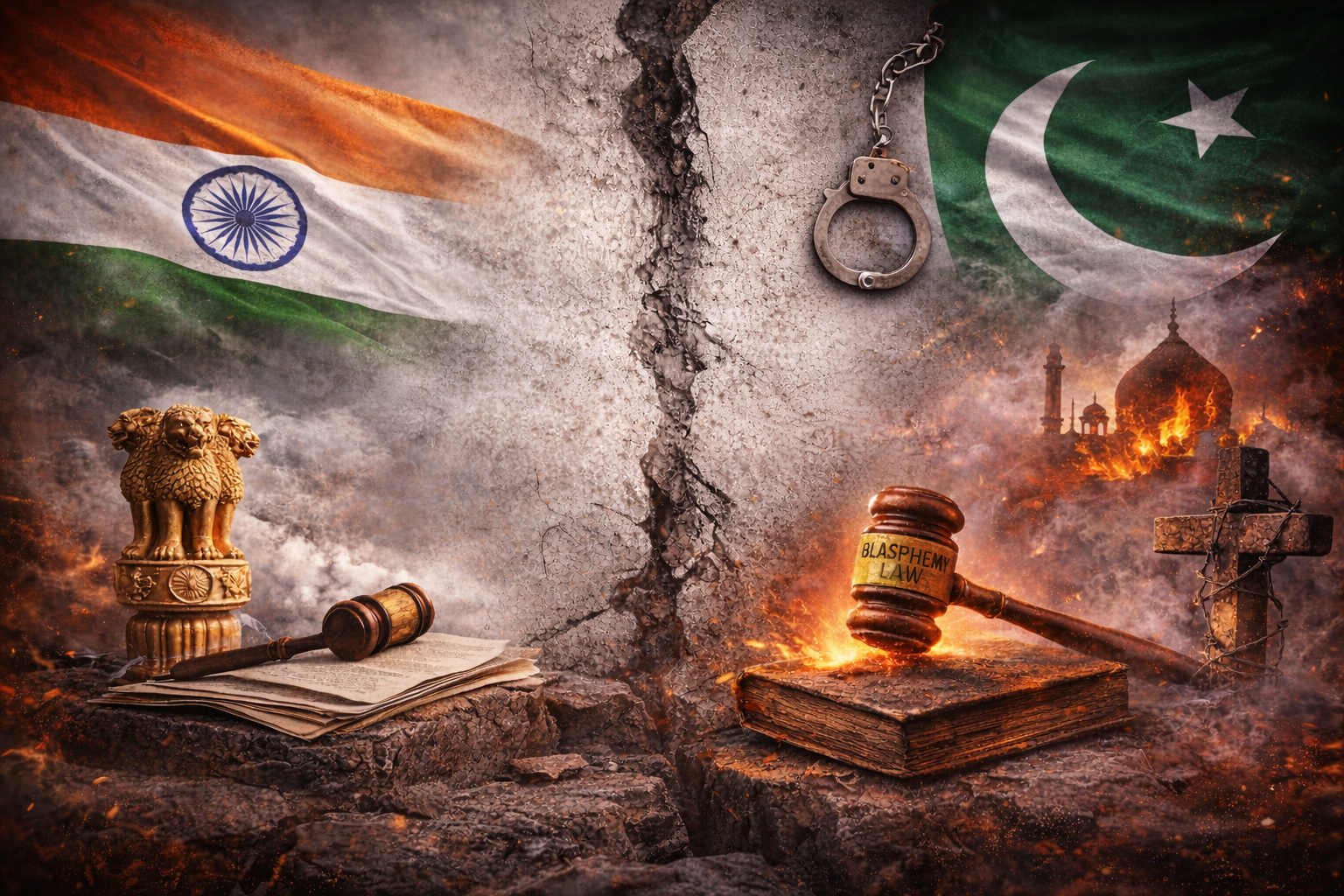
India has sharply rejected recent remarks by Pakistan’s Foreign Office on incidents involving minorities in India, calling them untenable and pointing instead to Pakistan’s own record. The exchange reflects a deeper diplomatic pattern rather than a one-off war of words.
What did India say in response to Pakistan?
India’s Ministry of External Affairs (MEA) responded through its Official Spokesperson Randhir Jaiswal, rejecting Pakistan’s remarks outright. “We reject the reported remarks from a country whose abysmal record on this front speaks for itself,” Jaiswal said, adding that Pakistan’s “horrific and systemic victimisation of minorities of various faiths is a well established fact”. The statement was issued in New Delhi on December 29.
What prompted India’s response?
Pakistan’s Foreign Office had commented on incidents in India involving minorities, attempting to frame them as evidence of broader discrimination. India chose not to engage on individual incidents. Instead, it challenged Pakistan’s credibility to speak on minority rights at all, arguing that Islamabad’s own governance and legal frameworks have consistently failed to protect minorities.
Why is India questioning Pakistan’s credibility?
India’s response is grounded in longstanding international documentation, not bilateral rhetoric.
Multiple global bodies and watchdogs — including the United Nations, Human Rights Watch, the United States Commission on International Religious Freedom, and Pakistan’s own Human Rights Commission — have, over years, raised concerns about Pakistan’s blasphemy laws and their misuse, mob violence against religious minorities, legal exclusion of the Ahmadiyya community, and forced conversions, particularly of Hindu and Christian minors. India’s position is that these are systemic issues, embedded in law and enforcement failures, not isolated events.
Is India claiming it has no internal challenges?
No. India’s response does not deny the existence of social tensions or incidents within its borders. Instead, New Delhi is drawing a distinction between episodic challenges in a functioning democratic system and structural vulnerability institutionalised through law and weak enforcement, which it argues is the case in Pakistan. This distinction is key to India’s diplomatic argument.
Why did India avoid a point-by-point rebuttal?
India deliberately avoided engaging Pakistan on specific incidents. Diplomatically, this serves two purposes. It prevents Pakistan from setting the narrative frame, and It shifts attention to Pakistan’s own systemic record. Indian officials appear confident that international audiences are already familiar with Pakistan’s minority-rights challenges, making detailed rebuttals unnecessary.
Why does the timing of this exchange matter?
The exchange comes amid heightened India–Pakistan tensions in 2025, following a major terror attack in Jammu and Kashmir and India’s subsequent military response. In such periods, minority-rights rhetoric is often used by Pakistan as a strategic communication tool rather than a rights-based intervention. India’s response signals it will not allow such narratives to gain traction internationally.
What broader diplomatic signal is India sending?
India’s statement reflects a more assertive diplomatic posture. It treats Pakistan’s public messaging as performative rather than substantive, places the burden of credibility squarely on Islamabad, and aligns India’s response with independent international assessments, not nationalist claims. For global partners, the message is that credibility and consistency matter in rights-based diplomacy.
What happens next?
India is unlikely to escalate the exchange unless Pakistan attempts to internationalise the issue further, such as through multilateral forums. For now, New Delhi appears content to let Pakistan’s record — as documented by external institutions — speak for itself, while maintaining focus on security, governance, and regional stability.