


Nigeria has publicly confirmed it approved a US military airstrike on Islamic State-linked militants in its northwest on Christmas Day, a move that appears to have defused the threat of unilateral American military action floated earlier by US President Donald Trump.
However, security analysts caution that while the strike carries symbolic and deterrent value, it is unlikely on its own to significantly weaken entrenched Islamist militancy in the region.
What did Trump say about the anti-terror action in Nigeria?
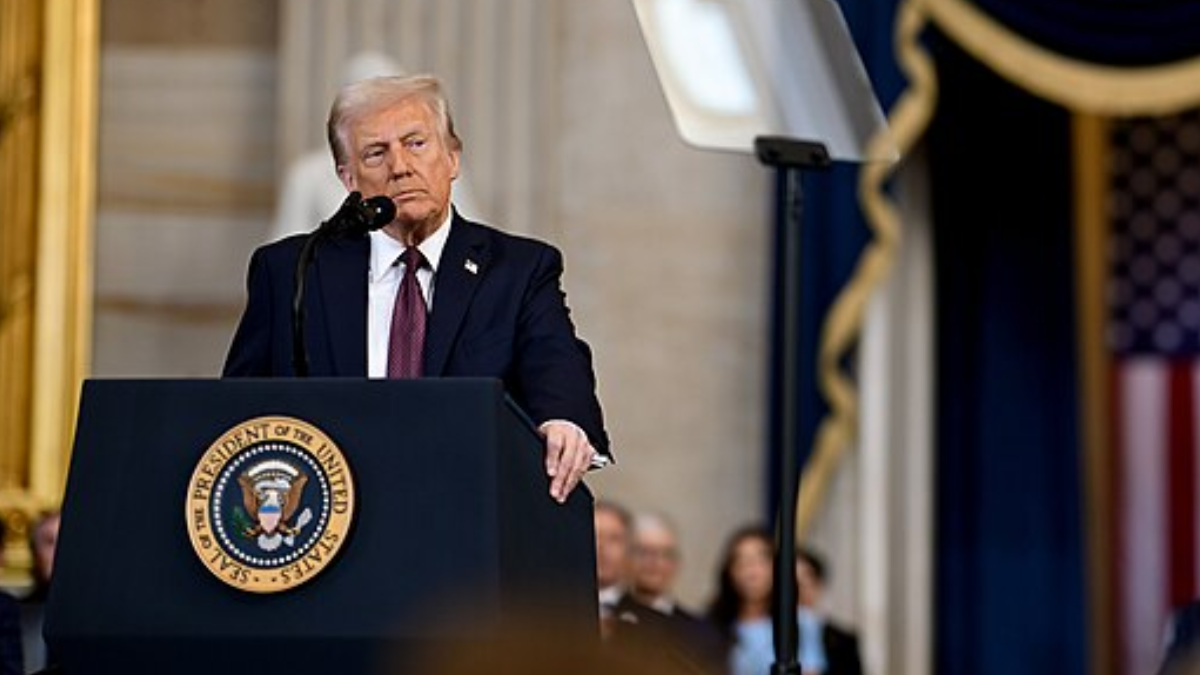
Trump announced on his Truth Social platform that US forces carried out the strike at Nigeria’s request, claiming the militants had been targeting Christians.
Nigerian authorities swiftly acknowledged cooperation with Washington but rejected any framing of the operation along religious lines.
What did Nigeria say about the US anti-terror operation?
Foreign Minister Yusuf Tuggar said Abuja acted jointly with the United States as part of a broader counterterrorism effort, stressing that Nigeria is a multi-religious country focused on protecting lives and property.
Local media reported loud explosions in the village of Jabo in northwest Nigeria on Christmas evening, though it could not independently verify casualties.
Which weapon did US use in the airstrikes in Nigeria?
A US defense official, speaking on condition of anonymity, said the operation involved about a dozen Tomahawk missiles launched from a US Navy warship in the Gulf of Guinea. The official added that the site was too remote for Nigerian forces to reach, making US intervention operationally expedient.
Trump later told Politico that the strike had been planned for an earlier date but was delayed on his orders to coincide with Christmas. “They didn’t think that was coming, but we hit them hard,” he said, claiming militant camps were “decimated.”
US Defense Secretary Pete Hegseth added on X that there was “more to come,” though US officials said no immediate follow-up strike appeared imminent.
Which part of Nigeria did the US airstrikes target?
The airstrike targeted an area increasingly destabilised since 2024 by the Lakurawa sect, a hardline Sunni Islamist group that claims links to the Islamic State.
Originally formed as a vigilante force, Lakurawa has evolved into a jihadist movement imposing strict Islamist rule across hundreds of villages.
Nigeria formally designated the group a terrorist organisation earlier this year. Analysts say the group has also been involved in large-scale cattle theft, with stolen livestock trafficked across the Nigeria-Niger border.
Will the US airstrike be able to eliminate the terror group?
Despite the dramatic show of force, experts doubt the strike will produce rapid results. Cameron Hudson, a former US official specialising in Africa, said a limited cruise missile attack was unlikely to change conditions on the ground.
“It’s not realistic to think that a few missiles are going to change much in the short term,” he said, arguing that any impact would depend on sustained engagement.
How did the situation escalate enough for US airstrikes in Nigeria?
The strike follows heightened diplomatic tension after Trump last month threatened military action unless Nigeria acted to stop what he described as persecution of Christians.
Nigeria, whose 230-million population is roughly split between Muslims and Christians, strongly denies systematic religious persecution. Abuja responded by deepening cooperation with Washington while rejecting sectarian rhetoric.
Security analyst Kabir Adamu said Nigeria’s decision to participate may have been aimed at avoiding a humiliating unilateral strike.
“Trump is pandering to domestic evangelical objectives,” Adamu said, noting the historical sensitivity of sectarian narratives in Nigeria. However, he warned that aligning too closely with Trump’s language risks inflaming sensitive religious fault lines.