


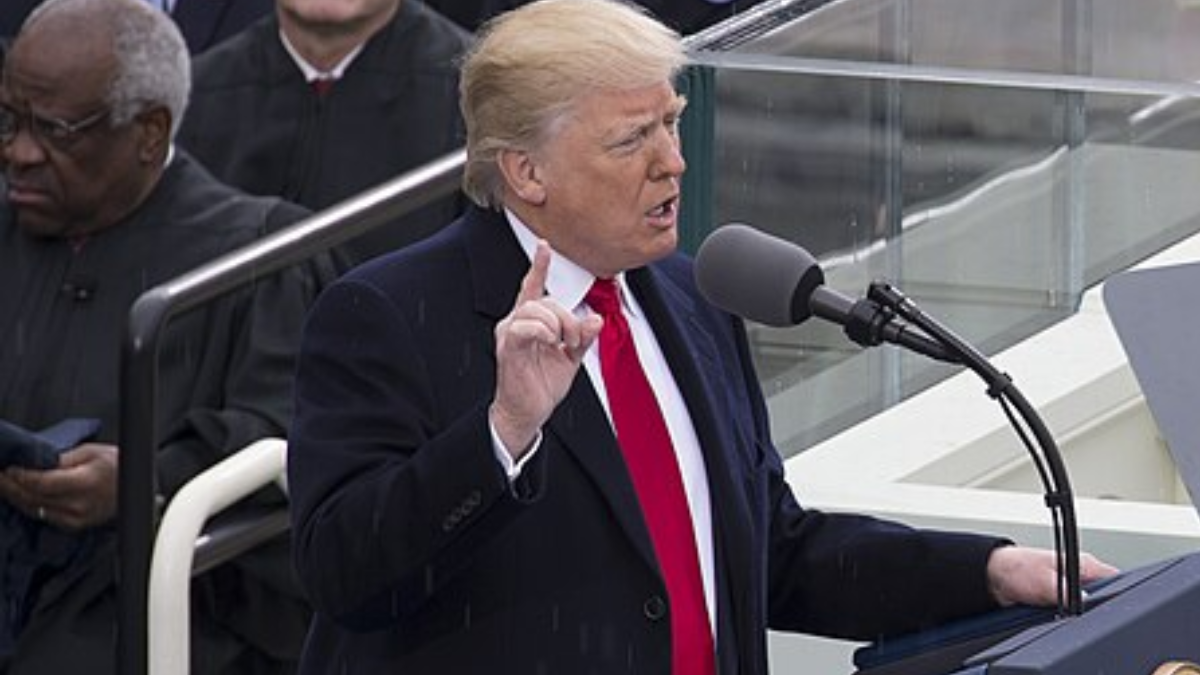
Three days after US President Donald Trump proposed a joint naval mission to ensure freedom of navigation in the Iran-blockaded Hormuz Strait, the response from all other Quad nations, NATO allies, and other states has been lukewarm.
India, about which an American official claimed was in talks with the US on the “coalition of navies” for the Hormuz Strait, has rejected that it had ever held bilateral discussions on the matter with the US.
On Monday (March 16, 2026), Trump once again called on countries, such as China and his European allies, to join the efforts in keeping the Hormuz Strait open for maritime traffic.
He said some nations got much of their energy supplies through the Hormuz Strait, particularly Japan (95%) and China (90%), whereas the US got less than 1% from the Gulf region. “We want them to come and help us with the Strait,” he said
Japan, a Quad member, declined Trump’s proposal, while Australia, another Quad member, said it was not even asked to join Trump’s “coalition of navies.”
Japanese Prime Minister Sanae Takaichi said Monday (March 16) that it was “difficult to answer” on sending Japanese warships to the Hormuz Strait, and that Tokyo was yet to receive any request from the US in this regard.
“We are currently considering what we can do to protect Japanese-related vessels and the lives of their crews within the scope of Japanese law,” Takaichi told parliament.
Earlier, Trump suggested that countries, including Japan, deploy their warships alongside US naval forces to help secure the strategic waterway.
The US President also wanted China’s views on the proposal, ahead of his Beijing visit for a summit meeting with Chinese President Xi Jinping.
He also admonished NATO countries, saying they faced a “very bad” future if they do not help the US in reopening the shipping route via the Hormuz Strait.
On Monday (March 16), Trump said he “wanted to know” China’s stance ahead of his scheduled bilateral meeting with leader Xi Jinping in Paris. Trump chided NATO, saying it faced a “very bad” future if US allies failed to help open the Hormuz.
Meanwhile, India, another Quad member, said it had not yet bilaterally discussed Trump’s proposal. “We (India and the US) have not yet discussed it in a bilateral setting. We are aware of the matter being discussed by several countries,” Ministry of External Affairs spokesperson Randhir Jaiswal said, in response to a question from the media.
However, India made its own arrangement to provide security and escort to cargo vessels that were bound for its ports, deploying three naval warships to the Gulf of Oman just outside the Hormuz Strait since last week.
The Indian warships were already escorting India-bound vessels, including the state-owned oil tankers that were allowed safe passage through the Hormuz Strait by Iran, which has otherwise attacked a few other cargo vessels in the waterbody in recent weeks.
The Indian warships, with their own Intelligence, Surveillance, and Reconnaissance capabilities, besides connectivity through indigenous satellites, maritime patrol aircraft, and drones, were keeping a tight watch on the maritime traffic of India-bound cargo vessels, according to Indian Navy officers in New Delhi.
Indian warships have been carrying out anti-piracy patrols in the Gulf of Aden since late 2008 and have at least two warships deployed in the region at all times since then.
US Energy Secretary Chris Wright told a press conference on Sunday (March 15) that Trump was “reaching out” to other nations to help reopen the Hormuz Strait.
“He named some of the countries — China, Japan, the UK, France, and South Korea. He told me some countries have committed to aiding the United States,” Wright told reporters.
Asked if he could give more names, Wright said, “The world depends on the flows through Hormuz, and most importantly, (for) the Asian nations — Japan, Korea, China, Thailand, India — a meaningful part of their total energy supply comes from the Strait of Hormuz.”
He added, “So the whole world would be united in opening the Strait of Hormuz, and we will have the support of other nations to achieve that objective.”
In response to all the discussions over the reopening of the Hormuz Strait through a joint naval mission led by the US, Iranian Foreign Minister Abbas Araghchi said the waterway was closed “only” to the American and Israeli vessels.
“As a matter of fact, the Strait of Hormuz is open. It is only closed to the tankers and ships belonging to our enemies, to those who are attacking us and our allies. Others are free to pass,” Araghchi told a media house in an interview over the weekend.
“Of course, many of them prefer not to because of their security concerns. This has nothing to do with us. And at the same time, many tankers and ships are passing through the Strait of Hormuz,” he said, but did not mention the three India-bound vessels that were allowed transit over the weekend.