


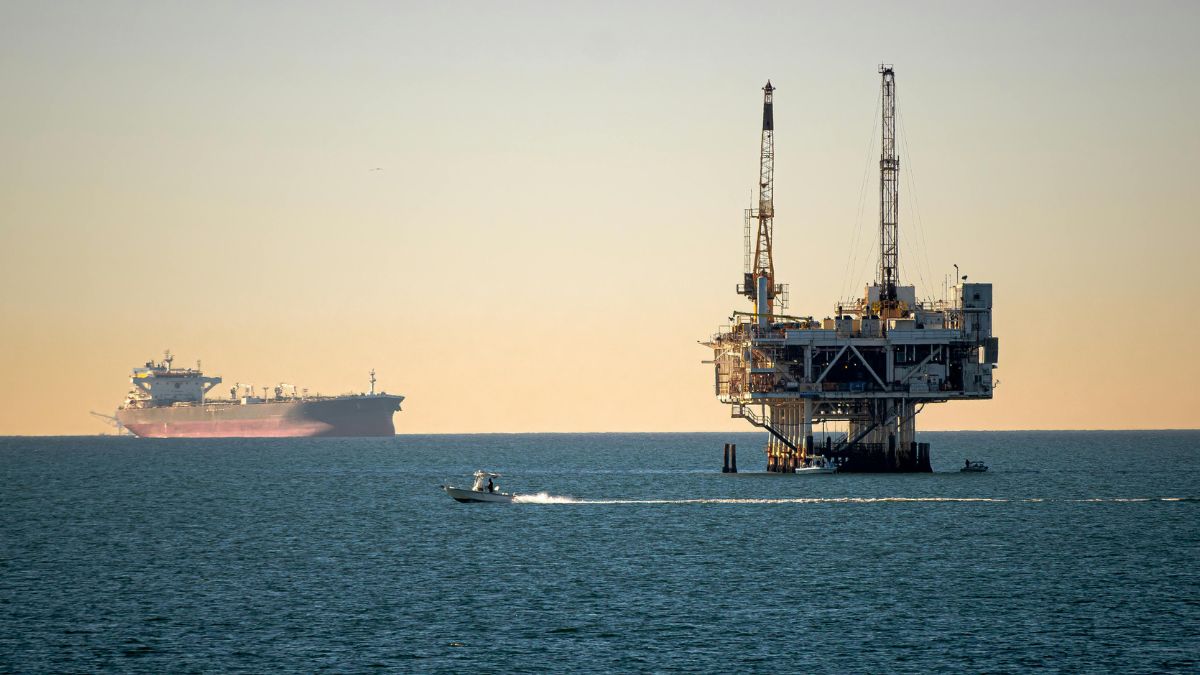
As tensions in West Asia escalate and Iran blocks the crucial Strait of Hormuz, energy security concerns have become not just the talk of the town, but of the world. In the midst of this geopolitical turbulence, Norway is quietly pushing for a major shift in Europe’s Arctic energy policy, one that could allow expanded oil and gas drilling in the Arctic region.
Already Europe’s largest supplier of natural gas, Norway is using the current crisis to lobby the European Union to reconsider its proposed ban on Arctic hydrocarbon exploration. The move comes as the European Commission reviews its Arctic strategy, which since 2021 has committed the EU to working toward an international moratorium on oil and gas drilling in the Arctic.
But with energy supplies from the Middle East increasingly uncertain and Russia’s gas flows sharply reduced since the Ukraine war, Norway sees an opportunity to position itself as Europe’s most reliable long-term energy partner.
Norway’s strategic pitch: Stable energy from a democratic supplier
Norway, though not an EU member, remains deeply integrated with the bloc’s energy market and policy framework. As Brussels conducts public consultations on its updated Arctic strategy, Norwegian politicians, diplomats and energy companies have intensified lobbying efforts, highlighting the country’s reputation as a stable, democratic and predictable energy supplier.
“Against the backdrop of Ukraine and Iran, it may now be even easier to scare European policymakers,” AFP quoted Truls Gulowsen, head of the Norwegian Society for the Conservation of Nature, as saying.
“They’re taking advantage of the situation to apply pressure,” said Anne Karin Saether, project manager at the Norwegian Climate Foundation.
Europe’s growing dependence on Norwegian gas
Norway’s energy importance has surged dramatically since Russia’s invasion of Ukraine in 2022, which forced European nations to drastically cut reliance on Russian gas. Today, Norway supplies nearly one-third of Europe’s natural gas needs, making it the continent’s single largest energy supplier.
Norwegian Energy Minister Terje Aasland said the resources coming from Norway’s Arctic region are already vital for Europe’s energy stability. “The EU and Britain now buy all the oil and gas that Norway produces in the Barents Sea,” Aasland said, arguing that energy prices would have been far higher without Norwegian supplies.
However, he insisted that Norway’s Arctic policy is not directly tied to the current Middle East conflict. “The fact that there is a war in the Middle East today has nothing to do with Norway’s position on oil activities in the North,” he noted.
Norway’s next energy frontier
Despite already being a major exporter, Norway believes vast untapped reserves still exist in its Arctic waters, particularly in the Barents Sea. According to the Norwegian Offshore Directorate, the country’s undiscovered oil and gas resources are estimated at 3.48 billion cubic metres of oil equivalent, with around 60% believed to lie in the Barents Sea.
Currently, Norway operates only two gas fields above the Arctic Circle – Snohvit and Aasta Hansteen. But the government is pushing for expansion.
In January, Oslo proposed opening 70 new exploration blocks, more than half of them located in the Barents Sea. The aim is to significantly boost exploration in what could become Europe’s next major hydrocarbon frontier.
Energy security vs climate concerns
Norway’s push has triggered strong reactions from environmental groups and climate advocates. Many argue that expanding Arctic drilling contradicts global climate goals, especially when the International Energy Agency (IEA) says already discovered oil and gas reserves are sufficient to meet future demand under climate targets.
“Even if the EU abandons its proposed moratorium, it will in any case take several decades before new oil and gas activities in the Arctic begin production,” said Karoline Andaur, head of WWF Norway.
Security risks near Russia
Beyond environmental concerns, the Arctic expansion debate is also intertwined with security issues linked to Russia. The Barents Sea lies close to Russian territory, raising fears that critical energy infrastructure could become a target during geopolitical tensions.
A recent report by the Norwegian Climate Foundation warned that pipelines and offshore installations could be vulnerable to sabotage. “This makes us particularly vulnerable,” Saether said.“With some pretty simple sabotage against gas pipelines up there, Russia could strike not only Norway but Europe as well.”
Will the EU change its Arctic policy?
The European Commission’s revised Arctic strategy is expected to be released in the second half of 2026. For now, Brussels has said its position on an Arctic hydrocarbon moratorium has not changed.
Norwegian consultancy Rystad Energy has even proposed excluding the Barents Sea from the EU’s Arctic definition, arguing that the waters remain ice-free due to the Gulf Stream and are therefore more suitable for energy development. Critics warn such compromises could undermine the EU’s climate commitments.
But as global energy markets face renewed uncertainty, from Russia’s war in Ukraine to the escalating Iran conflict and disruptions in the Strait of Hormuz, Norway’s Arctic ambitions are increasingly gaining attention in European capitals.