


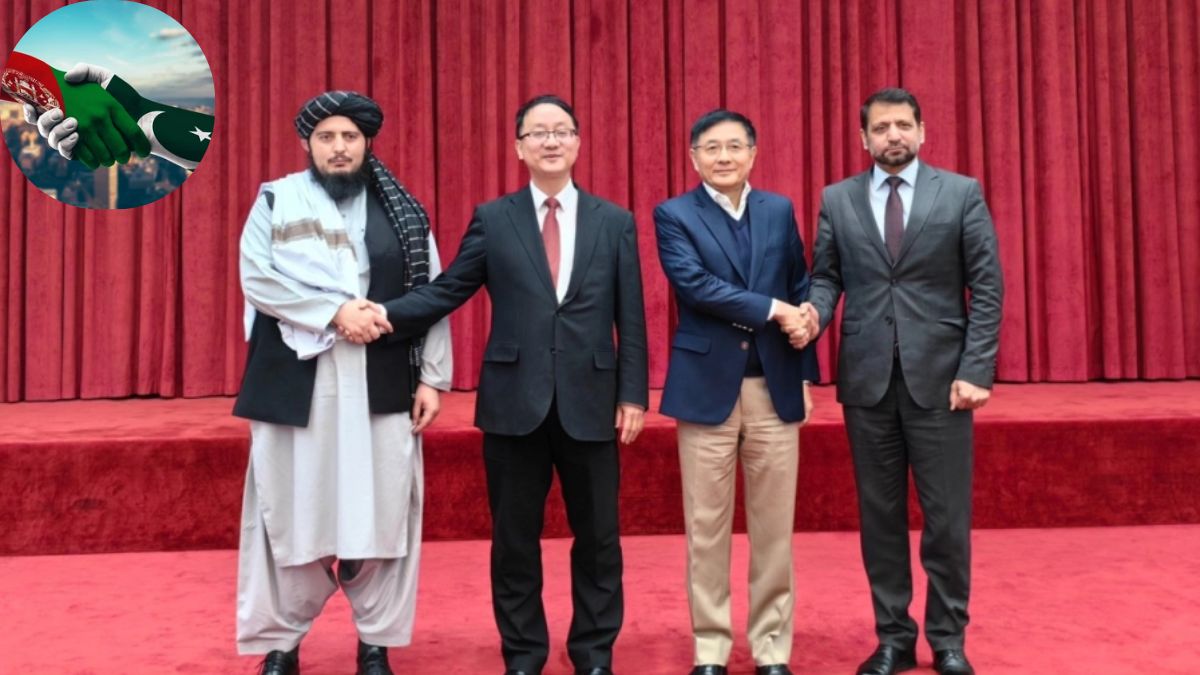
Pakistan and Afghanistan on Wednesday (April 8, 2026) agreed to stop their hostilities on the border and to “explore a comprehensive solution” after weeks of fighting that claimed the lives of several hundred and left many more injured.
China, which mediated a truce, announced that Pakistan and Afghanistan agreed not to escalate their military operations and to resolve their disputes.
The announcement came after the parties to the China-led mediation agreed to keep their dialogue open after seven days of peace talks in Urumqi in the Beijing-occupied East Turkistan (Xinjiang).
“The three parties agreed to explore a comprehensive solution to the issues in the relations between Afghanistan and Pakistan, and clarified the core and priority issues that need to be addressed,” Chinese Foreign Ministry spokesperson Mao Ning said.
They acknowledged that “terrorism is the core issue affecting the relationship,” Mao said during a media briefing in Beijing. Both Pakistan and Afghanistan won’t “take actions that would escalate or complicate the situation,” she said.
While Pakistan did not react to the Chinese announcement, Afghanistan’s Foreign Ministry spokesperson Abdul Qahar Balkhi said the peace talks had concluded.
Balkhi, in an X post, said the talks were held in a “constructive atmosphere,” focusing on bilateral relations, security issues, and regional stability.
He thanked Beijing for mediating and hosting the talks, expressing the hope that the peace process would help strengthen trust, deepen relations, and promote effective cooperation in the region.
The China-hosted talks began in Urumqi last week. The dialogue was an effort to stop the Pakistan-Afghanistan conflict that began in February.
Islamabad had declared an “open war” with Kabul and carried out airstrikes inside its neighbouring nation that left several hundred dead and injured.
The United Nations’ Office for the Coordination of Humanitarian Affairs in Afghanistan said on Tuesday (April 7) that the conflict had displaced 94,000 people overall, while 100,000 people in two Afghan districts near the border have been completely cut off by the fighting since February.
Even during the talks in Urumqi, Afghanistan accused Pakistan of artillery shelling across its border on several occasions. Pakistan, on its part, accuses Afghanistan of providing a haven to Tehrik-e-Taliban Pakistan (TTP), which carried out deadly attacks on its territory. Kabul denies Islamabad’s accusations.
The TTP is a separate outfit but enjoyed ideological links with the Afghan Taliban, which took over Afghanistan in 2021 in an overnight military action as the US withdrew its forces.