


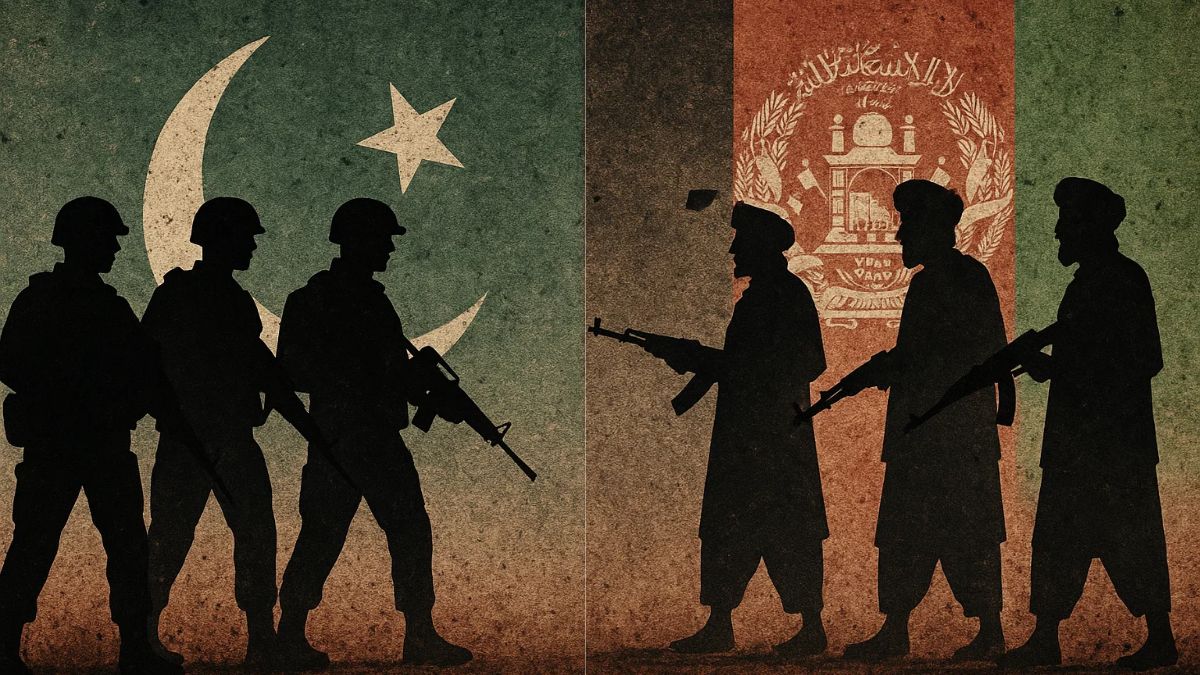
As Afghanistan’s Taliban administration and Pakistan talk again on maintaining a fragile ceasefire following fresh peace talks in Saudi Arabia, Islamabad has called for a “reimagining” of South Asia’s fractured regional order.
The parallel developments underscore a striking irony: Pakistan is calling for dialogue and regionalism while remaining locked in its worst armed confrontation with a neighbouring South Asian state since the Taliban seized Kabul in 2021.
What were the Pak-Afghan talks all about?
Afghan Taliban and Pakistani officials told international media that the latest round of talks was quietly hosted in Saudi Arabia, after earlier negotiations in Qatar and Turkiye failed to deliver a long-term peace deal.
Both sides, they said, reaffirmed their commitment to preserving the ceasefire that has held for several weeks despite heavy fighting in October that killed dozens on both sides. One senior Taliban official said the initiative came from Riyadh and that Kabul was “open to more meetings to see a positive outcome.”
What is the Pak-Afghan conflict?
The conflict, fuelled by Pakistani accusations that Afghan-based militants conduct cross-border attacks, has driven relations to their lowest point in years.
Islamabad claims several recent suicide bombers, including one who killed 12 people in the capital, were Afghan nationals. The Taliban denies harbouring anti-Pakistan militants, insisting its soil is not being used as a launchpad for attacks.
After October’s deadly clashes, both sides agreed to a ceasefire in Doha. A second round in Istanbul collapsed last month after Pakistan pressed for a written Taliban commitment to act against Pakistani militants. Kabul rejected this as unrealistic, arguing it cannot guarantee security inside Pakistan.
What was the call for reimagining South Asia?
Yet even as Islamabad negotiates an armed truce with Kabul, Pakistan’s Deputy Prime Minister and Foreign Minister Ishaq Dar has been urging South Asian nations to rebuild regional cooperation.
Speaking at the Islamabad Conclave 2025 this week, Dar lamented that South Asia has remained “mired in confrontation” since the end of the Cold War, saying the region’s 11-year freeze in dialogue between India and Pakistan is undermining long-term stability.
His remarks came months after India and Pakistan fought a brief but intense 92-hour military flare-up in May, during which both sides exchanged missiles, artillery fire, and scrambled fighter jets.
What did Pakistan’s Dar warn about?
Dar warned that South Asia’s fragile security environment, marked by nuclear-armed neighbours, unresolved disputes, rising nationalism, hybrid warfare, and transnational terrorism, has made cooperation more urgent than ever.
He criticised the paralysis of the South Asian Association for Regional Cooperation (SAARC), which has been inactive for over a decade, saying “artificial obstacles” must be removed to revive economic cooperation.
He also highlighted the region’s shared vulnerabilities: climate shocks, water insecurity, glacial melt, and economic fragility affecting the nearly two billion people who live in South Asia.
With intra-regional trade stuck at just 5 percent and connectivity infrastructure lagging, Dar argued that South Asia remains among the world’s least integrated regions.
What is the irony of Pakistan’s call?
However, even as he spoke of “connectivity replacing divisions,” Pakistan remains entangled in a volatile border conflict with the Taliban regime.
The contradiction between Pakistan’s regional rhetoric and its immediate military reality underscores the deep structural challenges facing South Asia, where overlapping disputes, power rivalries, and historical mistrust persist despite lofty calls for cooperation.
Dar insisted Pakistan rejects bloc politics and instead wants dialogue, diplomacy, and coexistence, adding that as Islamabad prepares to join the UN Security Council in 2025–26, it hopes to contribute to global peace and security.
Yet for South Asia to move beyond conflict, the region’s largest states must first prove capable of resolving their own disputes, including Pakistan’s tense standoff with Afghanistan, which has now become a test case for whether Islamabad’s vision of a more peaceful, interconnected region can realistically be achieved.