


It isn’t just the war on the ground that affects geopolitics but the war of words too seems to have an impact, sometimes so big that it ends up confusing the situation. As the West Asia conflict enters a critical phase, a new and somewhat unexpected player has emerged in the high-stakes diplomatic arena – Pakistan.
Behind the scenes, Islamabad appears to be acting as a communication bridge between Washington and Tehran, even as US President Donald Trump sharpens his rhetoric and signals limited patience for negotiations. However, it is worth mentioning here that Iran has not officially stated that it is engaging in talks.
Pakistan emerging as a backchannel mediator?
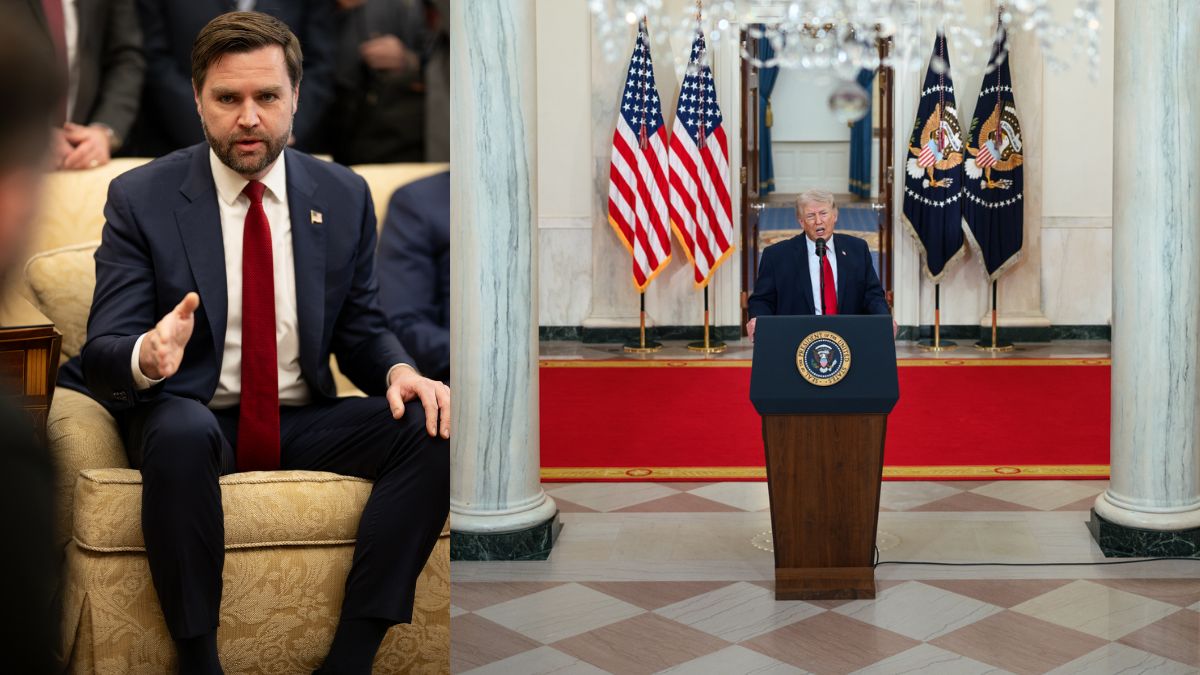
In a significant diplomatic twist, US Vice President JD Vance has reportedly been engaging with intermediaries from Pakistan to communicate with Iran, signalling Islamabad’s growing role in quiet negotiations. Ironically, Pakistan is itself fighting on its western front, as it continues to engage with Afghanistan for several months now.
Pakistan, which has publicly expressed willingness to host dialogue, is now seen as a potential conduit between the US and Iran at a time when direct engagement remains politically sensitive and diplomatically fragile.
At the direction of President Trump, JD Vance is said to have conveyed a clear and uncompromising message to Tehran: time is running out, according to a report in news agency Reuters. Sources told the agency that the US has indicated openness to a ceasefire, but only if specific American demands are met.
Alongside this, Iran has been warned of escalating pressure on its infrastructure if it fails to engage meaningfully. Trump has doubled down publicly as well, warning of intensified strikes on Iranian targets, even as he keeps a narrow window open for diplomacy.
Why is JD Vance taking the lead in negotiations?
Vance’s growing role in the negotiations reflects both strategic calculation and political positioning. Seen as a potential successor to Trump, Vance has historically been cautious about prolonged US military involvement overseas. Alongside Vance, key figures like Secretary of State Marco Rubio and envoys Steve Witkoff and Jared Kushner remain part of the negotiation architecture, indicating that Washington is keeping multiple channels active.
While Iran has officially denied direct negotiations with the US, reports suggest that Tehran may be more open to engaging with JD Vance than other American officials. This preference reportedly stems from a deep trust deficit following the collapse of earlier talks and subsequent military escalation.
However, Iran’s position remains cautious as it tries to balance openness to dialogue with strong resistance to external pressure. On Wednesday (April 1, 2026), President Masoud Pezeshkian wrote an open letter to the Americans, explaining how Iran has never initiated a war and asked them to look beyond the “machinery of misinformation”.
What’s the current situation?
The urgency behind these diplomatic manoeuvres is clear. The war has entered its fifth week, with no decisive outcome. Global energy markets remain volatile due to Strait of Hormuz disruptions and the risk of a wider regional spillover continues to grow. Trump has suggested that the conflict could end within two to three weeks.
A significant portion of Pezeshkian’s letter revisits the long and fraught history between Iran and the United States. He pointed to the 1953 coup, US support for the Shah, backing of Iraq during the Iran-Iraq war, and decades of sanctions as key sources of mistrust.
Despite these pressures, he argued, Iran has not only endured but grown stronger, citing advances in education, technology, and healthcare since the Islamic Revolution.