


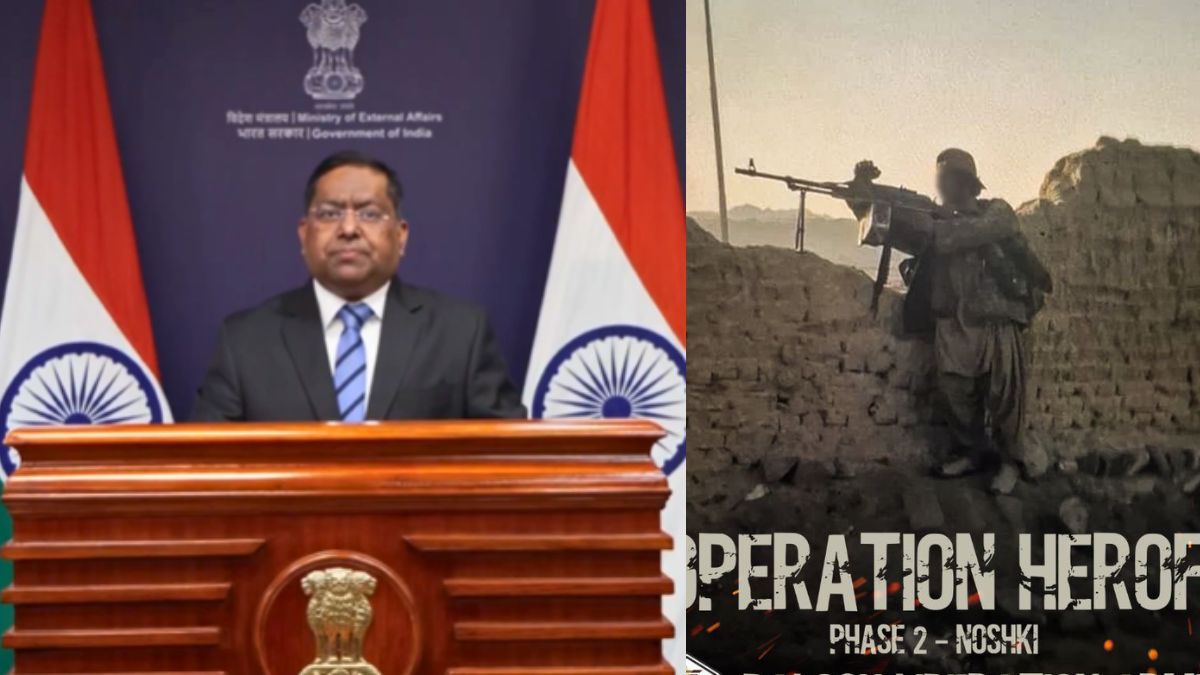
Pakistan recently faced large-scale, coordinated attacks across cities and towns in the Balochistan province, and once again pointed fingers at India for the same. However, India has firmly rejected what it called Pakistan’s “baseless and predictable” attempt to link New Delhi to the latest wave of deadly attacks in the province.
As Pakistan grapples with one of the worst security breakdowns in its largest province in years, the Ministry of External Affairs said Islamabad was resorting to its familiar tactic of blaming India to divert attention from deep-rooted internal failures and an intensifying insurgency.
Responding to allegations from Pakistan’s military and Interior Minister Mohsin Naqvi, the Ministry of External Affairs lambasted Pakistan over its maneuvers, and advised it to focus on addressing long-standing demands of the people in Balochistan.
Pakistan vs Balochistan: What is unfolding on the ground?
Pakistan’s resource-rich southwestern province, bordering Iran and Afghanistan, has witnessed coordinated separatist assaults across Quetta, Gwadar, Mastung and Noshki, killing dozens of civilians and security personnel.
According to Pakistani officials, attackers, some dressed as ordinary civilians, stormed hospitals, schools, markets and banks, opening fire indiscriminately and using civilians as human shields. Balochistan Chief Minister Sarfraz Bugti said at least 17 law enforcement personnel and 31 civilians were killed.
Pakistan’s military, on the other hand, claimed nearly 130 separatists were killed over two days of counter-operations.
Pakistan using India as a convenient scapegoat?
In a sharp statement issued on X, New Delhi categorically rejected Pakistan’s claims, calling them “nothing but an effort to deflect global scrutiny.” Foreign Ministry spokesperson Randhir Jaiswal urged Islamabad to confront the political and humanitarian crisis in Balochistan instead of “parroting frivolous claims after every violent incident.”
“Pakistan’s record of suppression, brutality and human rights violations in Balochistan is well known,” Jaiswal said, adding that the unrest stems from decades of neglect, enforced disappearances and heavy-handed military action.
The response came after Pakistan’s Interior Minister Mohsin Naqvi alleged India’s role behind the recent attacks in the Balochistan province.
What do recent attacks reveal about Pakistan’s internal security failures?
Despite Pakistani authorities claiming prior intelligence and “pre-operations,” insurgents managed near-simultaneous strikes on security installations, attempted suicide bombings, and temporary road blockades in urban centres, underscoring major gaps in Pakistan’s counterinsurgency posture.
Pakistan’s Defence Minister Khawaja Asif admitted that female attackers were involved in at least two incidents, and that separatists are increasingly targeting civilians, labourers and low-income communities.
Who claimed responsibility for the violence?
The Baloch Liberation Army (BLA) claimed responsibility for the coordinated attacks, describing them as part of an operation dubbed “Herof” (Black Storm). The group said it targeted Pakistani security forces across the province, claiming heavy casualties and captures.
Balochistan, Pakistan’s largest yet poorest province, has been gripped by a decades-long separatist movement driven by demands for greater autonomy and control over vast natural resources. Analysts say Islamabad’s reliance on militarised responses, rather than political reconciliation, has only fuelled resentment and violence.