


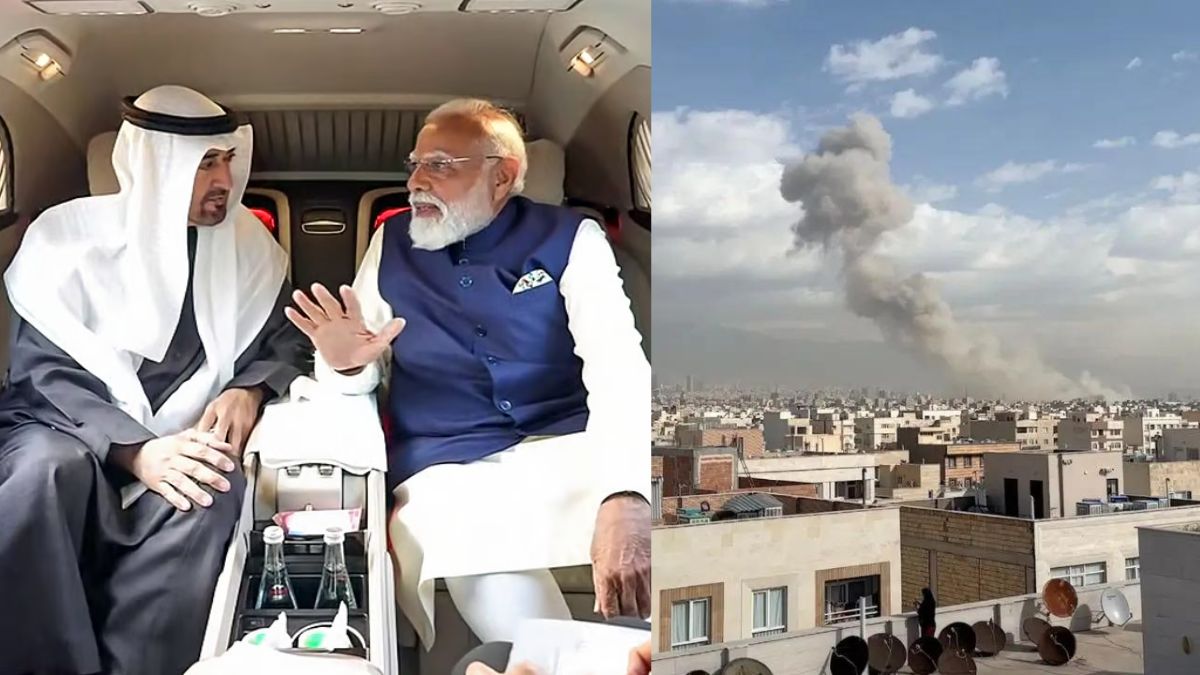
As the US-Israel-Iran war intensifies across West Asia, Prime Minister Narendra Modi held a crucial phone call with UAE President Sheikh Mohamed bin Zayed Al Nahyan, signalling India’s growing diplomatic engagement in the fast-escalating crisis. PM strongly condemned attacks on the UAE during the call.
According to the Ministry of External Affairs (MEA), the Prime Minister condemned attacks on the UAE, especially those targeting civilian infrastructure and causing loss of innocent lives. Both leaders also stressed the importance of ensuring safe navigation through the Strait of Hormuz, a critical global energy corridor now under threat due to the conflict.
They agreed to work together for the early restoration of peace, security and stability in the region.
PM Modi-UAE President call
Both the leaders stressed on the need to ensure safe and uninterrupted navigation through the Strait of Hormuz amid the escalating conflict in West Asia. In a post on X, PM Modi said, “Spoke with my brother Sheikh Mohamed bin Zayed Al Nahyan, President of the UAE and conveyed advance Eid greetings. We discussed the current situation in West Asia.”
“Reiterated India’s strong condemnation of all attacks on the UAE that have resulted in loss of innocent lives and damage to civilian infrastructure,” PM Modi added, noting that both sides will continue to work together for the early restoration of peace, security and stability in the region.
Iran expands strikes across Gulf
The diplomatic outreach comes as Iran steps up missile and drone attacks across the Gulf, targeting countries hosting US military assets. In a major escalation, Qatar reported an aerial attack involving 14 ballistic missiles and multiple drones, 13 missiles and all drones were intercepted, according to Qatari authorities.
One missile landed in an uninhabited area, causing no casualties. However, falling debris from intercepted threats triggered a fire in an industrial zone, which emergency teams later brought under control.
Qatar has accused Iran of targeting civilian infrastructure, including residential areas and even Hamad International Airport in Doha, contradicting Tehran’s claims of avoiding non-military targets.
Strait of Hormuz and regional security in focus
The escalating attacks have renewed global concerns over the Strait of Hormuz, through which a significant portion of the world’s oil supply passes. India, heavily dependent on energy imports, has maintained naval presence in the region for anti-piracy and security operations, engaged in ongoing discussions with Iran and other stakeholders to ensure safe passage of Indian vessels.
MEA officials confirmed that Indian ships continue to move through the region, though under heightened vigilance.
Indians return home amid flight disruptions
With airspace restrictions and rising security risks, thousands of Indians in the Gulf are scrambling to return home. In a major evacuation effort, around 1,600 Indians returned from Qatar on five Qatar Airways flights in a single day.
“Qatar Airways operated five flights to India today. These included two flights to Delhi and one each to Mumbai, Kochi and Thiruvananthapuram,” said the Indian embassy in Qatar on Tuesday. It added that the services remain limited and non-scheduled due to the ongoing conflict.
The Indian Embassy in Doha is facilitating transit visas via Saudi Arabia for those opting for land routes, Emergency consular services, including passport issuance. Indians have been advised to strictly follow local safety guidelines amid ongoing hostilities.
Evacuations from Iran continue via land routes
India’s efforts are not limited to the Gulf. The Indian Embassy in Tehran remains operational, assisting citizens, especially students, seeking to exit Iran. Advisories have been issued for safe transit via land borders into Armenia and Azerbaijan, as many attempt to leave conflict zones.
Moreover, India is closely tracking developments across multiple fronts. 25 Indian nationals were repatriated in the last 24 hours from ports and affected regions, over 125 calls and 450 emails handled by emergency control rooms. No congestion has been reported at Indian ports, with cargo operations continuing normally.
Meanwhile, LPG shipments carried by vessels like Shivalik and Nanda Devi are being processed as scheduled. India is also evaluating requests from neighbouring countries for fuel supplies, balancing regional demand with domestic needs.