


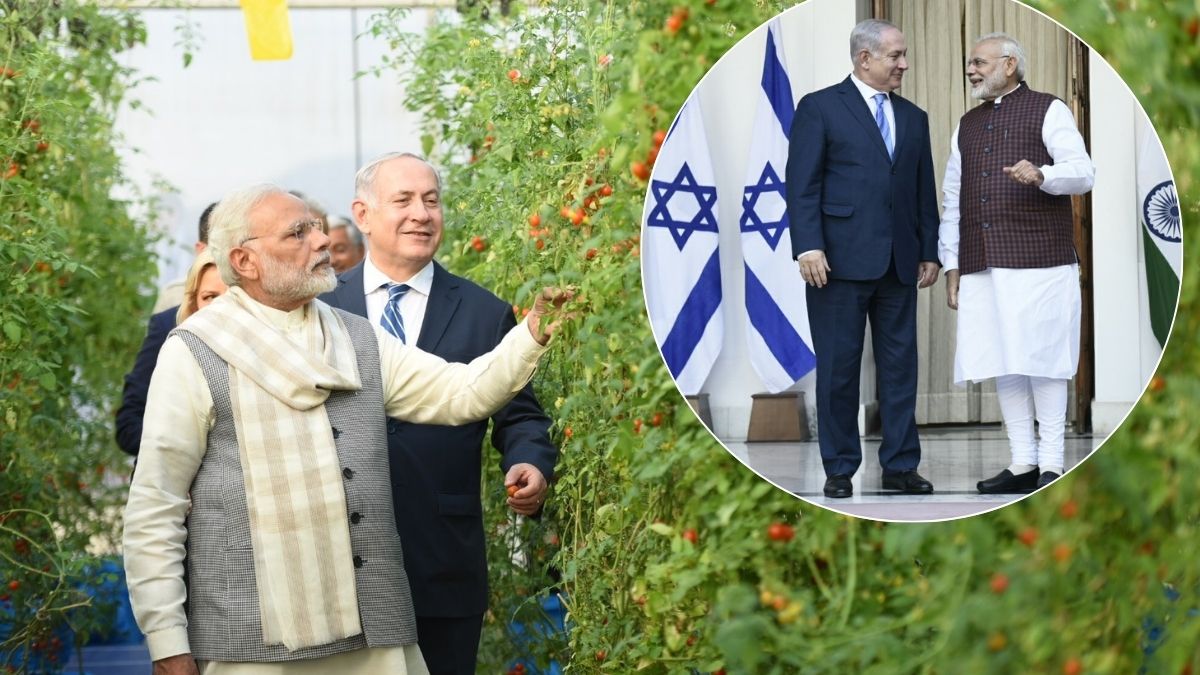
Prime Minister Narendra Modi will arrive in Israel on Wednesday (February 25, 2026) for what Israeli Prime Minister Benjamin Netanyahu has described as a “historic” visit, one expected to deliver fresh momentum across defence, innovation, diplomacy and regional strategy.
The visit, PM Modi’s second to Israel after his landmark 2017 trip, comes at a sensitive geopolitical moment in West Asia and amid renewed global focus on strategic alignments, emerging technologies and regional security frameworks. He had then became the first-ever Indian Prime Minister to visit Israel.
PM Modi Israel visit: Why is Netanyahu calling the visit ‘historic’?
Ahead of the visit, Netanyahu described Modi as a “dear friend” and hailed the relationship as a “powerful alliance between two global leaders.” “This week, expression will be given to the special relationship that has been forged over recent years between Israel and the global power that is India,” Netanyahu said at the opening of a Cabinet meeting.
He emphasised the personal rapport between the two leaders, noting their frequent phone conversations and reciprocal visits. The Israeli PM further added, “We are partners in innovation, security and a shared strategic vision. Together, we are building an axis of nations committed to stability and progress.”
What is on the agenda for PM Modi on Israel visit?
According to the Israeli Prime Minister’s Office, PM Modi will address the Knesset (Israeli Parliament), attend a high-level innovation event in Jerusalem, and visit Yad Vashem, Israel’s official memorial to Holocaust victims, alongside Netanyahu. Bilateral discussions are expected to focus on strengthening economic, diplomatic and security cooperation.
The Israeli Embassy further shared that defence, innovation and strategic collaboration will form the core pillars of engagement.
Netanyahu indicated that both sides will take “a series of decisions” aimed at tightening cooperation between their governments.
How central are AI and emerging technologies?
Technology is expected to be a defining theme of the visit. Netanyahu highlighted cooperation in high-tech sectors, including artificial intelligence and quantum computing. “I say AI and quantum not because they are the future, but because they are the present. We want to be among the world’s leading nations in these fields,” he said.
India and Israel have steadily expanded collaboration in cybersecurity, fintech, semiconductors and defence technology. The upcoming innovation event in Jerusalem is expected to showcase joint ventures and next-generation partnerships.
What is Netanyahu’s ‘Hexagon’ regional vision?
In one of the most striking remarks ahead of the visit, Netanyahu outlined a broader geopolitical vision, a “hexagon” of alliances involving India, Arab nations, African countries, Mediterranean states such as Greece and Cyprus, and select Asian partners.
“The intention here is to create an axis of nations that see eye-to-eye on the reality, challenges and goals against the radical axes,” the Israeli PM said, referring to both what he described as the radical Shia axis and an emerging radical Sunni axis.
While details remain limited, the remarks signal Israel’s interest in integrating India more deeply into a wider strategic framework in the Middle East and beyond.
PM Modi’s Israel visit after Board of Peace meeting
The Prime Minister’s visit comes shortly after the Board of Peace meeting last week on February 19, an initiative that originated from US President Donald Trump’s 20-point Gaza ceasefire proposal endorsed by the UN Security Council and has since evolved into a broader diplomatic platform.
India has maintained a calibrated position in West Asia, balancing ties with Israel, Arab nations and Iran while emphasising peace, dialogue and stability.
The India-Israel partnership, formalised in 1992 and elevated significantly over the past decade, spans defence procurement, counter-terrorism cooperation, agriculture, water management and innovation ecosystems.
How did PM Modi respond to Netanyahu?
Responding to Netanyahu’s remarks, Modi said India “deeply values the enduring friendship with Israel, built on trust, innovation and a shared commitment to peace and progress.” He expressed agreement on the strength and diversity of bilateral ties and said he looked forward to discussions during the visit.
The exchange underscores the strong personal diplomacy that has characterised India–Israel relations in recent years.
Why does his visit matter now?
As global alignments shift and technology reshapes geopolitics, the Modi–Netanyahu engagement signals continuity and expansion in a partnership that has grown increasingly strategic. From defence collaboration to AI leadership and regional coordination, the visit is expected to reinforce India’s role as a major Asian power engaging deeply in West Asian security and innovation networks.
Nearly a decade after Modi became the first Indian Prime Minister to visit Israel, his return visit reflects how far the relationship has evolved, from cautious engagement to open strategic partnership, and from Namaste to Shalom.