


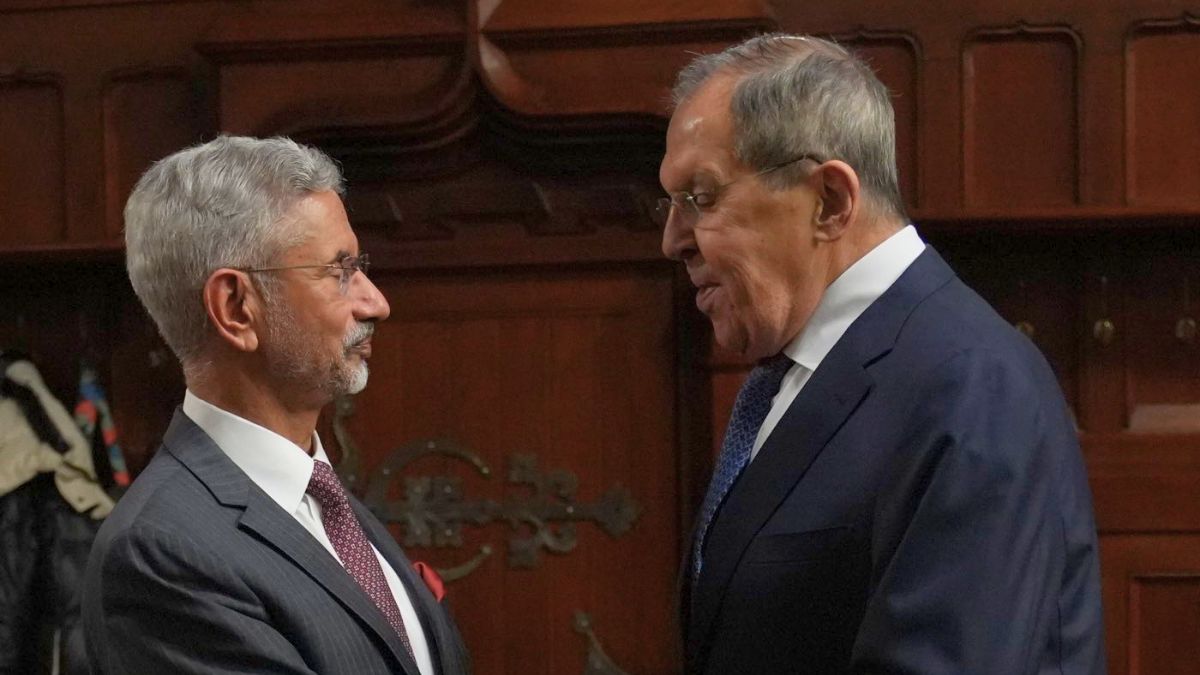
As the war in West Asia rattles global energy markets, India and Russia have stepped up diplomatic engagement, with External Affairs Minister S Jaishankar holding talks with Russian Foreign Minister Sergey Lavrov on the escalating regional crisis and its global implications.
The conversation comes at a time when India has increased crude oil imports from Russia after receiving a 30-day waiver from the United States, allowing New Delhi to temporarily continue purchases amid fears of supply disruptions from the Middle East. The US recently announced a 30-day waiver for India to purchase Russian oil, amid the ongoing war.
Adding to the geopolitical debate over energy security, Russia’s ambassador to India has strongly defended New Delhi’s decision, saying the country does not need permission from anyone to secure its energy needs.
Jaishankar and Lavrov discuss West Asia war
Jaishankar confirmed the discussion with Lavrov in a post on X, describing it as a “good telecon” in which both sides exchanged views on the worsening situation in West Asia.
“A good telecon with Foreign Minister Sergey Lavrov of Russia. Shared our assessments on the West Asia conflict and related diplomatic efforts. Also took stock of our bilateral cooperation agenda,” Jaishankar wrote.
According to Russia’s Foreign Ministry, the two diplomats also discussed the conflict surrounding Iran and the broader regional instability, emphasising the need for swift de-escalation and a diplomatic solution. Both sides highlighted the potential role of multilateral groupings such as BRICS and the Shanghai Cooperation Organisation (SCO) in supporting efforts to stabilise the region and promote a sustainable settlement.
India turns to Russian oil after US waiver
The talks came as India increased imports of Russian crude following a 30-day waiver granted by the United States, allowing New Delhi to continue purchases amid extraordinary market conditions. The temporary exemption was reportedly granted due to concerns that India’s energy supply could be disrupted by the ongoing conflict in West Asia.
The crisis has also affected maritime traffic through the Strait of Hormuz, one of the most critical energy chokepoints in the world.
Nearly 20% of global oil and liquefied natural gas shipments pass through the narrow waterway, linking the Persian Gulf to the Gulf of Oman. Any disruption there can have immediate consequences for global oil prices and supply chains, especially for major energy importers like India.
Russian envoy defends India’s energy choices
Amid global scrutiny over Russian oil purchases, Russia’s Ambassador to India Denis Alipov strongly backed New Delhi’s position. Speaking to Russian broadcaster RT India, Alipov said India has the sovereign right to secure its energy needs without seeking approval from other countries.
“I think a reply has already been given by Indian officials. EAM Jaishankar responded to it — India doesn’t require any permission from anybody,” the envoy said. Alipov also criticised attempts to remove Russian oil from global markets, warning that such efforts could lead to serious supply shortages at a time when the global energy system is already under pressure.
“You cannot exclude Russian oil from the global basket. There will be an acute shortage of supply. Whether India buys Russian oil or someone else, Russian oil will be there anyway,” he said. He added that continued energy cooperation with Moscow would ultimately benefit India.
Global energy markets on edge
The diplomatic exchanges come as oil markets remain highly volatile due to the escalating West Asia conflict. The war involving Iran has triggered disruptions to tanker movements in the Gulf, fears of a blockade or slowdown in the Strait of Hormuz, sharp fluctuations in oil and gas prices.
Countries heavily dependent on imported energy, including India, China and many European economies, are now scrambling to secure alternative supply routes and partners. For India, Russia has become one of the largest sources of discounted crude oil since the Ukraine war began in 2022, helping cushion domestic fuel prices.
India expands diplomatic outreach on West Asia
Alongside the conversation with Lavrov, Jaishankar also held discussions with European Union foreign policy chief Kaja Kallas and French Foreign Minister Jean-Noël Barrot. The calls focused on the wider geopolitical and economic repercussions of the West Asia conflict, particularly its impact on global energy markets and regional stability.
India has repeatedly called for dialogue, diplomacy and de-escalation, warning that prolonged instability in the Middle East could have serious consequences for global trade, energy security and international peace.