


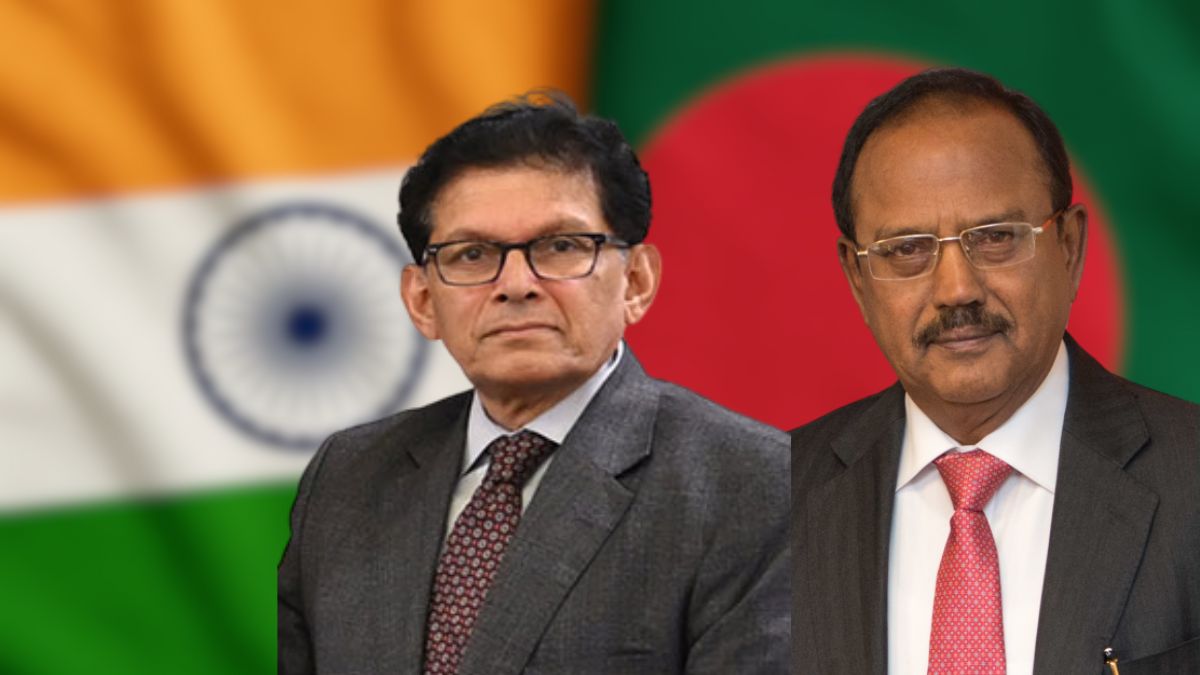
In the first structured bilateral engagement since the change of government in Dhaka, India and Bangladesh held a high-level National Security Adviser (NSA)-level dialogue in New Delhi, signalling cautious optimism for the future of one of South Asia’s most critical partnerships.
Bangladesh’s NSA, Khalilur Rahman, travelled to New Delhi for talks with India’s NSA Ajit Doval, a move senior Indian officials are describing as a “positive signal” at a time when Bangladesh is navigating deep domestic political turbulence.
The invitation itself, they noted, underscores Dhaka’s willingness to maintain channels of communication despite heightened internal sensitivities.
What does the timing of the talks signal?
Setting the tone for the meeting, Rahman began his public remarks by condemning the recent blast at Delhi’s Red Fort, signalling alignment on counterterrorism priorities even as both sides confront rapidly evolving security challenges.
The talks took place days after Bangladesh’s International Crimes Tribunal (ICT) issued a death sentence for former prime minister Sheikh Hasina, a verdict that has triggered intense political debate inside the country.
For New Delhi, the timing of the meeting offered a strategic opening to stabilise relations with a key neighbour amid shifting political currents and broader regional uncertainty.
What did the two NSAs discuss?
According to officials familiar with the discussions, the two NSAs “raised their concerns in clear terms” while reaffirming commitments aimed at keeping bilateral ties steady.
India expressed concerns over the safety of minorities in Bangladesh, an issue that has resurfaced due to the recent political unrest. Dhaka assured New Delhi that it is committed to protecting all communities and preserving communal harmony.
What was India’s specific message on Hasina?
India also conveyed the importance of adhering to the election timeline announced by the interim government led by Muhammad Yunus, stressing that predictable political processes are crucial for regional stability.
On the contentious issue of Sheikh Hasina’s conviction, New Delhi reiterated that its stance remains strictly within “the diplomatic ambit.”
Government sources emphasised that any future extradition-related matters will be handled through a transparent and legal process, free of political interference, an important clarification amid speculation over the former prime minister’s fate.
What were the security issues raised?
Security cooperation dominated the agenda. Both sides discussed stepped-up joint maritime patrols, enhanced intelligence sharing, mechanisms to monitor terror financing, and shared concerns over Rohingya-linked extremist networks.
Despite domestic pressure from Jamat-aligned groups, Dhaka reportedly expressed “full willingness” to deepen security collaboration across agencies.
Why cross-border radicalisation was raised?
India highlighted growing threats from cross-border radicalisation, particularly from Chittagong and Sylhet into Assam and West Bengal.
Officials pointed to increased illegal crossings in the aftermath of Hasina’s exit and intelligence warnings that terror operatives may attempt to infiltrate India through vulnerable border points.
The instability in neighbouring Myanmar has added to these worries, raising fears that Rohingya refugee camps could emerge as recruitment hubs for extremist groups.
In conclusion, New Delhi conveyed a clear message: India remains committed to supporting Bangladesh across political, economic, and security spheres, ensuring that the bilateral relationship continues to function within a “stable and structured framework” despite the complexities unfolding in the region.