


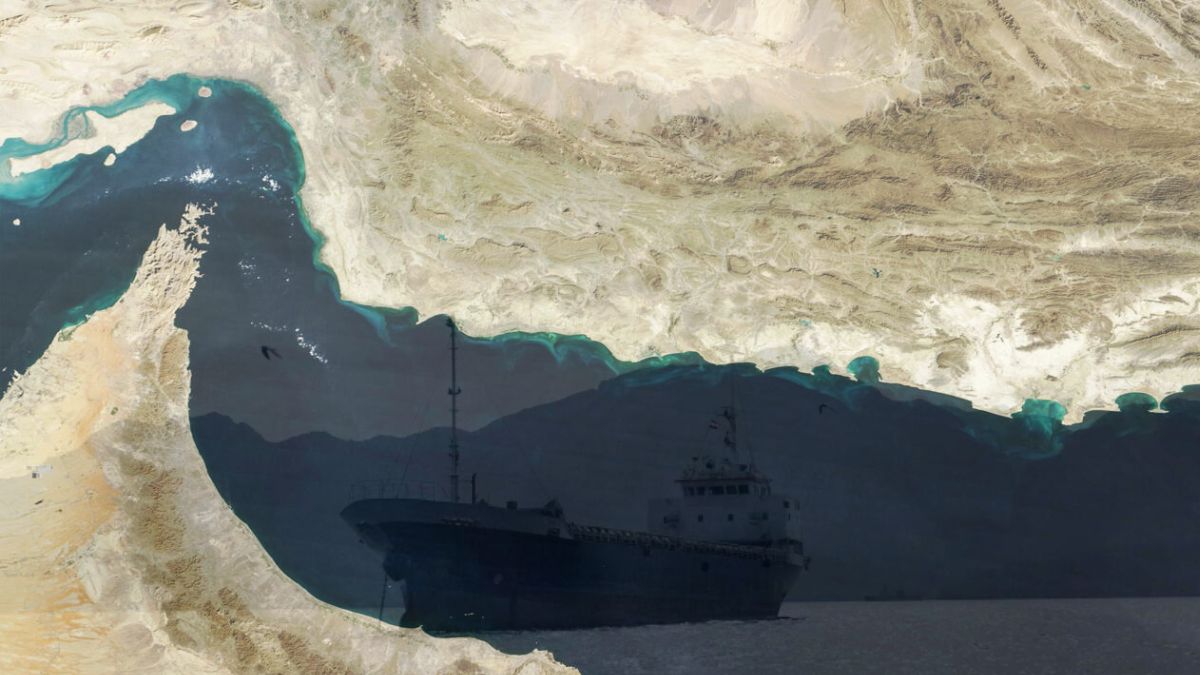
Iran on Saturday (April 11, 2026) denied the US Central Command’s claims of two of its warships clearing mines in the Strait of Hormuz after the US military formation made a claim in this regard.
“The claim by the CENTCOM commander regarding the approach and entry of American vessels into the Strait of Hormuz is strongly denied,” the Iranian military’s Khatam al-Anbiya Central Headquarters spokesperson said.
The US CENTCOM had claimed that its USS Frank E. Peterson and USS Michael Murphy, both destroyers, had transited the Strait of Hormuz and operated in the Gulf region as part of a broader mission to clear sea mines laid by Iran.
“The initiative for the passage and movement of any vessel is in the hands of the Armed Forces of the Islamic Republic of Iran,” the Iranian military spokesperson said in response.
Iran’s Islamic Revolutionary Guards Corps (IRGC), on its part, threatened “a strong response” to any warships passing through the Strait of Hormuz.
The CENTCOM had earlier said, “The Strait of Hormuz is an international sea passage and an essential trade corridor that supports regional and global economic prosperity. Additional US forces, including underwater drones, will join the clearance effort in the coming days.”
Iran Unable to Locate Mines: US
Meanwhile, US officials claimed Iran was unable to locate some sea mines it had laid in the Strait of Hormuz, complicating efforts to open the maritime passage for cargo traffic.
A British media house reported that the US officials also claimed Iran may not have recorded all the locations of the sea mines they laid as part of the blockade of the Strait of Hormuz during the last 45 days of the West Asian war.
The US officials claimed their warships and underwater drones were carrying on the efforts to clear the Strait of Hormuz of the sea mines to get it ready for unimpeded cargo traffic.
As part of their peace talks in Islamabad on Friday (April 10) and Saturday (April 11), the US had laid conditions for the opening of the Strait of Hormuz for traffic before the West Asia war could end. The talks ultimately failed on Sunday (April 12).
US to Blockade Iran After Talks Failed
On Monday (April 13), the US military said it would blockade all maritime traffic to and from Iranian ports. The announcement came after the Islamabad peace talks ended on Sunday (April 12) without an agreement.
The US CENTCOM said the American blockade would begin on Monday (April 13) and it would be “enforced impartially against vessels of all nations entering or departing Iranian ports and coastal areas, including all Iranian ports on the Arabian Gulf and Gulf of Oman.”
All non-Iranian vessels transiting the Strait of Hormuz would not be impeded, CENTCOM said, adding that it would issue a notice in this regard for the attention of the commercial mariners.
On Sunday (April 12), US President Donald Trump said the US Navy would intercept all cargo vessels in international waters that paid a toll to Iran to gain safe passage through the Strait of Hormuz.
“No one who pays an illegal toll will have safe passage on the high seas,” Trump wrote on social media, adding, “any Iranian who fires at us, or at peaceful vessels, will be BLOWN To HELL.”
Supertankers Exit Strait of Hormuz
On Saturday (April 11), three supertankers carrying oil passed through the Strait of Hormuz, shipping data showed. These were among the first vessels to exit the Gulf since the West Asian war began on February 28.
A Liberia-flagged Very Large Crude Carrier (VLCC), Serifos, and China-flagged VLCCs, Cospearl Lake and He Rong Hai, entered and exited the “Hormuz Trial Anchorage” that bypasses Iran’s Larak Island, the LSEG data showed.