


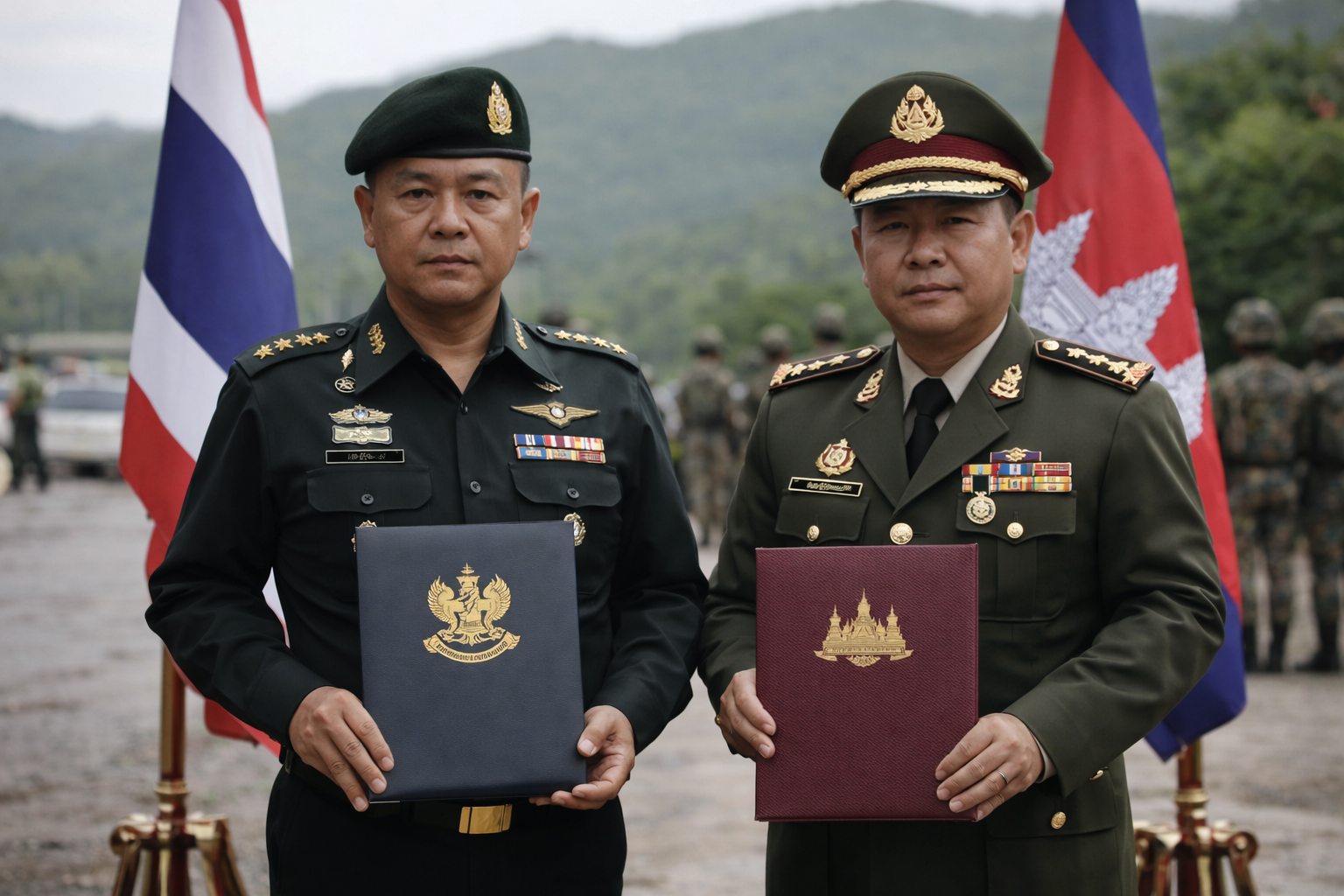
A ceasefire between Thailand and Cambodia came into force on December 28, bringing a pause to nearly three weeks of intense fighting along their shared border that displaced close to one million people.
The truce was agreed during a special meeting between the defence ministers of the two countries and took effect at noon local time, according to a joint statement.
What does the ceasefire agreement include?
Under the agreement, both sides have committed to freezing front lines at their current positions, banning the deployment of reinforcements, and facilitating the return of civilians displaced by the fighting.
The statement said that once the ceasefire holds for 72 hours, Thailand will release 18 Cambodian soldiers who have been in custody since July. Both sides also agreed to cooperate on the removal of landmines in affected border areas.
How was the ceasefire reached?
The breakthrough followed several days of talks between Bangkok and Phnom Penh, with diplomatic encouragement from China and the United States. Unlike the previous ceasefire attempt earlier this year, United States President Donald Trump did not play a direct role, though the US State Department was involved in the discussions.
China has also been engaged diplomatically, urging restraint and dialogue between the two neighbours.
What have Thai and Cambodian officials said?
Thailand’s Defence Minister Natthaphon Narkphanit described the agreement as a test of the “other party’s sincerity”.
“Should the ceasefire fail to materialise or be violated, Thailand retains its legitimate right to self-defence under international law,” he said.
Cambodia’s defence ministry said the agreement prioritised humanitarian concerns, particularly the return of displaced civilians and demining efforts.
How has the international community responded?
United Nations High Commissioner for Human Rights Volker Türk said he hoped the ceasefire would “pave the way” for lasting peace. A spokesperson for the European Union urged both sides to implement the agreement in “good faith”.
Why did previous ceasefire efforts fail?
The current truce follows the collapse of an earlier ceasefire brokered in July, which was later formalised as the “Kuala Lumpur Peace Accords” after mediation by Malaysia and President Trump.
That agreement required both sides to withdraw heavy weapons from the disputed region and establish an interim observer mechanism. Thailand suspended the accord in November after its troops were injured by landmines, with Bangkok saying the security situation had not improved.
Renewed clashes erupted earlier this month, with both sides accusing each other of initiating hostilities.
What has been the cost of the fighting?
Clashes throughout December included artillery exchanges and Thai air strikes inside Cambodia. Thailand’s air force said it targeted fortified Cambodian positions after civilians had evacuated, while Cambodia accused Thailand of indiscriminate attacks on civilian areas.
Cambodia has suffered significant military losses and damage to equipment, while Thailand has also reported injuries to its troops. Nationalist sentiment has risen in both countries, complicating prospects for a durable settlement.
What is the underlying cause of the conflict?
The dispute stems from a long-running disagreement over the border, dating back more than a century. Tensions escalated earlier this year after a symbolic incident at a disputed temple site.
A Cambodian soldier was killed in clashes in May, followed by five days of heavy fighting in July that left dozens of soldiers and civilians dead and displaced thousands.
Whether the current ceasefire holds will depend largely on political will in both capitals, as well as the effective implementation of confidence-building measures agreed under the latest truce.