


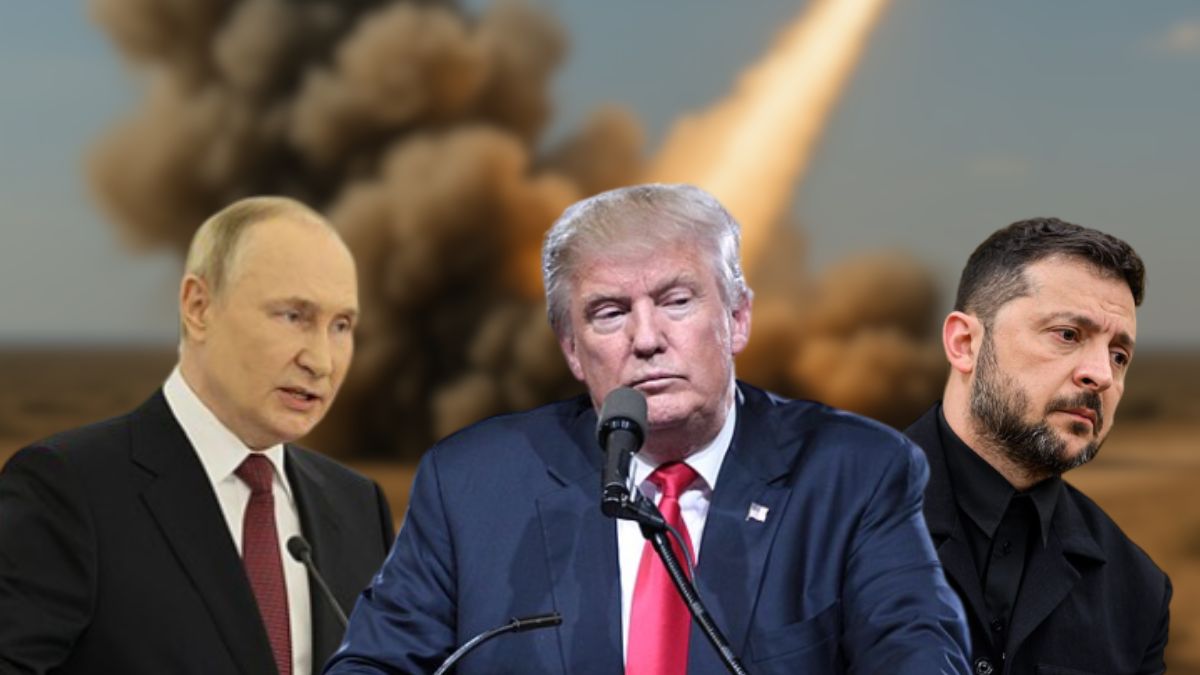
Story: In a fast-moving diplomatic offensive, senior figures in Donald Trump’s emerging foreign-policy team — Secretary of State Marco Rubio, Special Envoy Steve Witkoff, and Trump’s son-in-law Jared Kushner — held closed-door meetings with Ukrainian negotiators in Florida over the weekend.
The talks mark the most ambitious attempt yet by the former US president to position himself as the central broker of a peace deal to end Russia’s war in Ukraine.
Why is this development significant?
The discussions come at a moment of intense political upheaval in Kyiv. Just hours before the Florida meeting, President Volodymyr Zelenskyy announced the resignation of his influential chief of staff Andrii Yermak, who until now had led Ukraine’s back-channel negotiations with Washington.
Yermak’s departure followed an anti-corruption raid on his residence amid an investigation into a $100 million embezzlement scandal in Ukraine’s energy sector — a revelation that has deepened domestic pressure on Zelenskyy.
Who are in the Ukrainian delegation?
The Ukrainian delegation now leading the talks includes Armed Forces chief Andrii Hnatov, Foreign Minister Andrii Sybiha, and National Security Council head Rustem Umerov.
Their immediate task: renegotiating Trump’s controversial 28-point peace framework, originally drafted during earlier contacts between Washington and Moscow.
Why did the initial plan draw criticism?
The initial version drew sharp criticism for leaning heavily toward Russian demands, including requiring Ukraine to cede the Donbas region, limiting Ukrainian military strength, blocking NATO membership, and forcing nationwide elections within 100 days.
US and Ukrainian negotiators say the plan has undergone major revisions in recent Geneva talks, but key sticking points remain, most notably Ukraine’s territorial integrity and its long-term security relationship with NATO.
Sources indicate the Florida meeting failed to produce a finalised draft, and substantial gaps remain in core political and military provisions.
How is Trump speeding up the plan?
Despite the unresolved issues, Trump has accelerated the diplomatic timeline. He announced that Witkoff — and possibly Kushner — would fly to Moscow this week for direct talks with Russian President Vladimir Putin.
Both men, business executives steeped in real-estate dealmaking, previously played central roles in crafting the 20-point proposal that helped broker a ceasefire in Gaza, a track record Trump hopes to replicate.
What is happening on the battlefield?
Meanwhile, the war continues to exact a heavy toll. On Saturday (November 29), Russian missile and drone attacks struck Kyiv and surrounding areas, killing at least three civilians and injuring dozens.
How is Zelenskyy intensifying diplomacy?
Amid the intensifying diplomacy, Zelenskyy has embarked on a critical visit to Paris. The Ukrainian leader, accompanied by First Lady Olena Zelenska, is expected to meet French President Emmanuel Macron at the Élysée Palace on Monday (December 1).
The leaders are set to discuss conditions for a “just and lasting peace,” aligning their positions with the ongoing US-led negotiations and assessing the evolving American plan.
Paris and Kyiv will also review security guarantees for Ukraine under the proposed “Coalition of the Willing,” an emerging European initiative designed to provide long-term defense support.
With Trump’s envoys shuttling between Florida and Moscow, and Zelenskyy consulting European partners in Paris, the coming days could prove pivotal. Whether these diplomatic maneuvers yield a breakthrough or deepen geopolitical fractures may determine the next phase of the Russia-Ukraine war.