


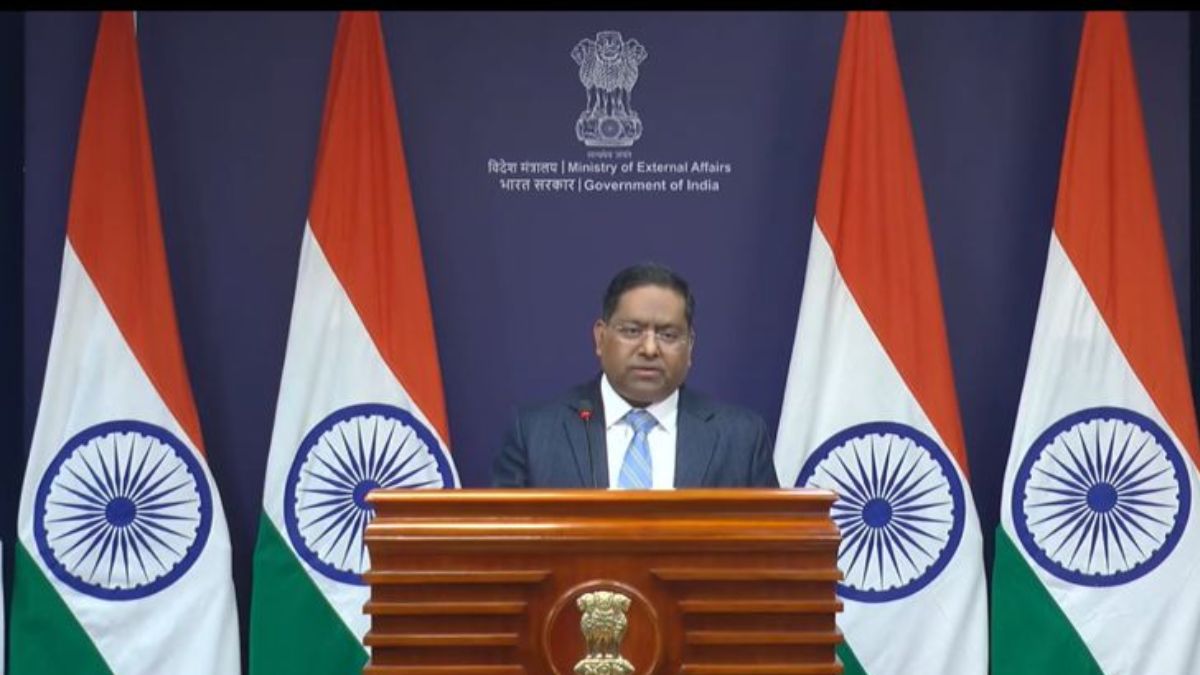
In a strong diplomatic signal against cross-border extremism, India on Monday (December 8, 2025) welcomed the United Kingdom’s sweeping actions targeting Khalistan-linked extremist elements, calling the move a boost to the global fight against terrorism and transnational crime.
The endorsement from New Delhi follows London’s decision to impose sanctions on an individual and an organisation allegedly linked to terrorist activities in India.
The sanctions include a complete asset freeze and strict compliance restrictions intended to choke the financial pipelines that sustain extremist groups.
How did India react to the UK’s action against terrorism?
Ministry of External Affairs (MEA) spokesperson Randhir Jaiswal said India “appreciates” the UK’s decisive steps, noting that such measures help curb illicit financial flows and dismantle entrenched criminal networks operating across borders.
He stressed that extremist organisations pose a threat not only to India and the UK but to global security at large.
“These steps strengthen the global fight against terrorism and extremism,” Jaiswal said at a press briefing. “Individuals and entities engaged in such activities endanger people across the world, not just in India or the UK.”
How was India looking forward to counterterrorism cooperation?
Jaiswal added that New Delhi looks forward to closer cooperation with London in counter-terrorism and security efforts, underlining the growing convergence between the two nations amid rising concerns over the misuse of foreign soil by anti-India groups.
The UK’s latest action targets Gurpreet Singh Rehal, who the British government says has been involved in supporting organisations linked to terrorism.
Who is Rehal and what are his terror activities?
According to HM Treasury, Rehal allegedly assisted banned Khalistan-oriented groups like Babbar Khalsa and Babbar Akali Lehar by promoting extremist propaganda, facilitating recruitment, and helping provide financial services and military-grade equipment.
Babbar Khalsa International (BKI), one of the groups referenced, is a long-standing pro-Khalistan militant organisation responsible for armed attacks, assassinations, and bombings in pursuit of carving out a separate Sikh state.
How would the UK sanctions impact terror groups?
Under the new sanctions, all funds and economic resources owned or controlled by Rehal in the UK have been frozen.
No British citizen or company may access his assets or offer him financial services without explicit government approval.
He has also been disqualified from serving as a company director or engaging in any corporate management activities.
India views the UK’s action as a critical step in tightening the global net around extremist financing, an area where New Delhi has consistently urged stronger international cooperation.