


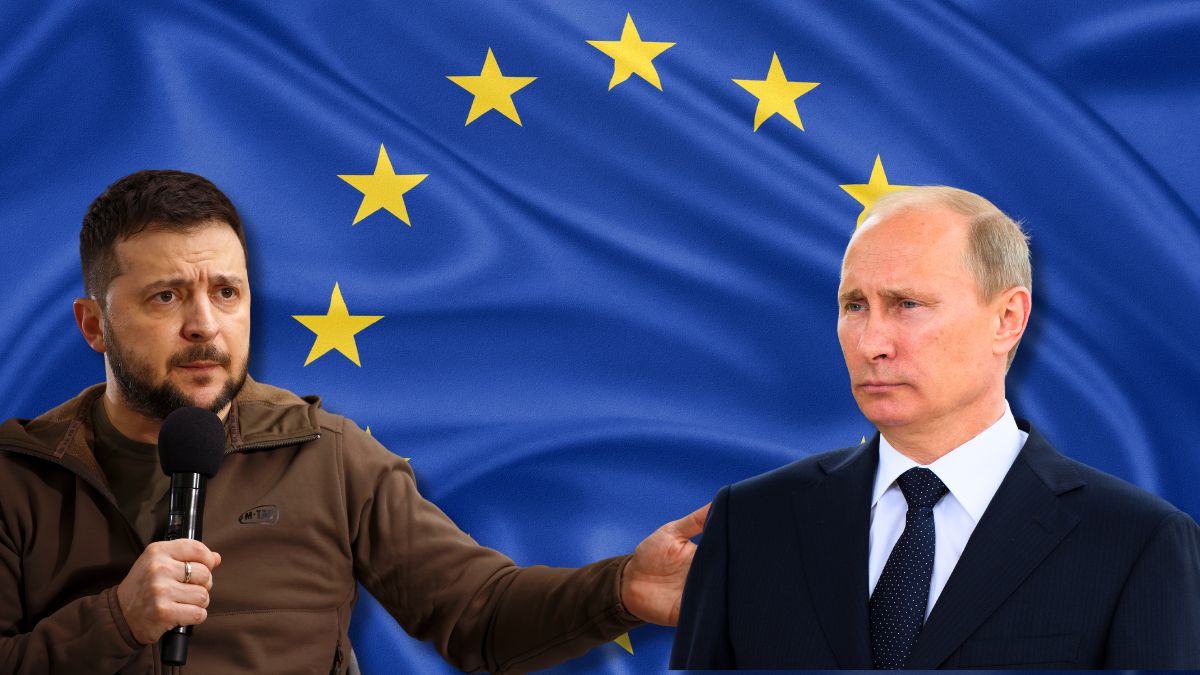
It will soon be four years to the Russia-Ukraine war, and still any hopes of a peaceful end to it seem far away. Even as the water lingers on, Kyiv has secured a big win against Moscow as European leaders have come together to offer €90 billion to Ukraine, so that it can upgrade and keep up its defences.
European Union leaders on Friday (December 19, 2025) have agreed to borrow funds to provide Ukraine with a €90 billion interest-free loan over the next two years, helping Kyiv sustain its defence against Russia. However, the move avoids using frozen Russian assets, a proposal that had divided member states.
The European Commission will continue exploring a separate plan to use immobilised Russian assets for reparations, but that option remains stalled, largely due to Belgium’s concerns. Most of the €210 billion in frozen Russian funds are held there.
Ukrainian President Volodymyr Zelenskiy, who also took part in the summit, has requested the bloc to agree to use the Russian assets to provide the funds he said would allow Ukraine to keep fighting. “The decision now on the table is one of the clearest and most morally justified decisions that could ever be made,” he said.
Europe approves a big loan for Ukraine
“Today we approved a decision to provide €90 billion to Ukraine,” said EU summit chair Antonio Costa after overnight talks in Brussels. “As a matter of urgency, we will provide a loan backed by the EU budget.” German Chancellor Friedrich Merz called it a “good news for Ukraine and bad news for Russia”, adding this is what they had intended to do.
The borrowing plan initially faced opposition from Hungary’s Russia-friendly Prime Minister Viktor Orban, but Hungary, Slovakia and the Czech Republic agreed to let it proceed on condition it does not affect them financially.
Belgian Prime Minister Bart De Wever shared that there were many questions on the Reparations Loan, we had to go to Plan B. “Rationality has prevailed,” he told a news conference, further noting that “the EU has avoided chaos and division and remained united,” he said.
What about the frozen Russian assets?
For now, they will remain frozen until Moscow pays reparations. Most of the total 210 billion euros worth of Russian assets are held in Belgium. If Moscow decides to make the reparations, Ukraine could use the funds to repay the loan. Brussels warned that without EU support, Ukraine would run out of money by mid-2026.
The alternative plan to use Russian assets proved too complex, with Belgium seeking guarantees against financial and legal risks.
Many EU leaders, who were part of the summit, said it was imperative they find a solution to keep Ukraine financed and fighting for the next two years. They were also keen to show European countries’ strength and resolve after U.S. President Donald Trump last week called them “weak”. “We just can’t afford to fail,” EU foreign policy chief Kaja Kallas said.