


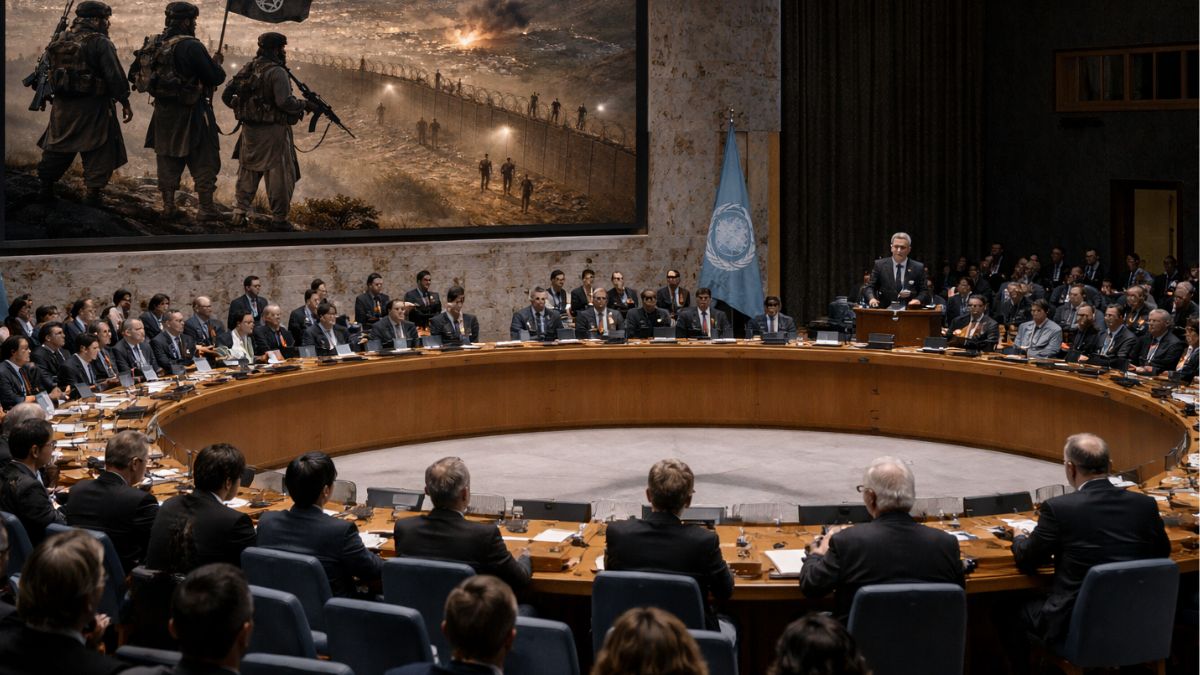
The threat posed by ISIS-Khorasan (ISIS-K) continues to persist in Afghanistan, and beyond, despite an overall improvement in internal security.
The UN Security Council’s Analytical Support and Sanctions Monitoring Team has warned that this raises concerns about regional stability and cross-border terrorism.
What has the UN warned about Afghanistan?
In its 16th report assessing the security situation in Afghanistan, the UN monitoring team said that while the country has witnessed a measure of internal peace and domestic stability, serious security threats remain.
These gains, the report noted, have benefited some segments of society more than others and do not negate the continued presence of extremist groups.
How has ISIS-K gained support inside Afghanistan?
The report stated that the Afghan de facto authorities have “suppressed, although not eliminated” ISIS-K, also known as ISIL-KP or Daesh-Khorasan Province.
Despite sustained countermeasures, the group continues to “pose serious threats within Afghanistan, regionally and beyond,” underlining the risk of terrorist spillover into neighboring countries.
Why did the UN report warn about TTP?
The UN assessment also highlighted the activities of the Tehrik-e Taliban Pakistan (TTP), noting that the group has carried out “numerous high-profile attacks in Pakistan from Afghan soil.”
These attacks have contributed to heightened tensions along the Afghanistan-Pakistan border, resulting in loss of life and disruptions to trade and cross-border movement.
Why has the UN report rejected Afghanistan’s claims?
Rejecting claims by the Afghan de facto authorities, the report said assertions that no terrorist groups operate in or from Afghan territory “are not credible,” reinforcing long-standing concerns raised by regional states and international observers.
At the same time, the report acknowledged areas of progress under strong centralized control. One of the most notable developments has been a sharp decline of more than 95% in poppy cultivation in 2025 compared to its peak in 2022.
Economically, Afghanistan remains “relatively resilient, but weak,” the report said, adding that ambitious infrastructure plans face challenges due to forced returns of Afghan nationals from neighboring countries and the impact of recent natural disasters.