


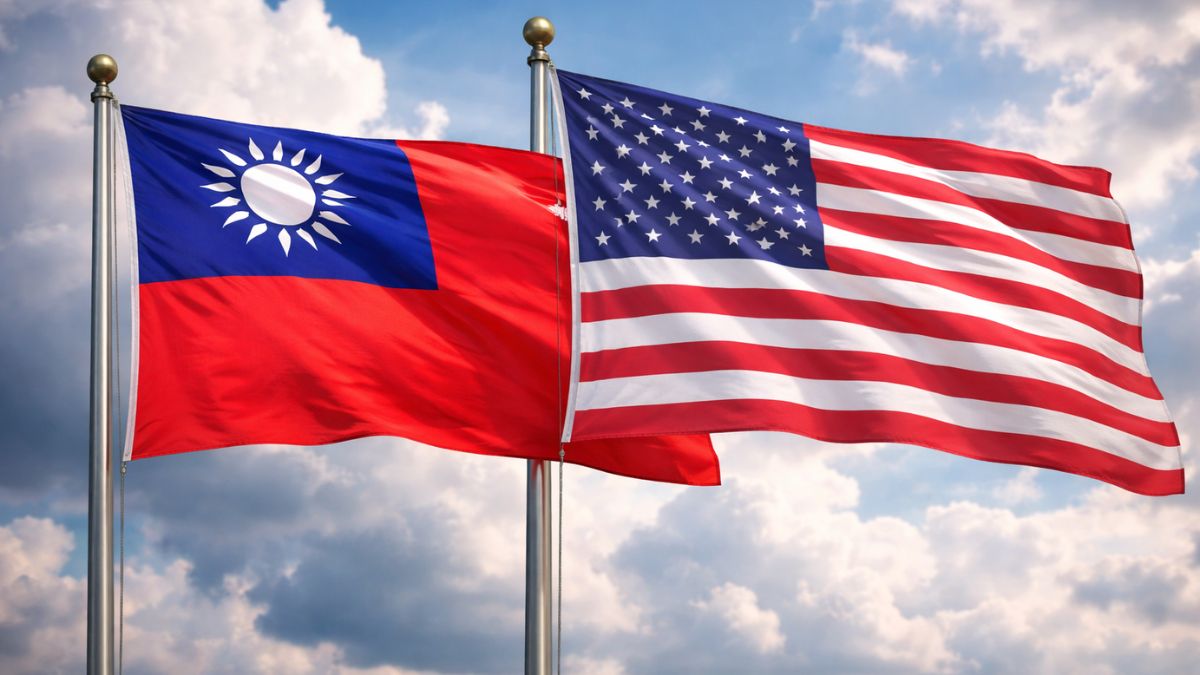
The United States has unveiled a record-breaking $11.1 billion arms sales package for Taiwan, the largest ever approved for the self-ruled island, triggering sharp reactions from Beijing and strong reassurances from Taipei as tensions in the Taiwan Strait continue to rise.
Announced on Wednesday (December 17, 2025) by the Trump administration, the package marks the second Taiwan arms sale under President Donald Trump’s current term and underscores Washington’s intent to strengthen Taiwan’s defences amid growing Chinese military pressure.
The proposed sale, which requires approval from the US Congress, enjoys broad bipartisan backing and is being framed by US officials as critical to maintaining regional stability.
What did Taiwan say about the US arms sales?
According to Taiwan’s defence ministry, the package includes eight major categories of weapons and equipment, notably HIMARS rocket artillery systems, howitzers, Javelin anti-tank missiles, Altius loitering munition drones, and spare parts for existing platforms.
The ministry said the deal would significantly enhance Taiwan’s deterrence posture, particularly through asymmetric warfare capabilities designed to counter a much larger adversary.
“The United States continues to assist Taiwan in maintaining sufficient self-defence capabilities and in rapidly building strong deterrent power,” Taiwan’s defence ministry said, adding that such capabilities form the foundation of peace and stability in the region.
What was the Pentagon’s view on the support for Taiwan?
The Pentagon echoed this view, stating that the arms sales serve US national and security interests by supporting Taiwan’s military modernisation and helping the island maintain a “credible defensive capability.”
Washington has increasingly encouraged Taipei to invest in mobile, survivable, and cost-effective systems, such as drones and precision rockets, rather than traditional big-ticket platforms.
How did Taiwan’s president welcome the US move?
Taiwan’s presidential office welcomed the announcement. Spokesperson Karen Kuo said President Lai Ching-te’s administration would press ahead with defence reforms, strengthen whole-of-society resilience, and “safeguard peace through strength.”
Last month, Lai announced a $40 billion supplementary defence budget covering 2026 to 2033, stressing that there was “no room for compromise on national security.”
How did China react angrily to the US support for Taiwan?
China reacted angrily, condemning the arms package as a serious provocation. The foreign ministry said the deal “severely undermines peace and stability in the Taiwan Strait” and accused Washington of emboldening pro-independence forces in Taiwan.
“By aiding ‘Taiwan independence’ with weapons, the US side will only bring fire upon itself,” foreign ministry spokesperson Guo Jiakun said, warning that attempts to use Taiwan to contain China were “absolutely doomed to fail.”
China’s defence ministry went further, saying the People’s Liberation Army (PLA) would intensify training and combat readiness and take “forceful measures” to safeguard sovereignty and territorial integrity.
While it did not specify what actions might follow, Beijing said it had lodged “stern representations” with Washington and demanded an immediate halt to arms sales to Taiwan.
What were the analysts’ views on the US support for Taiwan?
Despite Beijing’s warnings, analysts say the systems included in the package could play a decisive role in deterring or slowing any invasion attempt.
Rupert Hammond-Chambers, president of the US-Taiwan Business Council, noted that HIMARS, used effectively by Ukraine against Russian forces, could be crucial in disrupting an advancing Chinese force.
He described the notifications as a record in US security assistance to Taiwan, driven by both the China threat and US demands that partners take greater responsibility for their own defence.
How does this US support indicate deepening Taiwan ties?
The announcement followed an unpublicised visit by Taiwan’s Foreign Minister Lin Chia-lung to the Washington area last week, according to sources, though neither side disclosed details of the meetings.
The United States formally recognises Beijing but maintains unofficial ties with Taiwan and is legally bound under the Taiwan Relations Act to provide the island with defensive weapons.
What could be the fallout of the latest US move on Taiwan?
While President Trump’s dealmaking style and a planned meeting with Chinese President Xi Jinping next year have raised regional concerns, US officials say arms sales to Taiwan are set to exceed levels seen during Trump’s first term.
China, which claims Taiwan as its territory, has not ruled out using force to achieve unification, a position firmly rejected by Taiwan’s democratically elected government, which insists the island’s future can only be decided by its people.