


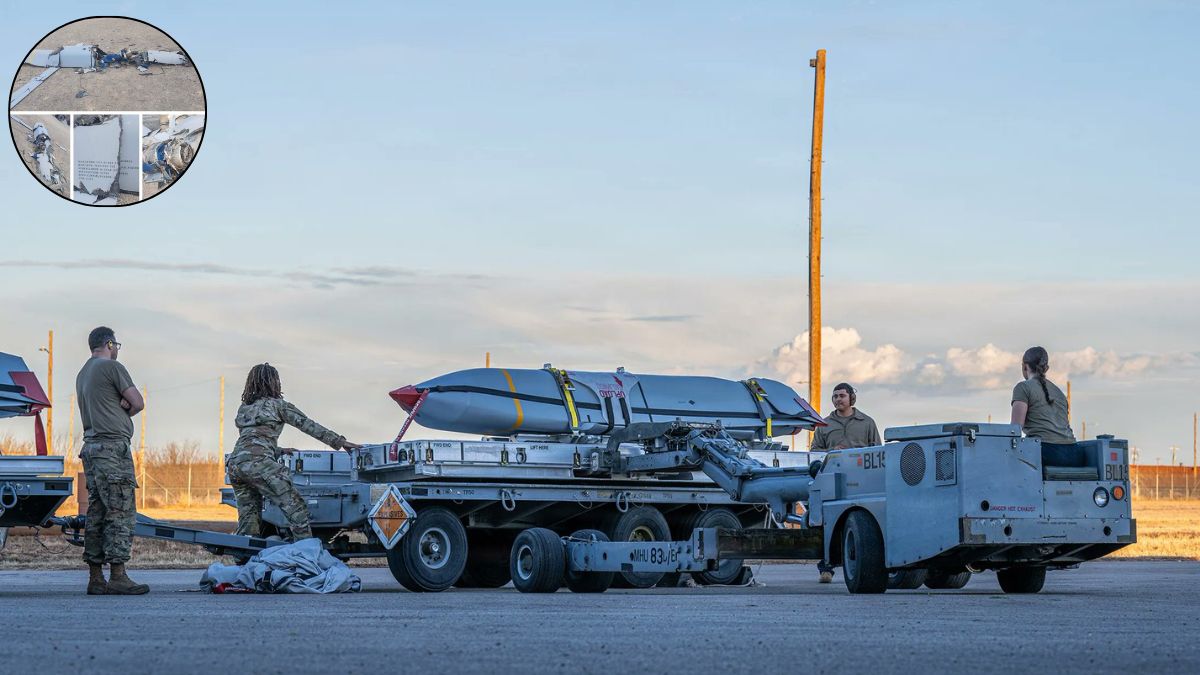
The US is planning to intensify its war against Iran by committing nearly the entire inventory of its JASSM-ER stealth cruise missiles, drawing them from stockpiles around the globe.
JASSM-ER, which stands for Joint Air-Surface Missile – Extended Range, can fly over 600 miles and is designed to hit targets from a safer distance, avoiding enemy air defence systems.
President Donald Trump’s Administration had in March 2026 ordered the pooling of the JASSM-ER inventory from other regions where the stockpiles have been stored and to be deployed for Iran operations, according to Western media reports.
The cruise missiles, each costing $1.5 million, would be taken out from the stockpiles in the Pacific region, apart from continental America.
The stockpiles would be moved to the US Central Command military bases overseeing the military operations against Iran or to Fairford in the United Kingdom, the reports, quoting unnamed US Administration sources, said.
The reports said only about 425 of these cruise missiles from the pre-war inventory of 2,300 units would be left for the other military regions of the US for use. These would be enough for 17 B-1B bombers on a single mission.
While 75 of the stockpiled missiles are said to be “unserviceable” due to damage or technical faults, the weapon system moved to the Central Command or Fairford in the UK would be enough to carry out an intensive war on Iran, the reports said.
Along with the shorter, 250-mile range JASSM, that would mean the US has committed about two-thirds of the cruise missiles inventory for its war on Iran, the unnamed person, said to be authorised to talk about the plan anonymously, told the Western media outlets.
Committing so many JASSM-ERs to the Iran war does not mean they will all be used. So far, these missiles have been launched from B-52 and B-1B bombers, as well as strike fighters, the person said.
According to the reports, the supplies of missile interceptors and long-range strike weapons had been an issue since February 28, when the US and Israel launched joint airstrikes on Iran.
Replacing the used weapons in the over five-week war to date would take many years of production at current levels, even as the US used up most of the JASSM-ER missiles for airstrikes during the course of the military operations against Iran.
Though these long-range strike weapons limited the risk to service members, the reduction in stockpiles of the weapon systems posed a major challenge to the US in countering and combating major adversaries, such as China, the reports said.
The US has reportedly used over 1,000 JASSM-ER missiles in the war against Iran in the first four weeks. The American combat aircraft also fired 47 during the raid to capture Venezuelan President Nicolas Maduro.
The successive US administrations since 2009 have allocated funds to buy over 6,200 JASSMs, while the baseline production of the missiles for the US military ended a decade ago, the reports said.
At present, the world’s largest defence company, Lockheed Martin’s scheduled production rate for 2026 was 396 of the extended range variants of the JASSM missiles.
Lockheed Martin could, though, manufacture around 860 JASSMs if the production line, which also makes the LRASM anti-ship missile, is fully focused on this particular weapon system.
Meanwhile, Iran rejected Trump’s threat to destroy the nation’s vital infrastructure if a peace deal was not agreed to within 48 hours.
Trump had repeated his threat to intensify attacks on Iran if a deal wasn’t reached soon and the Strait of Hormuz was not opened for cargo traffic.
Iranian General Ali Abdollahi Aliabadi, in a statement from Iran’s Military Central Command headquarters at Khatam al-Anbiya, said Trump’s threat was “a helpless, nervous, unbalanced, and stupid action.” General Aliabadi warned that “the simple meaning of this message is that the gates of hell will open for you.”
The Iranian reaction came after Trump, on Saturday (April 4, 2026), said the US military would intensify the attacks on Iran if it failed to reach a deal or to open the Hormuz Strait for traffic.
“Remember when I gave Iran ten days to MAKE A DEAL or OPEN UP THE HORMUZ STRAIT. Time is running out – 48 hours before all Hell will reign (sic) down on them. Glory be to GOD!” he said in a post on Truth Social.
Israel followed suit, with a senior defence official in Tel Aviv saying his nation was preparing to attack Iranian energy infrastructure, and was waiting for a green signal from Washington.
Iran has, since the war began, been defiant to US or Israeli threats, but its Foreign Minister Abbas Araghchi has kept the dialogue door open for peace, through mediation from Pakistan and other like-minded nations.
However, Araghchi never gave any indication of Iran being ready to bow to Trump’s demands. “We are deeply grateful to Pakistan for its efforts and have never refused to go to Islamabad. What we care about are the terms of a conclusive and lasting END to the illegal war that is imposed on us,” Araghchi said on X.
Since the West Asian war began on February 28, thousands have been killed, apart from triggering an energy crisis globally, even as cargo movement through the Hormuz Strait remains disrupted, resulting in a rise in oil and gas prices.