


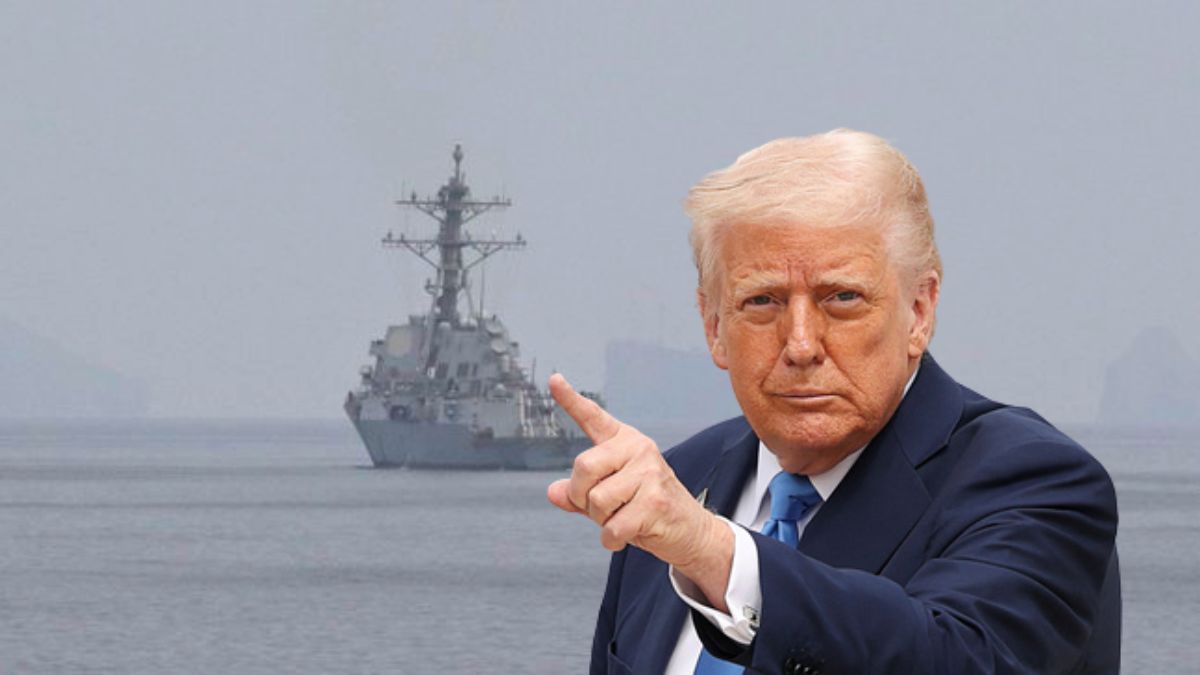
Tensions in one of the world’s most critical energy corridors – Strait of Hormuz – have surged once again after the United States announced a blockade of Iranian ports and coastal areas, following the collapse of US-Iran talks in Islamabad. The Strait of Hormuz is a critical global energy chokepoint, handling 25% of the world’s maritime oil trade.
US Central Command said enforcement began Monday (April 13, 2026), targeting vessels linked to Iranian ports across the Arabian Gulf and Gulf of Oman. While transit between non-Iranian ports has not been formally halted, shipping activity has slowed sharply, with early tracking data showing a steep drop in crossings.
After the US-Iran talks in Islamabad failed, US President Donald Trump announced a blockade of the Strait of Hormuz and destroy Iranian warships that get near US blockade. He warned, “If any of these ships come anywhere close to our BLOCKADE, they will be immediately ELIMINATED… It is quick and brutal.”
Strait of Hormuz US blockade: How are Indian ships being affected?
The escalation has directly impacted Indian maritime interests, with at least 15 Indian-flagged vessels stranded west of the Strait of Hormuz amid the disruption. These include LNG and LPG carriers, crude oil tankers, container ships, a dredger and a chemical tanker.
Officials said that 10 out of 25 Indian-flagged vessels in the region have managed to cross the strait safely, but the remaining ships are awaiting safe passage.
One vessel, LPG tanker Jag Vikram, successfully transited the strait on April 11 and is currently en route to Mumbai carrying around 20,400 tonnes of LPG, with an expected arrival on Wednesday (April 15, 2026) under Indian Navy escort.
What steps is India taking to secure its shipping and energy lifelines?
India has activated maritime security mechanisms, with at least six Indian naval ships deployed near the Persian Gulf to assist commercial vessels through communication, monitoring and escort advisories. Despite rising tensions, India Today quoted officials as saying there has been no change in deployment patterns, with operations continuing under standard protocols.
India is also coordinating real-time maritime intelligence with 28 countries to ensure safer navigation through the volatile region. Security agencies have flagged nearly 30 incidents in recent weeks, including 23 vessels reportedly targeted.
What is Iran saying about India and the Hormuz passage?
Amid the crisis, Iran has sought to reassure India, signalling continued cooperation despite the US blockade. Iran’s ambassador to India, Mohammad Fathali, said, “In this difficult time, we have good relations. We believe Iran and India share common interests and a common fate.” He stressed that Iran has never charged India for passage through the Strait of Hormuz, pushing back against claims linked to US warnings.
“You can ask the Indian government if we have charged anything up to now,” he said.
It is worth recalling here that even as the world was grappling with severe oil and energy supply shortages because of Strait of Hormuz closure during the Iran-US conflict, Tehran had allowed Indian-flagged vessels to pass, calling India a “friend” and underscoring their civilisational bonds.
Iranian Ambassador Fathali further added that Iran is willing to help India navigate the passage of its tankers, even as restrictions tighten. “Iran has oil and is ready to sell to any country that wants it,” he said, underlining Tehran’s openness amid shifting geopolitical dynamics.
Why does the Strait of Hormuz matter so much to India?
The Strait of Hormuz handles nearly 25% of global maritime oil trade, making it a critical chokepoint for global energy flows. For India, the stakes are particularly high since about half of its crude oil and LPG supplies pass through this route. Any prolonged disruption could impact energy security, shipping costs, and domestic fuel prices.
Recent developments also saw India receive its first Iranian oil shipments in seven years, following a temporary US waiver, highlighting the delicate balance New Delhi is maintaining between Washington and Tehran.