


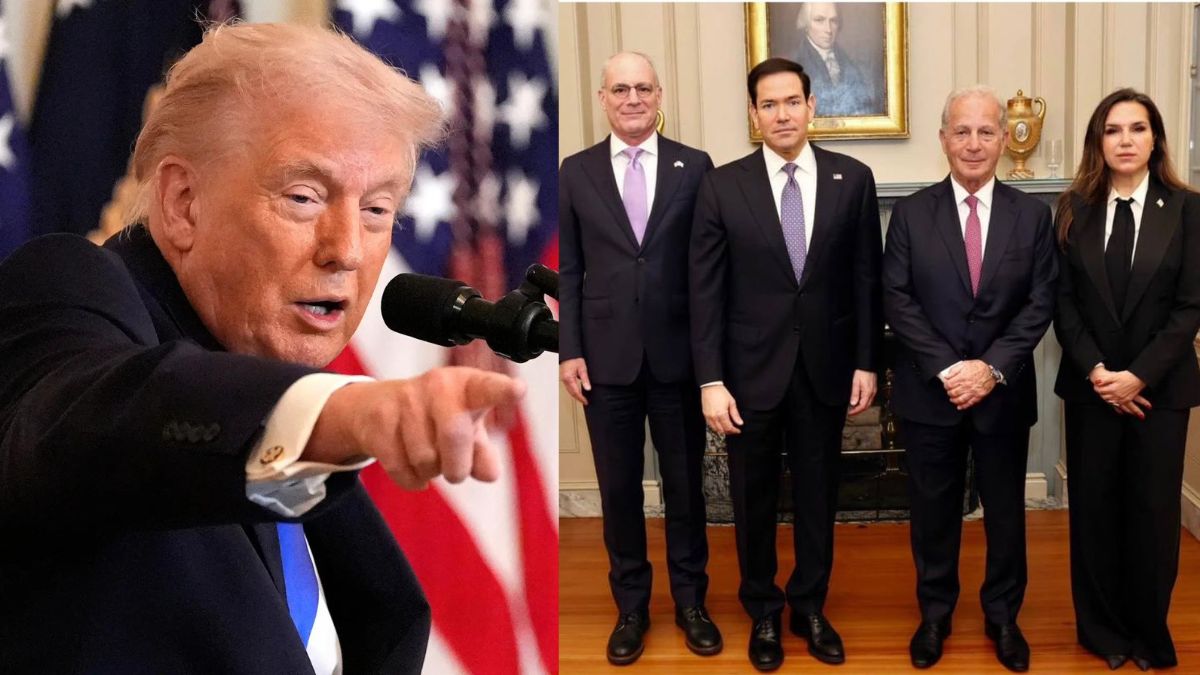
Just days after a failed round of talks in Islamabad, a fresh round of negotiations between the United States and Iran could take place as early as Thursday (April 16, 2026), reviving hopes of diplomacy after a high-stakes but inconclusive round in Islamabad. US President Donald Trump signalled the same, suggesting that the war might be very close to an end.
The talks held over the weekend marked the first direct encounter between US and Iranian officials in more than a decade and the most senior-level engagement since Iran’s 1979 Islamic Revolution. Despite lasting nearly 21 hours, the negotiations ended without an agreement, though both sides kept the door open for further dialogue.
US-Iran truce talks in Pakistan came just a few days after a ceasefire announcement, and were aimed at building a broader peace framework amid rising tensions over Iran’s nuclear programme, US sanctions, and regional flashpoints such as the Strait of Hormuz.
US-Iran talks: What stalled a deal?
The negotiations faltered primarily over the scale and duration of restrictions on Iran’s nuclear programme. The US proposed a 20-year suspension of nuclear activity, with Vice President JD Vance stating it would ensure Iran could not pursue a bomb “not just now, not just two years from now, but for the long term.”
Washington also called for the removal of nearly 970 pounds of near weapons-grade uranium from Iran. Tehran, however, pushed back, offering a much shorter pause, up to five years or a “single digit” timeframe, and insisted the uranium stockpile remain within the country, proposing monitored dilution instead.
These differences proved decisive, with Iranian lawmaker Seyyed Mahmoud Nabavian identifying enrichment limits and uranium stockpiles as the central obstacles.
Fresh US-Iran talks: What do these talks matter amid the ongoing crisis?
According to US officials cited by the Associated Press, a fresh round of US-Iran talks could take place very soon. The potential resumption of talks comes at a time when the region remains volatile, with tensions tied to Iran’s nuclear ambitions, ongoing US sanctions, and strategic concerns around the Strait of Hormuz.
US President Trump, in a broadcast interview, shared that the Iran war is “very close to over” with authorities in the country eager to agree a peace deal. “We’ve beaten them militarily, totally,” Trump told Fox Business Network’s “Mornings with Maria” in a prerecorded interview. “I think it’s close to over, I view it as very close to over.”
“If I pulled up stakes right now it would take them 20 years to rebuild that country, and we’re not finished,” he stated, further adding, “We’ll see what happens, I think they want to make a deal very badly.”
US-Israel-Lebanon talks: What breakthrough was made?
In a parallel diplomatic push, the United States hosted a historic trilateral meeting with Israel and Lebanon, marking their first high-level engagement since 1993. According to the US Department of State, the talks focused on initiating direct negotiations aimed at a ceasefire, security cooperation, and a broader peace framework.
The US described the meeting as a “historic milestone”, expressing optimism that it could pave the way for a comprehensive agreement beyond the scope of the 2024 ceasefire arrangement.
What positions did Israel and Lebanon outline?
Both sides indicated readiness for dialogue, but key positions remain firm.
Israel reiterated its demand for the disarmament of all non-state armed groups and dismantling of militant infrastructure in Lebanon, while affirming its right to defend itself against Hezbollah. It also expressed readiness for direct negotiations to achieve durable peace.
Lebanon emphasised the urgent need to fully implement the November 2024 cessation of hostilities, stressing territorial integrity and sovereignty, and calling for concrete measures to address the ongoing humanitarian crisis.
The US underscored that any agreement must be brokered directly between the two governments, rejecting alternative negotiation channels.
What role is the US playing?
From attempting to revive the Iran nuclear deal framework to facilitating Israel-Lebanon talks, Washington is pursuing a multi-layered diplomatic strategy in West Asia. It also highlighted that successful negotiations could unlock reconstruction aid and economic recovery for Lebanon, expanded investment opportunities, and greater regional stability.
All sides agreed to launch direct negotiations at a mutually agreed time and venue.