


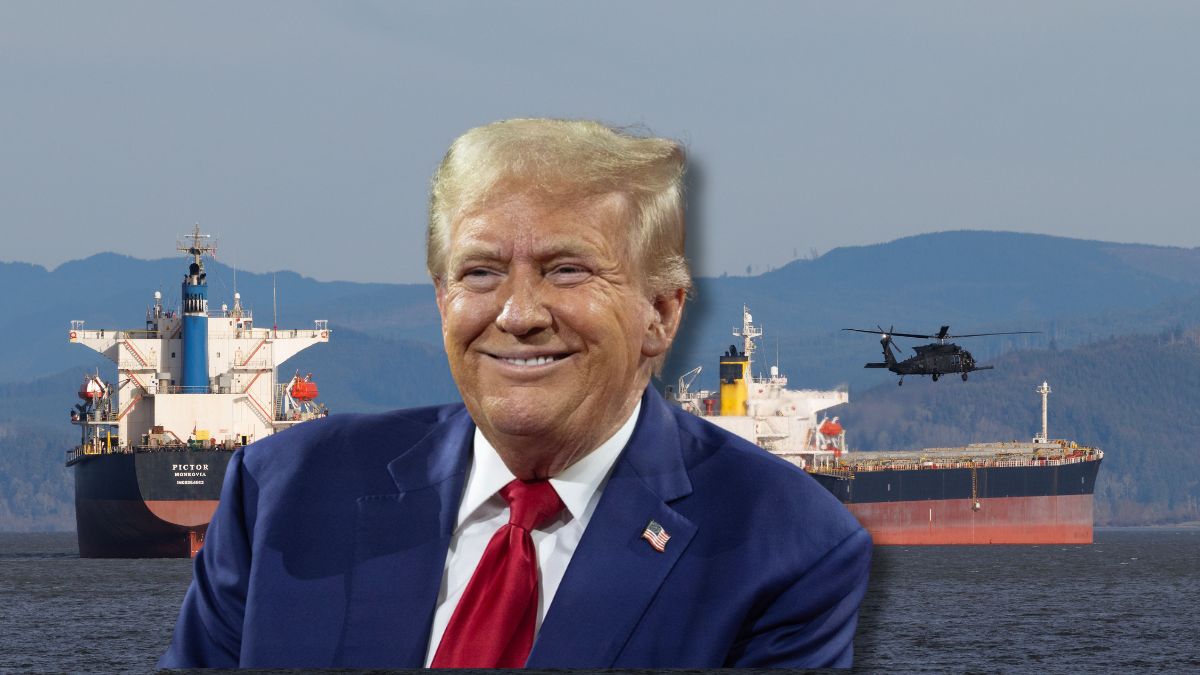
In a significant policy reversal, the United States has extended the sanctions waiver allowing the purchase of Russian crude loaded at sea, barely two days after Treasury Secretary Scott Bessent said it would not be renewed. India, one of the top two destinations for Russian crude, would be a major beneficiary of the reversal.
“We will not be renewing the general license (sanctions waiver) on Russian oil…,” Bessent had said at a White House briefing earlier this week. However, Washington has now issued a fresh extension, permitting transactions for cargo loaded on or before April 17 to continue until May 16, 2026.
According to industry experts, the decision to extend the waiver likely came after pressure from countries buying Russian crude to partly offset the loss of Gulf barrels, as the ongoing West Asia conflict continues to disrupt traditional energy supply routes.
How is the West Asia conflict affecting global oil decisions?
The reversal comes amid severe disruptions in global oil flows caused by the war in West Asia and restrictions around the Strait of Hormuz, a critical artery for global energy trade.
Although there are early signs of a fragile peace between the US and Iran and expectations that vessel movements through the Strait could gradually increase, experts caution that a full recovery will take time. Damage to energy infrastructure and lingering security concerns may keep supplies constrained for weeks, if not months.
With nearly 20% of global oil passing through the Strait under normal conditions, the current slowdown has forced major importers to aggressively seek alternative sources of crude.
What does this mean for India’s oil supply?
The US move is expected to provide significant relief to India, the world’s third-largest oil consumer, which relies on imports for over 88% of its crude needs. With supplies from West Asia squeezed, India has increasingly turned to Russian oil. The waiver extension allows Indian refiners to continue importing Russian crude, even via sanctioned tankers or entities, without the risk of secondary US sanctions.
Had the waiver not been extended, Indian refiners would have faced restrictions on dealing with suppliers like Rosneft and Lukoil, potentially forcing a sharp adjustment in import volumes.
With the extension in place, India, already one of the top buyers of Russian crude, remains a key beneficiary.
How dependent is India on vulnerable supply routes?
India’s exposure to disruptions in the Strait of Hormuz is significant. Around 2.5–2.7 million barrels per day (bpd)—roughly half of its crude imports—have recently transited through the chokepoint, compared to a long-term average of about 40%.
With much of that supply effectively offline due to the conflict, Russian crude has emerged as a crucial alternative to maintain supply stability and prevent price shocks.
How have India’s import patterns shifted recently?
India’s crude sourcing has seen sharp fluctuations in recent months. In February 2026, imports of Russian crude had dropped to just over 1 million bpd, nearly half of the 2025 peak, amid tightening US sanctions and ongoing trade negotiations.
However, as the West Asia conflict intensified and the waiver came into effect, imports surged again. In March, India’s Russian oil imports nearly doubled to around 2 million bpd, accounting for 44.4% of total imports. In early April, the figure averaged 1.6 million bpd, according to Kpler data.
What is India’s official stance on energy sourcing?
India has maintained a consistent and pragmatic approach to energy procurement.
“As far as energy sourcing is concerned, we have told you on several occasions what our policy is. It is based on meeting the requirements of our 1.4 billion people as also the market conditions and the global situation that is available. That continues to be our policy… There has been no change,” said MEA spokesperson Randhir Jaiswal.
New Delhi has, however, not officially commented on Washington’s latest reversal but continues to prioritise energy security amid volatile global conditions.