


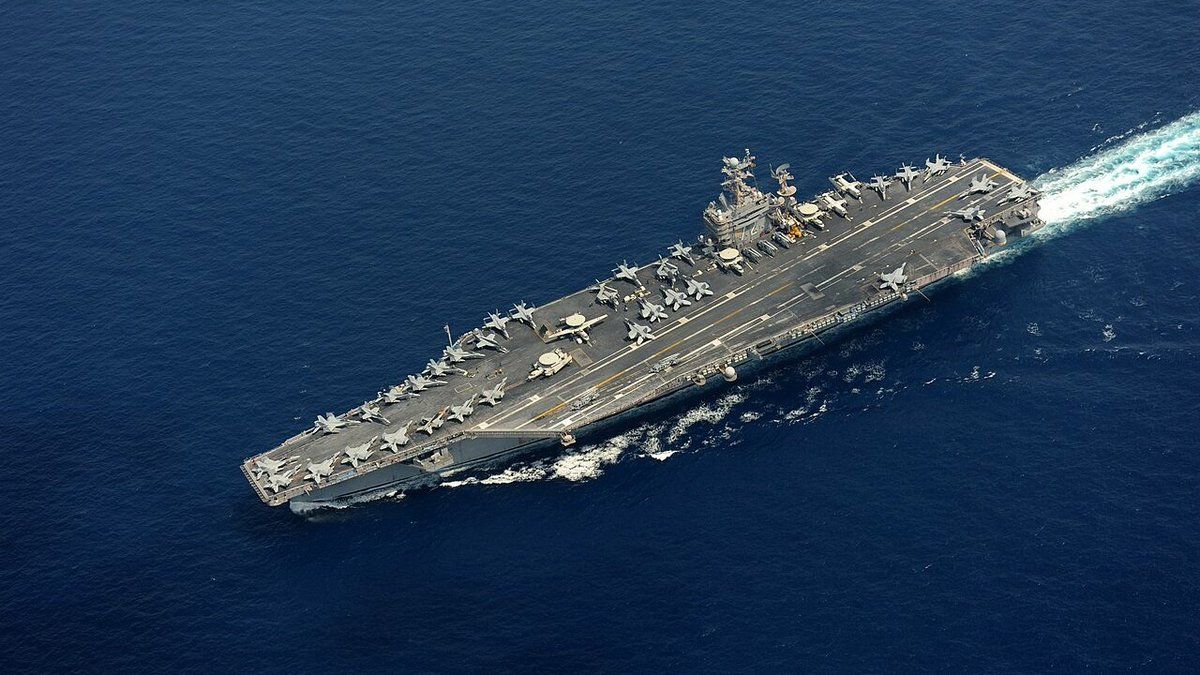
In yet another escalation of the recent tensions between the United States and Iran, a US Navy fighter jet shot down an Iranian drone in the Arabian Sea after it moved toward the aircraft carrier USS Abraham Lincoln. US Central Command (CENTCOM) said the Iranian drone “aggressively approached” the carrier with “unclear intent”.
The latest attack underscores the growing volatility between Washington and Tehran amid heightened regional tensions. CENTCOM said that the drone continued to fly toward the ship despite de-escalatory measures taken by US forces operating in international waters, and so they shot it down.
According to the US military, the drone, identified as a Shahed-139, was downed by an F-35C fighter jet operating from the USS Abraham Lincoln. At the time of the incident, the carrier was sailing roughly 500 miles (800 kilometres) off Iran’s southern coast. CENTCOM said no US personnel were injured and no equipment was damaged during the encounter.
What is the severity of the incident?
The shootdown came within hours of another confrontation in the region, when Iranian forces harassed a US-flagged, US-crewed merchant vessel transiting the strategically vital Strait of Hormuz, a key chokepoint through which a significant share of global oil supplies pass.
Later the same day, Iran’s Islamic Revolutionary Guard Corps (IRGC) again targeted commercial shipping, harassing the tanker Stena Imperative, according to the US military.
CENTCOM said two fast-moving Iranian boats and a Mohajer drone approached the vessel “at high speeds and threatened to board and seize the tanker,” prompting renewed concerns over maritime security.
US-Iran tensions
The twin incidents highlight a pattern of aggressive Iranian behaviour at sea, particularly toward US and allied vessels. Analysts say such actions risk miscalculation at a time when the region is already on edge following Iran’s recent violent crackdown on nationwide anti-government protests.
In response to the deteriorating security environment, the US has deployed an aircraft carrier strike group to the Middle East to bolster deterrence and protect freedom of navigation.
Why is this happening as diplomacy is being discussed?
Adding a layer of complexity, the military escalation comes even as Iranian President Masoud Pezeshkian signalled openness to talks with Washington.
“I have instructed my minister of foreign affairs, provided that a suitable environment exists, one free from threats and unreasonable expectations—to pursue fair and equitable negotiations,” Pezeshkian said in a post on X, calling it Iran’s clearest signal yet of willingness to re-engage diplomatically.
He said the move followed requests from “friendly governments,” suggesting quiet international pressure to defuse tensions.
What is the US response under President Trump?
US President Donald Trump, who has reinstated his “maximum pressure” sanctions policy on Iran since returning to office, has delivered mixed messages—pairing warnings with cautious optimism.
“We have talks going on with Iran… and if we could work something out, that’d be great. And if we can’t, probably bad things would happen,” Trump said, according to the Associated Press. Earlier, the US President warned that “bad things would happen” if no agreement is reached.
Meanwhile, US-Iran are planning to hold negotiations on Friday (February 6, 2026), but Trump has still refused to rule out military action while his Iranian counterpart insists talks will only go ahead provided they were free of threats.