


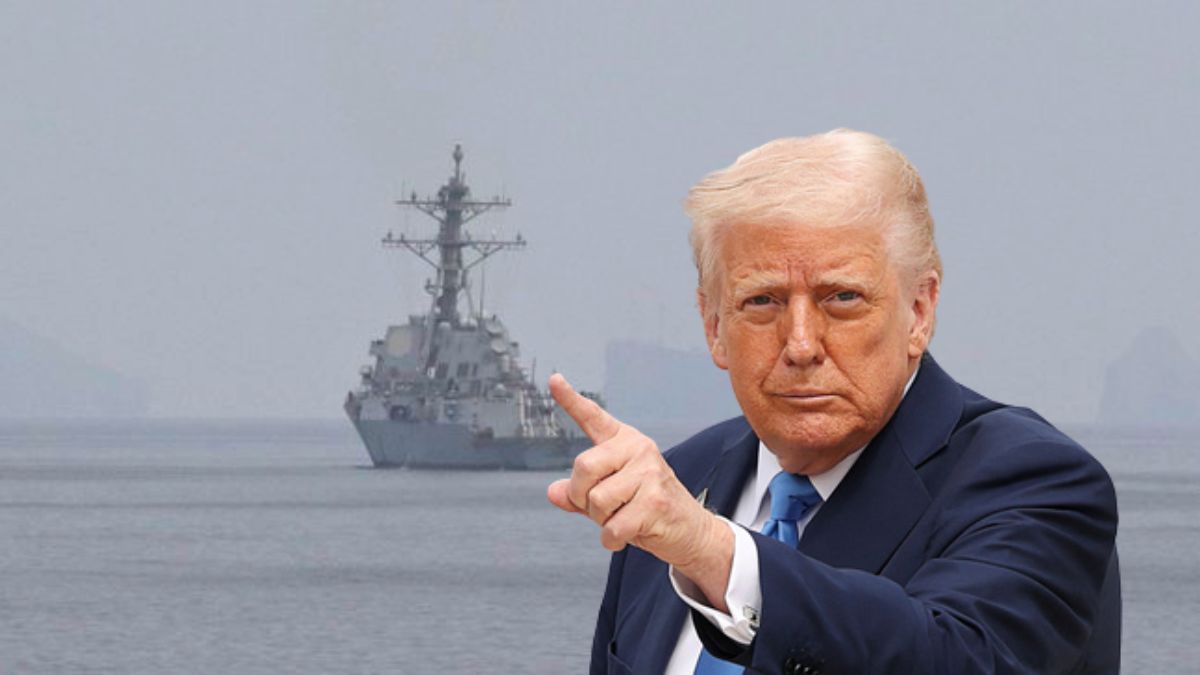
Amid escalating tensions in West Asia, the United States Central Command (CENTCOM) said on Tuesday (April 14, 2026) that it has launched a naval blockade targeting ships entering and departing Iranian ports to significantly increase pressure on Tehran.
CENTCOM stated that over 10,000 US Sailors, Marines, and Airmen, along with more than a dozen warships and aircraft, are actively executing the operation. The action comes in the wake of a deadline imposed by US President Donald Trump.
In a post on X, CENTCOM noted that no ships were able to pass during the first 24 hours of the blockade. It added that the restrictions apply to vessels of all nations entering or departing Iranian ports. Six merchant vessels have already collated with US directives and turned back toward Iranian ports in the Gulf of Oman.
The U.S. military also warned that any vessel entering or leaving the blockaded area without authorization would be subject to interception, diversion, or capture.
Pentagon deploys additional troops
The Pentagon is sending thousands of additional troops to West Asia to bolster its military presence. The deployment aligns with the maritime blockade as Washington seeks to pressure Iran into a deal, while keeping options for further strikes or ground operations open. The Washington Post said.
Strait of Hormuz in Focus
The Strait of Hormuz remains a critical flashpoint, with nearly one-fifth of the world’s oil supply passing through the vital energy corridor.