


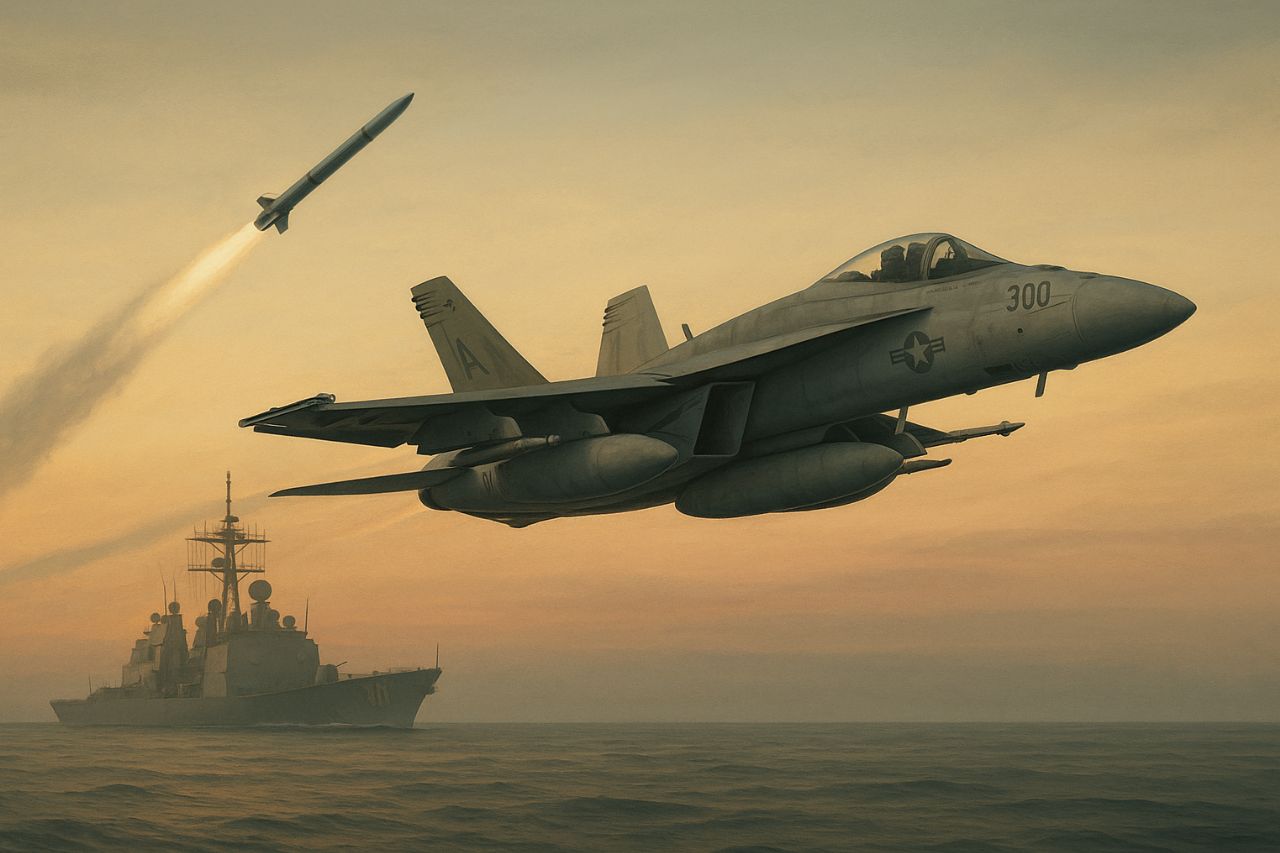
A newly released set of US Navy investigative reports reveals a troubling picture of operational strain, technical failures, and human error across the USS Harry S. Truman strike group during its 2024–2025 deployment to the Red Sea, culminating in a shocking friendly-fire shootdown of an American F/A-18 Super Hornet by the cruiser USS Gettysburg.
The 600-page command investigation into the December 22, 2024 incident, reviewed in detail by international media and released Thursday (December 5, 2025) shows how a series of cascading errors led Gettysburg’s crew to mistake US Navy aircraft for incoming Houthi anti-ship missiles.
The strike group had just assumed combat duties in the Red Sea amid near-daily missile and drone attacks on global shipping by Yemen’s Iran-backed Houthis.
How the pilot saw his life flash before he ejected?
Shortly before dawn, two Super Hornets from Strike Fighter Squadron 11 (“Red Rippers”) were in the air when Gettysburg fired a surface-to-air missile (SAM), believing the jets were hostile cruise missiles.
The missile suddenly corrected course mid-flight and locked onto the first aircraft. The pilot later told investigators he saw his “life flash before his eyes” before he and his weapons officer ejected moments before impact. The $60 million jet was obliterated.
A second American fighter was then targeted. The crew issued frantic mayday calls but chose to outmanoeuvre the missile rather than eject. The weapon screamed past the jet by only a few feet before burning out over the sea. A third US aircraft was also misidentified but not fired upon.
Witnesses, including a Navy helicopter crew, said there was no warning before the Gettysburg fired.
How system failures and crew fatigue drove wrong decisions?
Investigators found “significant degradation” across Gettysburg’s combat systems, including poor tracking, identification failures, and misaligned data networks.
For months, the cruiser and carrier had been separated during operations, weakening situational awareness. The report concludes the decision to shoot was “wrong when measured across the totality of information available.”
Crew fatigue and relentless Houthi attacks further eroded judgment, with the ship’s combat information center unable to help the captain regain situational clarity.
Was there a pattern of mishaps leading to collision and two more jets lost?
The friendly-fire shock was only one of four major mishaps involving the Truman strike group:
- February 2025 collision: Running behind schedule near the Suez Canal, the carrier collided with a merchant vessel after an officer navigated at unsafe speeds and failed to take evasive action. Senior officers also underestimated the risks of the congested transit.
- April 2025 deck accident: During evasive manoeuvres to avoid an incoming Houthi missile, a Super Hornet being repositioned in the hangar bay slid off the deck into the sea. Dirty, slippery surfaces and miscommunication contributed to the loss.
- May 2025 arresting gear failure: Another Super Hornet went overboard during landing when a flight-deck arresting cable snapped. Investigators found missing parts, poor maintenance, and mounting pressure from high operational tempo.
How the US Navy admitted “Hard Reality” of failures?
Vice Chief of Naval Operations Admiral Jim Kilby said the reports highlight the need to invest more in training and readiness. Rear Admiral Sean Bailey, the former strike group commander, was blunter: the arresting-gear failure was “entirely preventable,” and leadership at multiple levels allowed standards to degrade.
Together, the investigations underscore a Navy stretched thin, battling sustained missile threats, complex carrier operations, and the compounding pressures that allowed avoidable disasters to occur.