


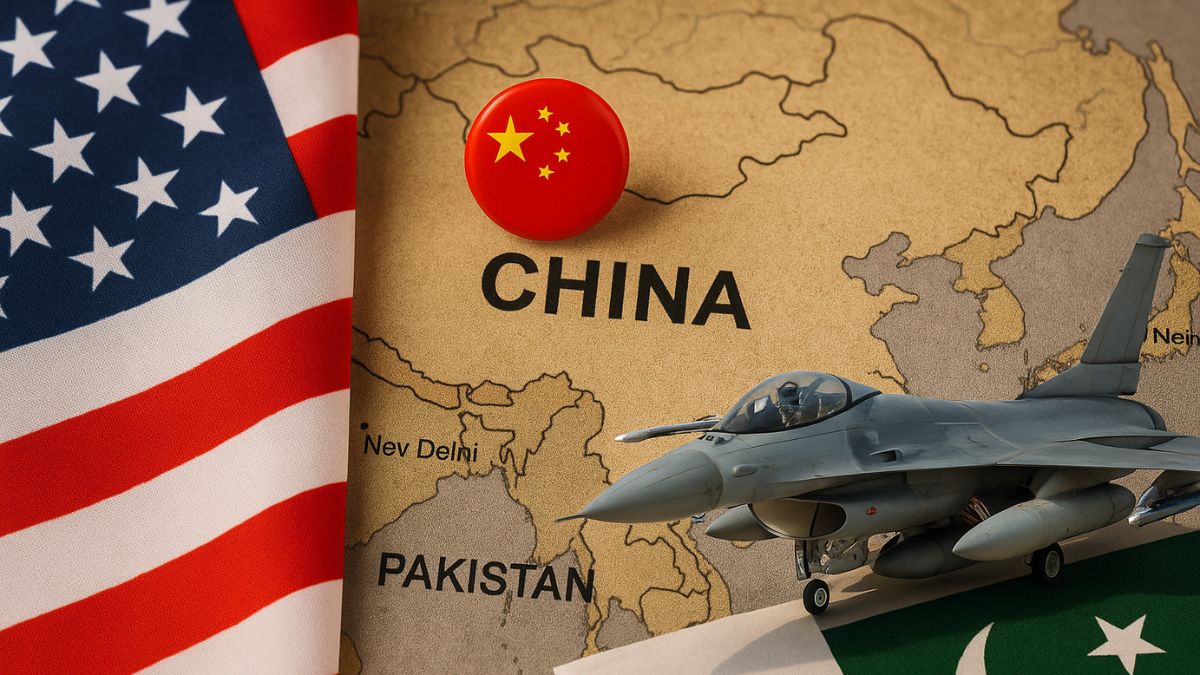
In a pivotal moment for US strategic policy, the United States Congress has passed a sweeping $900 billion National Defense Authorization Act (NDAA) that embeds new restrictions aimed squarely at China.
The Trump administration also moved forward with a $686 million F-16 support package for Pakistan that is already drawing scrutiny from New Delhi.
The developments come amid heightened geopolitical tension in the Indo-Pacific and evolving US diplomatic engagement with Indian Prime Minister Narendra Modi.
What does the US NDAA 2026 say about China?
The 2026 NDAA, approved by the House of Representatives and now headed to the Senate, reinforces a tougher congressional stance toward China’s strategic rise.
Lawmakers have included provisions to limit American investment in sensitive Chinese technologies, particularly those with potential military application, and to curb federal funding for blacklisted Chinese biotechnology firms.
This legislative action complements an increased allocation for Taiwan’s security cooperation, raising funding from $300 million to $1 billion, and mandates closer monitoring of US outbound investment linked to pivotal sectors such as AI, semiconductors, and biotech.
How does NDAA 2026 focus on China?
The bill’s China-focused measures stand in contrast to the Trump administration’s more nuanced economic approach toward Beijing, as articulated in a recent US national security strategy that speaks of rebalancing economic ties.
However, lawmakers from both parties view the restrictions as necessary to lock in a hard-edged posture toward strategic competition with China over the long term.
What is US funding support for Pakistan’s F-16 jets?
Simultaneously, the US administration has notified Congress of a proposal to provide $686 million in advanced technology and support for Pakistan’s fleet of US-made F-16 fighter jets.
The package, cleared by the Defense Security Cooperation Agency, encompasses communications systems, avionics upgrades, secure navigation tools, logistical support, and mission-planning software to modernise Pakistan’s Block-52 and Mid-Life Upgrade F-16 aircraft.
Washington’s approval of the F-16 support deal highlights the complex balancing act in US regional policy: while deepening strategic competition with China, the United States maintains defence cooperation with Islamabad, rooted in decades-long ties dating back to the Cold War and later counterterrorism collaboration.
Why should this US support for Pakistan concern India?
The announcement has triggered concern in New Delhi, given the aircraft’s history in South Asia. During the 2019 Balakot airstrike and subsequent aerial engagements, Pakistani F-16s played a controversial role that drew Indian protests and US inquiries into potential misuse of end-user agreements, a legally sensitive topic that remains unresolved in public fora.
Despite these tensions, diplomatic channels between India and the United States have remained active. On the same day the defence bill passed, Prime Minister Modi held a telephonic conversation with President Trump, reviewing progress in bilateral economic, security, and defence cooperation under the Comprehensive Global Strategic Partnership framework.
This marked their third high-level call since trade tensions escalated over US tariffs on Indian exports, underscoring the complexity of US-India ties amid broader strategic divergences.
Strategic analysts suggest that while Congress pushes a hard line on China, the Trump administration is navigating a multifaceted foreign policy that seeks to uphold defence partnerships, manage regional sensitivities, and sustain high-stakes diplomatic engagement with major players like India, even as concerns over Pakistan’s F-16 capabilities persist.