


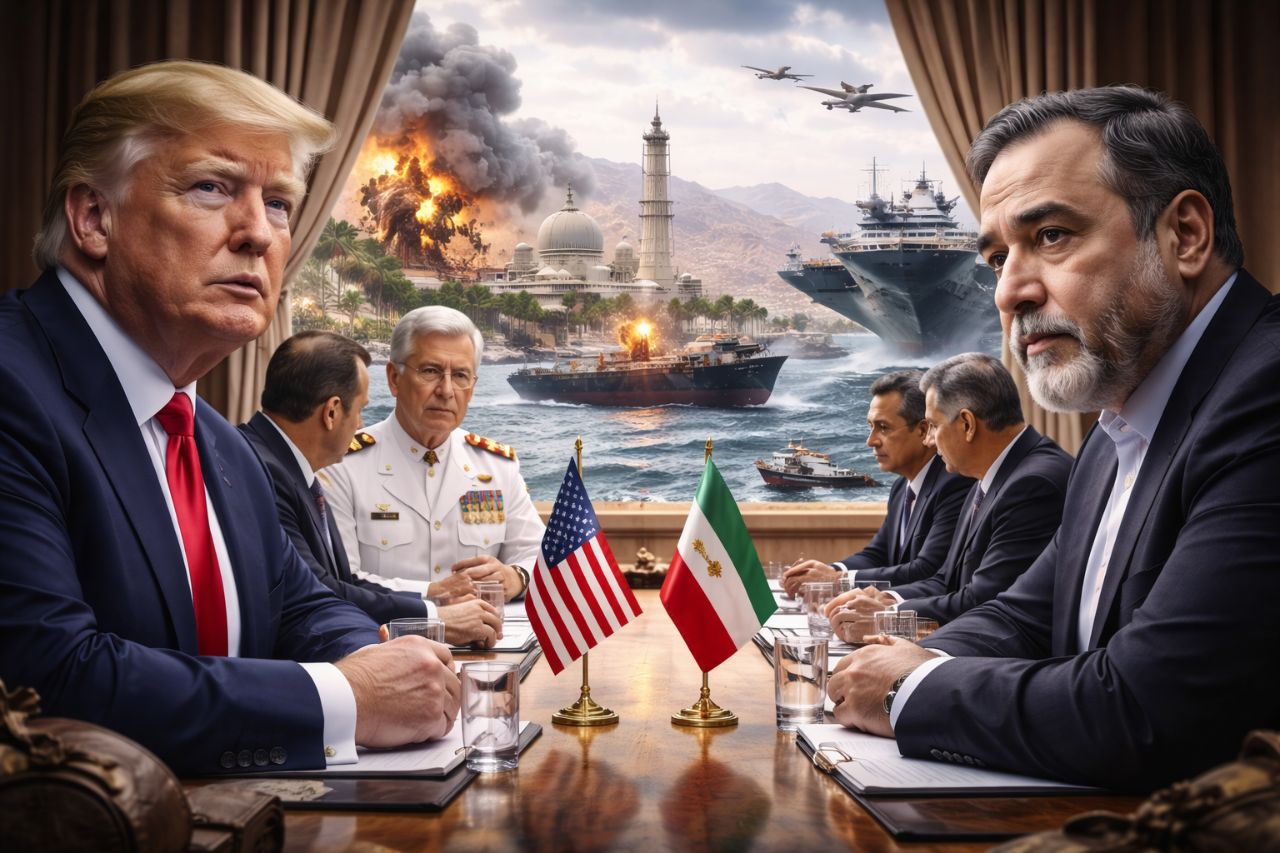
The US and Iran on Friday (February 6, 2026) resumed their informal talks regarding Tehran’s nuclear programme, as American President Donald Trump signed his tariff threat to Iranian partners into an executive order.
The talks, in Oman, also saw Trump parachuting in his military commander for the West Asian region on to the discussion table, sharply escalating military pressure on Iran..
The two developments underscored Trump’s strategy of leveraging both military and diplomatic pressure to force Iran into agreeing to his demands at the negotiation table.
Oman mediated the talks in Muscat, marking the first time the US involved its Central Command chief and US Navy Admiral Brad Cooper in the discussions with Iran.
Cooper being at the negotiation table with diplomats such as Steve Witkoff was seen as a signal from Trump of his intent to use his military against Iran if talks failed.
The talks coincided with the US deployment of its carrier strike group led by aircraft carrier USS Abraham Lincoln in West Asia, close to Iranian waters.
Trump described the discussions as “very good” and said more talks were planned early next week, while warning Tehran that failure to reach a deal would carry “very steep” consequences.
Speaking to reporters aboard Air Force One, Trump claimed Iran appeared eager to negotiate and willing to go further than in previous rounds, though he offered no specifics.
“We’re in no rush,” he said, suggesting Washington was prepared to sustain pressure over time.
Iran, however, struck a more cautious tone. Foreign Minister Abbas Araghchi said the talks focused mainly on exploring a framework for future negotiations and stressed that dialogue could only succeed in a “calm atmosphere, without tension and without threats.”
He acknowledged deep mistrust between the two sides and said diplomats would return to their capitals for consultations, effectively ending this round of talks.
Oman’s Foreign Minister Badr al-Busaidi, who has repeatedly acted as an intermediary between Tehran and Washington, said the discussions were “useful” in clarifying positions and identifying areas of possible progress.
The talks were held at a palace near Muscat’s international airport, a venue previously used for discreet US-Iran engagements.
The diplomatic engagement came amid heightened regional tensions. In recent days, US forces shot down an Iranian drone near the USS Abraham Lincoln, while Iran attempted to stop a US-flagged vessel in the Strait of Hormuz, incidents that have raised fears among Gulf Arab states of a wider regional conflict.
Even as talks concluded, Washington intensified economic pressure. The US Treasury and State Departments announced new sanctions targeting Iran’s energy sector, including penalties on 14 oil tankers linked to what the US calls Iran’s “shadow fleet,” as well as trading firms and executives accused of helping Tehran evade sanctions.
More significantly, Trump signed an executive order authorising the potential imposition of tariffs of up to 25% on imports from countries that continue to buy Iranian oil or conduct business with Tehran.
While the order does not immediately impose tariffs, it establishes a legal framework allowing the US to act swiftly, with the measures removable if Iran or its trading partners align with US national security and foreign policy interests.
The White House said the move was part of a broader effort to counter Iran’s nuclear ambitions, ballistic missile programme and regional influence, reinforcing Trump’s revived “maximum pressure” campaign.
As diplomacy and deterrence now advance side by side, the Oman talks highlight how any US-Iran deal will unfold under the shadow of both warships and tariffs.