


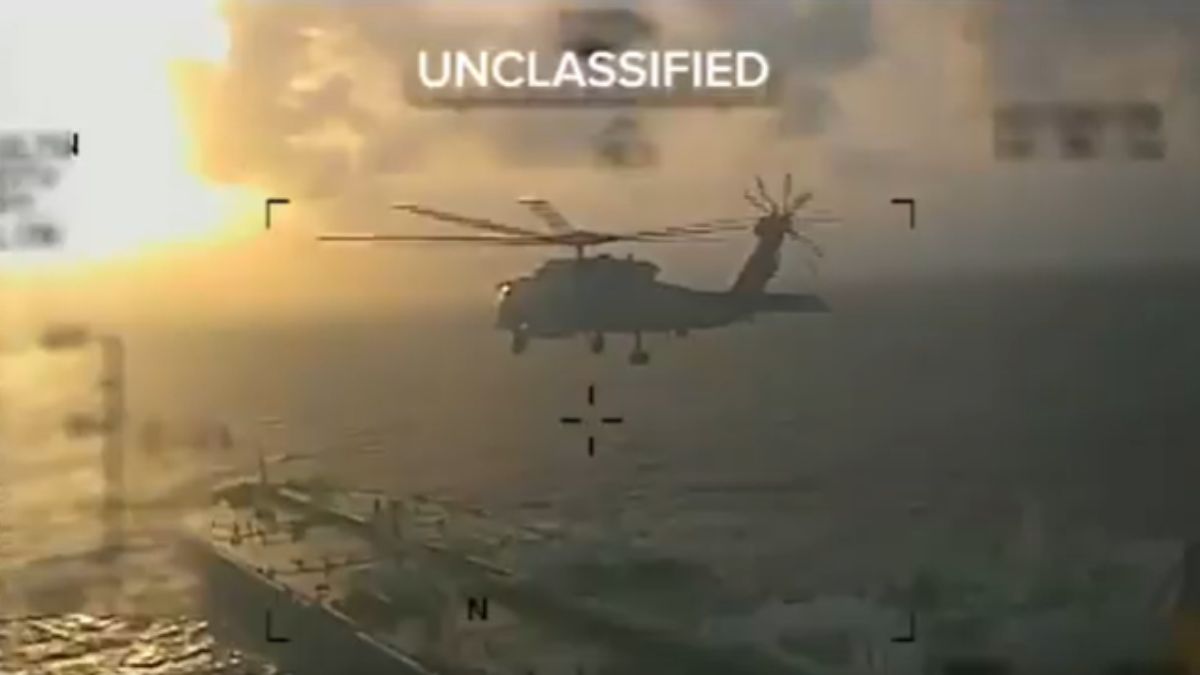
In the second such interdiction this month and underscoring Washington’s intensifying campaign against Caracas’ oil exports, the United States has seized another oil tanker that recently departed from Venezuela. The latest seizure was confirmed by the US Department of Homeland Security (DHS).
This follows President Donald Trump’s announcement earlier this week that he had ordered a “blockade” of sanctioned oil tankers entering and leaving Venezuela. In a post on Truth Social, he said Venezuelan leader Nicolas Maduro’s government had been designated a foreign terrorist organisation and accused it of stealing US assets.
Trump has also accused Maduro’s government of using stolen oil to finance itself, Drug Terrorism, Human Trafficking, Murder, and Kidnapping. The Trump administration has repeatedly accused Venezuela of drug smuggling, and since September 2025, the US military has killed at least 90 people in strikes on boats.
US-Venezuela maritime interdiction in international waters
The latest operation was led by the US Coast Guard and took place in international waters, mirroring an earlier seizure conducted off Venezuela’s coast this month. A specialised tactical team boarded the vessel in a pre-dawn operation, according to US officials. DHS Secretary Kristi Noem, whose department oversees the Coast Guard, shared a footage of the operation on social media.
The video shows US helicopters landing on a tanker identified as Centuries. “In a pre-dawn action early this morning on Dec 20, the US Coast Guard with the support of the Department of War apprehended an oil tanker that was last docked in Venezuela,” Noem wrote. “The United States will continue to pursue the illicit movement of sanctioned oil.”
Washington links oil trade to ‘narco-terrorism’
US officials have framed the seizures as part of a broader effort to disrupt what they describe as criminal networks operating out of Venezuela. Noem said the oil trade was being used to fund “narco terrorism” in the region, warning: “We will find you, and we will stop you.”
The Trump administration has accused Venezuelan President Maduro of leading the so-called Cartel de los Soles, a group the US has designated as a terrorist organisation. Maduro has repeatedly denied the allegations.
Defence Secretary Pete Hegseth echoed the administration’s hardline stance, saying the US would continue maritime interdiction operations to “dismantle illicit criminal networks” and prevent “violence, drugs, and chaos” from spreading across the Western Hemisphere.
Venezuela condemns ‘theft and kidnapping’
Caracas reacted angrily to the seizure, condemning it as “theft and kidnapping” and accusing Washington of attempting to steal Venezuela’s natural resources. “These acts will not go unpunished,” the Venezuelan government said in a statement, adding that it plans to raise the issue at the UN Security Council and other multilateral forums.
President Maduro has previously accused the US of abducting crews and unlawfully confiscating ships, claims Washington rejects.
Legal grey zones and questions over sanctions
The Centuries is a Panamanian-flagged vessel that has also sailed under Greek and Liberian flags in recent years, according to shipping records. Notably, it does not appear on the US Treasury Department’s list of sanctioned vessels, raising fresh questions about the legal scope of the seizures.
Earlier this month, the US seized another tanker named Skipper, which the White House said was part of a so-called “ghost fleet” allegedly using deceptive practices to conceal illicit oil shipments. That vessel is expected to be taken to a US port.
The tanker seizures come amid a visible US military build-up in the Caribbean Sea. In recent weeks, US forces have carried out strikes on boats accused of smuggling drugs from Venezuela. The US military has, however, not released public evidence linking the vessels to drug trafficking.