


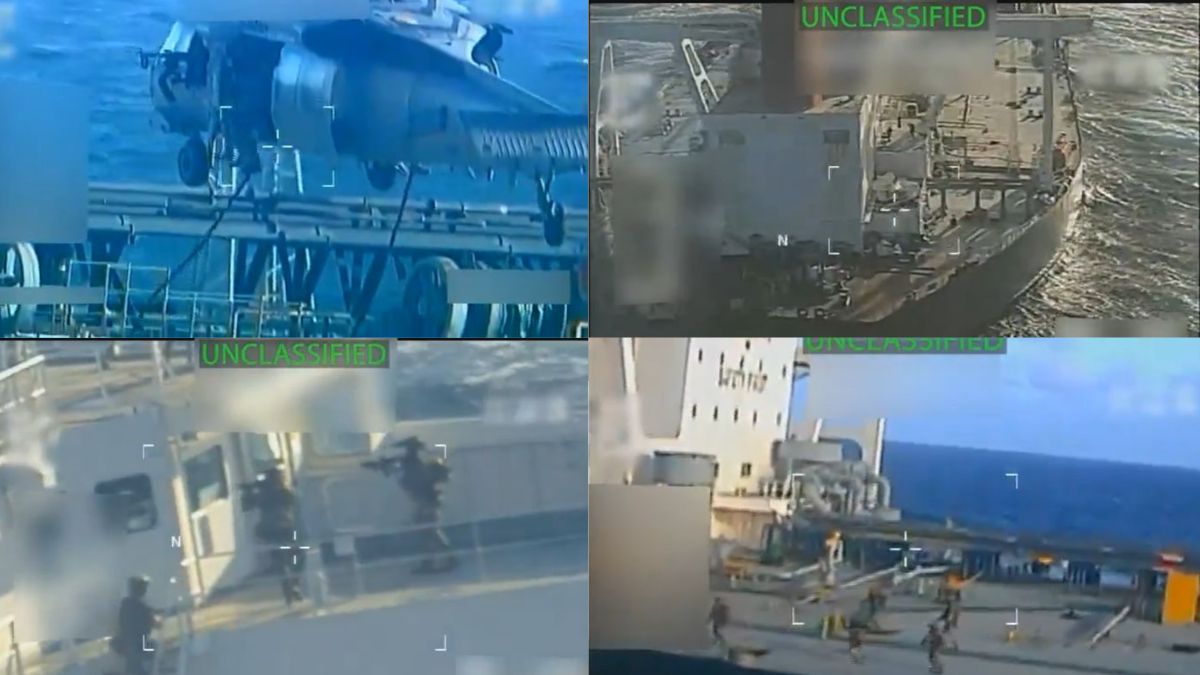
The dramatic seizure of an oil tanker by the United States off Venezuela’s coast has reignited fears of a full-blown conflict in the Caribbean, capping nearly two decades of steadily worsening hostilities between Washington and Caracas.
With Russia now openly reaffirming its support for President Nicolás Maduro, analysts warn that the crisis is entering a dangerous new phase that risks pulling global powers into direct confrontation.
How has the long escalation road gone from sanctions to military threats?
The roots of the crisis stretch back to 2006, when Washington first imposed sanctions on Venezuela under President George W. Bush. Citing Caracas’s alleged failure to cooperate in counter-terrorism efforts, the US banned the sale of American weapons and military equipment. Relations plunged fast, and by 2010, both countries had withdrawn their ambassadors.
When Hugo Chávez died in 2013, and Maduro succeeded him, tensions deepened. In 2014–15, the Obama administration sanctioned senior Venezuelan officials over human rights violations linked to the violent suppression of anti-government protests. This marked the beginning of what the Maduro government calls a US-led “economic war.”
How has the Trump era of hard sanctions, military threats, and oil embargoes worsened?
US pressure intensified sharply under Donald Trump. In 2017, Washington targeted Venezuela’s Supreme Court and imposed sanctions on Maduro himself after he created a controversial Constituent Assembly that sidelined the opposition-controlled parliament. It was also Trump who first floated a potential “military option” against Venezuela, threats he would repeat in subsequent years.
By 2019, after Washington rejected Maduro’s re-election as fraudulent, the US toughened financial sanctions, recognised opposition leader Juan Guaidó as interim president, and cut all diplomatic ties. That same year came the most consequential blow: a sweeping oil embargo on PDVSA and all Venezuelan government assets in the US.
Though Washington briefly eased the embargo in 2023 to compensate for the global oil shortfall caused by Russia’s invasion of Ukraine, full restrictions were reinstated in 2024 after Maduro blocked the candidacy of popular opposition leader (and future Nobel Peace Prize laureate) María Corina Machado.
Upon returning to office in early 2025, Trump again tightened the screws, halting oil licences for multinational firms operating in Venezuela. Chevron was later allowed to resume operations, but without transferring funds to the Maduro government.
Why has Venezuela faced narco-terrorism charges and rising rewards?
Meanwhile, Washington escalated its criminal pursuit of Maduro. In 2020, the US indicted him on “narco-terrorism” charges and offered a $15 million reward for information leading to his capture, an amount raised to $50 million in August 2025.
The US accuses Maduro of heading the unproven “Cartel of the Suns,” allegations Caracas dismisses as fabricated.
What is the 2025 military build-up and the risk of open conflict?
By late 2025, the confrontation shifted decisively from diplomacy to force. Since September, the US has launched deadly airstrikes against suspected drug-smuggling vessels in the Caribbean, claiming they are linked to Venezuelan networks. Caracas accuses Washington of manufacturing a pretext for invasion.
The December 10, 2025, tanker seizure marked the sharpest escalation yet. Venezuela denounced it as “international piracy,” while Russia rushed to Maduro’s side. In a phone call, President Vladimir Putin reaffirmed Moscow’s support, praising Caracas’s defense of “national interests and sovereignty” against US pressure.
Is a US-Venezuela war on the horizon?
With a US naval build-up, intensifying strikes, economic strangulation, and now Russian backing for Maduro, the Venezuela–US standoff is entering perilous territory. Experts warn that miscalculation, especially at sea, could trigger a rapid spiral toward open conflict.
For now, the world watches the Caribbean, where the geopolitical chessboard is shifting once again.