


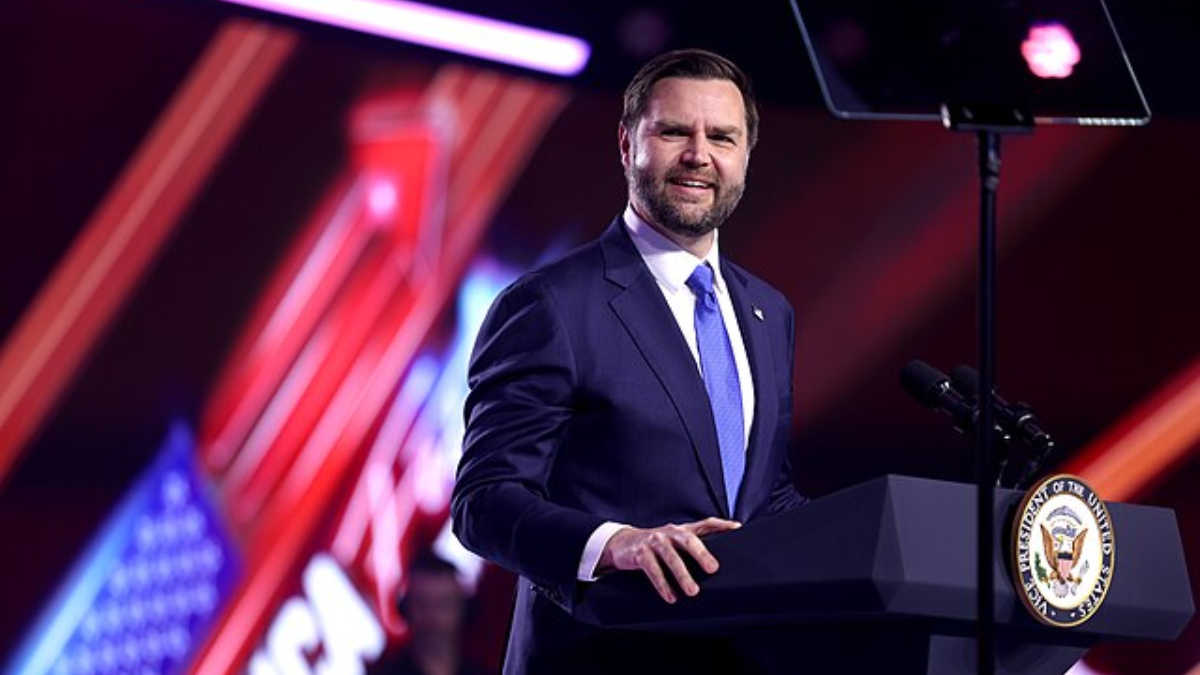
US Vice President J. D. Vance is said to be heading to Pakistan, along with a delegation, to clinch a peace deal with Iran, which has now refused to participate in the second round of talks hosted by Islamabad.
US President Donald Trump said Vance, along with special envoy Steve Witkoff and adviser Jared Kushner, were en route to Islamabad for the talks, and that an Iran deal could be signed in Pakistan on Tuesday (April 21, 2026).
On Monday (April 20), it was still unknown if Iran would join the second round of talks aimed at ending the West Asian conflict that began on February 28 with the US-Israel joint airstrikes inside Iran that killed Supreme Leader Ayatollah Ali Khamenei.
At the time of preparing this report, there was no confirmation of either the US or Iranian delegation having landed in Islamabad for the peace talks being mediated by Pakistan.
While media reports emerged that an American aircraft landed at the Nur Khan air base near Rawalpindi, it was not clear who travelled in that aircraft.
While Trump had said earlier that he was ready to travel to Islamabad to see the peace deal with Iran being signed, he wasn’t traveling to Pakistan this time, indicating complications in the negotiations to reach an agreement.
However, Trump said he was willing to meet with senior Iranian leadership later if a breakthrough in the talks were achieved this time around in Islamabad.
“They’re heading over now. They’ll be there tonight,” Trump was quoted by some Western media houses as saying on the US delegation headed to Islamabad.
“I have no problem meeting them. If they want to meet, and we have some very capable people, but I have no problem meeting them,” Trump said of the Iranian leadership. He, however, reiterated that Tehran must abandon any pursuit of nuclear weapons.
Last week, when asked whether he might travel to Pakistan to sign an agreement, the US President said: “I might go, yeah. If the deal is signed in Islamabad, I might go.”
He added that Iran has the “potential to thrive” if it complies with the condition that it does not develop nuclear weapons.
However, Iran has signalled reluctance to join the talks. Its foreign ministry said no decision had been taken on participating in the next round.
Iranian leadership also accused the US of not being serious about the diplomatic process, indicating that the demands to abandon nuclear and missile capabilities were “unreasonable.”
The misunderstandings were compounded by the US action to seize an Iran-bound cargo vessel mid-sea earlier this week as part of the blockade of Iranian ports by the US Navy.
Iran retaliated with drone attacks on US military assets in the region, and insisted that the American blockade wasn’t helpful in the peace talks, and it should be lifted immediately.
During the first round, the Iranian delegation was led by parliament speaker Mohammad Bagher Ghalibaf and included Foreign Minister Abbas Araghchi.