


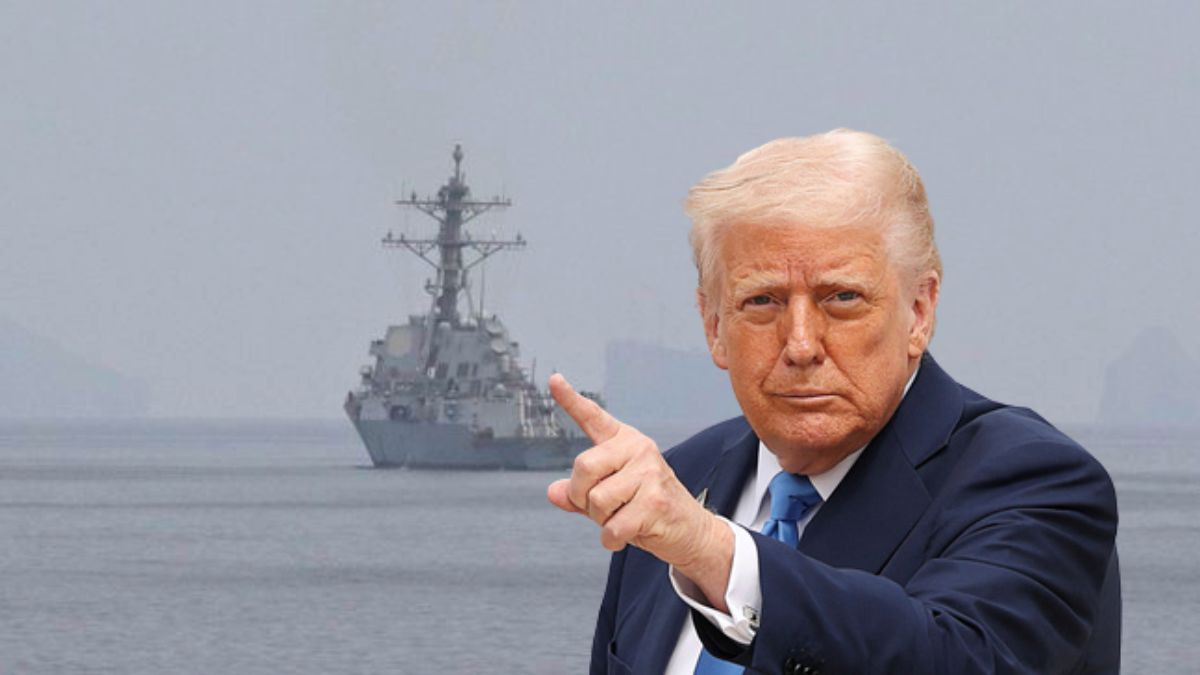
The two-week ceasefire was effectively over, and the West Asian peace process almost stalled, after the US and Iran on Monday (April 20, 2026) came to verbal blows at each other after American forces had seized an Iranian cargo vessel that tried to run through its naval blockade of the Gulf region, and Tehran retaliated by attacking American ships.
The US military said it fired on an Iranian-flagged cargo ship headed towards Iran’s Bandar Abbas port on Sunday (April 19) after a six-hour standoff, disabling its engines.
The US Central Command released a video showing American Marines descending ropes from helicopters onto the vessel and taking control of the Iranian cargo ship.
US President Donald Trump said the US Marines had boarded the Iranian vessel after it ignored warnings. “Right now, US Marines have custody of the vessel. We have full custody of the ship, and are seeing what’s on board,” Trump said, claiming the ship was under US Treasury sanctions.
Iran’s military said the cargo ship was travelling from China and accused the US of “armed piracy”. It said they were ready to confront US forces over the “blatant aggression” but were constrained by the presence of crew members’ families on board.
In retaliation, the Iranian military launched drone attacks at the US warships in the Sea of Oman, marking a sharp escalation in the military tensions.
The drone attacks were carried out in direct retaliation for the US seizure of an Iranian cargo vessel earlier, Iranian state media reported.
However, there were no further details on the scale of the drone strikes on the US warships or any damage caused.
Iran’s Foreign Ministry spokesperson Esmaeil Baghaei said the US was “not serious” about pursuing diplomatic efforts and that Tehran would not change its clearly stated demands, stating it did not believe in deadlines and ultimatums when safeguarding national interests.
These attacks and counterattacks on each other’s assets at sea placed the ceasefire in jeopardy, as Iran refused “for now” to join new peace talks with the US.
Trump had hoped to get the peace negotiations that had failed two weekends earlier restarted, mediated by Pakistan. The two-week ceasefire would come to an end within the next 24 hours.
Baghaei said the US was “insisting on some unreasonable and unrealistic positions.” Iran has earlier strongly objected to the US blockade of the Iranian ports and said this was undermining the peace talks and testing Tehran’s “defensive capabilities.”
China, meanwhile, expressed concern over the “forced interception” of the Iranian cargo vessel by the US military, as a foreign ministry spokesperson urged both sides to abide by the ceasefire agreement in a responsible manner.
Upping the ante, Iranian Parliament Speaker Mohammad Bagher Ghalibaf, who was the lead negotiator for Tehran in the Islamabad round of peace talks, said his nation’s military had neutralised over 180 drones and had hit an American F-35 stealth fighter jet during the military operations since February 28.
Ghalibaf was talking to Iranian officials on the current status of the peace talks with the US when he noted that engaging the American fighter aircraft reflected deliberate planning and the technical capability of the Iranian military.
“Hitting the F-35 is not a one-off event; it is an operation across various dimensions of technical and design capabilities,” Ghalibaf said, adding that it was a signal about Iran’s progress in defence technology.
“The missile that exploded near the F-35 made the enemy realise what capabilities we possess and in what direction we are heading,” he was quoted as saying