


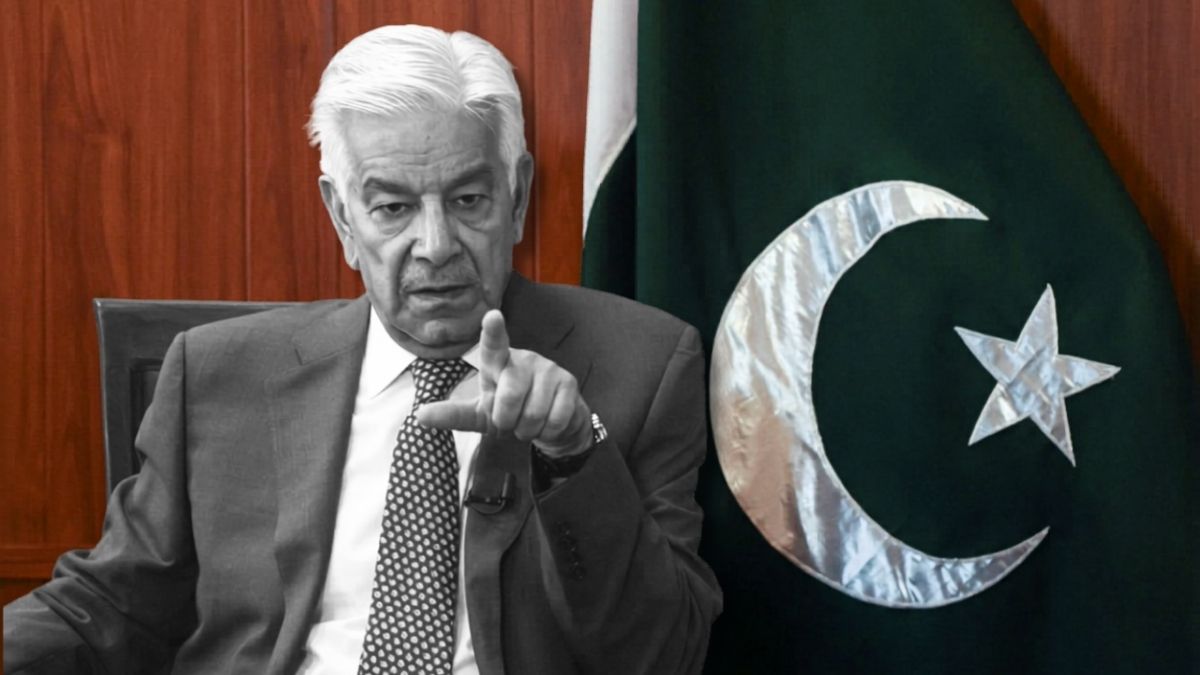
Just a few days ahead of the first anniversary of the deadly Pahalgam terror attack, fresh rhetoric from Pakistan has once again raised concerns of a renewed escalation between the two nuclear-armed neighbours. This time, Pakistan’s Defence Minister Khawaja Asif has named Kolkata as a potential target, warning India.
Asif’s statement, adding a new edge to the already strained ties between India and Pakistan, came after Union Defence Minister Rajnath Singh’s remarks, who earlier said that any “misadventure” from India’s neighbour in the prevailing situation would invite an “unprecedented and decisive” action.
In a sharp escalation of rhetoric, Asif warned that any future conflict with India would not remain confined to border areas. “If India tries to stage any false flag operation this time, then God-willingly, we will take it to Kolkata,” Asif said while speaking to reporters in Sialkot. He further claimed that the scope of conflict would widen dramatically.
“If they try again, they will face even greater humiliation than last year. This time, the conflict will not remain limited to 200 to 250 km. We will enter their territory and strike them inside their own homes,” the Pakistani defence minister stated, also alleging a possible “false flag” plot involving “their own men or Pakistanis in their detention”, but did not provide any evidence to support this.
Why are these remarks coming now?
The timing of Asif’s remarks is critical, as they come just weeks ahead of the first anniversary of the April 22, 2025 Pahalgam terror attack, in which terrorists killed 26 civilians and triggered one of the most serious India-Pakistan military escalations in recent years.
In response to that attack, India had launched Operation Sindoor in early May 2025, targeting terror infrastructure across Pakistan and Pakistan-occupied Kashmir using missile and drone strikes. The four-day conflict saw both sides exchange artillery, missile, and drone fire before a ceasefire was reached on May 10, 2025, following direct talks.
While there has been no official response yet to Asif’s latest remarks, India’s position has already been made clear in recent statements. Defence Minister Singh issued a strong warning, referencing Operation Sindoor, “I would like to tell you the operation is not over yet. If such dirty actions are repeated by Pakistan, our armed forces will give a befitting reply which they would not forget ever.”
Strained relations between India and Pakistan
Asif’s remarks echo earlier warnings from Pakistan’s establishment about expanding the theatre of conflict deeper into Indian territory, though without clarity on operational changes. Adding to the rhetoric, former Pakistan High Commissioner to India Abdul Basit recently said, “If America attacks Pakistan we have to attack India, Mumbai, New Delhi, without a second thought. We won’t leave it we’ll see what happens later.”
While he described the scenario as unlikely, he added, “If someone sees us with a bad eye Pakistan will have no other option than to attack India wherever it wants. We don’t want that to happen India doesn’t want that either.”
How does the regional situation add to tensions?
The recent escalation comes amid a broader regional churn, with Pakistan already fighting Afghanistan on its Eastern front, and the West Asia conflict continuing to disrupt global stability and energy markets. Over the past few months, the Pakistan-Afghanistan tensions have flared significantly, with Kabul accusing Islamabad of airstrikes in multiple regions.
Afghan authorities have alleged civilian casualties in recent Pakistani strikes, though independent verification remains limited.