


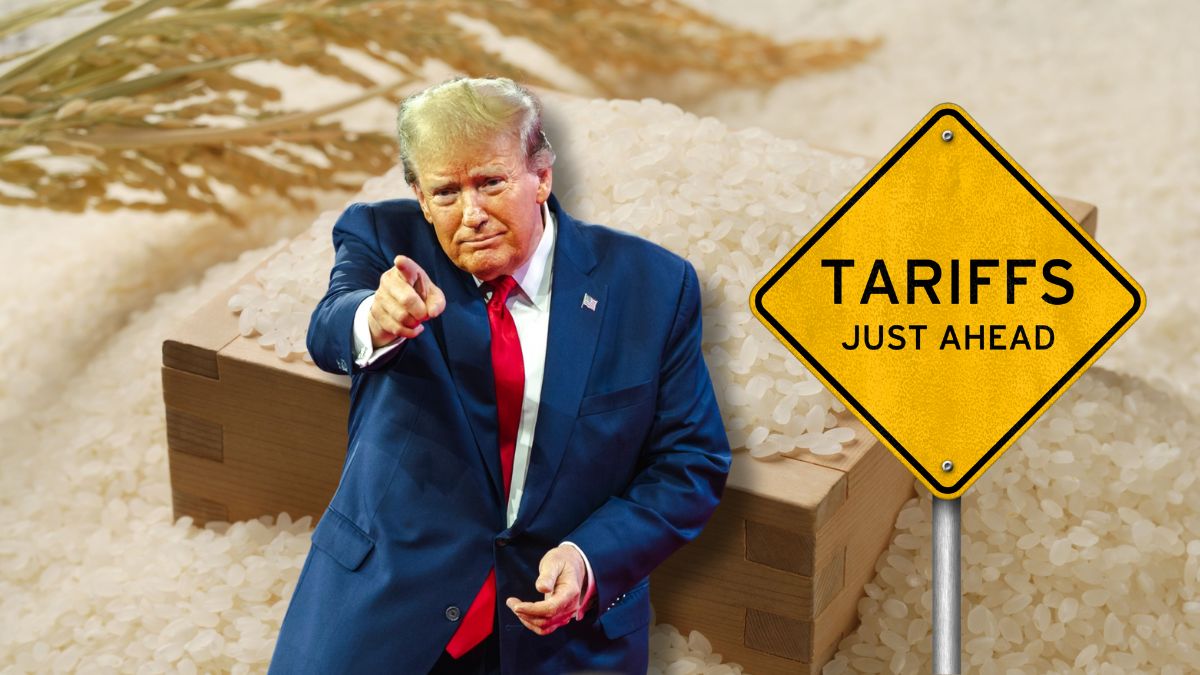
As if 50% tariffs on Indian goods arriving in the United States were not enough that President Donald Trump has now hinted at a yet another extreme major, especially at a time when a US delegation is on a visit to India to continue with the stalled trade talks. The 47th POTUS could impose fresh tariffs on Indian rice.
In a move that could significantly impact Indian agricultural trade, US President Trump has now indicated he may impose new tariffs on imports of Indian rice. The threat, which also targets Canadian fertiliser, was made during a White House event on Monday (December 8, 2025) where he unveiled a $12 billion support package for American farmers.
If announced, these tariffs could bring about a major setback for India, as it is already in works to chalk out a strategy to limit or bring down the US tariffs, so a healthy trade deal could be carved out.
What is Trump’s latest ‘rice’ strategy as India-US hold trade talks?
While interacting with the CEO of Louisiana-based Kennedy Rice Mill, Meryl Kennedy, President Trump stated he intended to address what Meryl said, accusing Indian rice exporters of the “dumping” of the grain into their domestic market. Meryl further complained of farmers who link falling rice prices to imports from India, Vietnam, and Thailand.
“The rice dumping issue has been ongoing for years and did not start during the current administration, but it has worsened recently,” she said in the meeting with US President Trump. To this, he replied, “They shouldn’t be dumping. I mean, I heard that, I heard that from others. You can’t do that.”
Additionally, after Meryl mentioned of Vietnam and Thailand as well, Trump specifically focused on India and said, “Tell me about India.”
New escalation? What about the FTA?
This announcement signals a fresh escalation in trade tensions between the US and India. It comes just as a US delegation is due to travel to India this week for further trade discussions. However, analysts do not anticipate a major breakthrough that would reduce existing tariffs.
Domestically, President Trump faces pressure from a key supporter base – the American farmers – especially from the Southern part of the country, who are grappling with market challenges and rising costs partly linked to existing tariff policies. With high inflation and consumer prices fuelling voter dissatisfaction ahead of next year’s midterm elections, tough trade talk may be aimed at a political audience.
“The southern US rice industry is struggling severely, facing what is described as anti-competitive market dynamics beyond just a crisis,” Meryl stated after Trump told Scott Bessent, United States Secretary of the Treasury Search Results, to take a note.
Trump’s hard tariff stance against India
Earlier this year in August, the US President had imposed 50% tariffs on a range of Indian goods arriving in the country. He cited longstanding US complaints about Indian trade barriers and, notably, India’s continued purchases of Russian oil as reasons for that retaliation.
On introducing tariffs on rice, Trump said, imports were challenging domestic producers and reiterated his intent to address the issue. It is worth mentioning here that India is now the world’s largest rice producer, as it overtook China earlier this year, achieving a record-breaking output in the 2024–25 agricultural year.
Interestingly, India exported $392 million worth of rice to the US in FY2025, just 3% of its global rice exports, and already faces tariffs of about 53% in the US market; 86% of these shipments are premium basmati.
Trump’s rice tariffs: A worry for India?
Well, not so much. Indian rice exporters have played down the US threat of imposing additional tariffs on Indian rice, saying it is “not a major concern”. They are of the view that rice demand remains steady and the export volumes to America are too small to significantly impact the sector.
According to India Rice Exporter Federation President Prem Garg, exports of basmati rice to the US account for less than 3% of the country’s six million tonne annual shipments, while the US share in India’s total rice exports, around 21 million tonne, is below 1%. “The US market is not large in our overall export basket,” he said.
He called the allegations by US officials of India “dumping” rice “completely wrong”, noting that the US imports only about 2.7 lakh tonne of Indian rice annually.
To better understand how negligible the impact would be, factor this data: India supplies 40% of global rice exports and ships to 172 countries and continues to see robust demand. While Gulf countries remain key markets for basmati, African nations have emerged as fast-growing buyers.
Additional fertiliser tariffs for Canada?
Meanwhile, President Trump also suggested that “very severe tariffs” could be imposed on Canadian fertiliser to encourage US production. He stated, “A lot of it does come in from Canada, and so we will end up putting very severe tariffs on that, if we have to.” It is worth noting that some fertilisers, such as potash and urea, had previously been excluded from reciprocal US-Canada tariffs.
President Trump reaffirmed his commitment to using tariffs as a primary trade tool, asserting that imports were harming domestic producers. He claimed the new $12 billion in farmer aid would be funded by tariff revenues collected from trading partners, stating other countries had “took advantage of us like nobody’s ever seen.”