


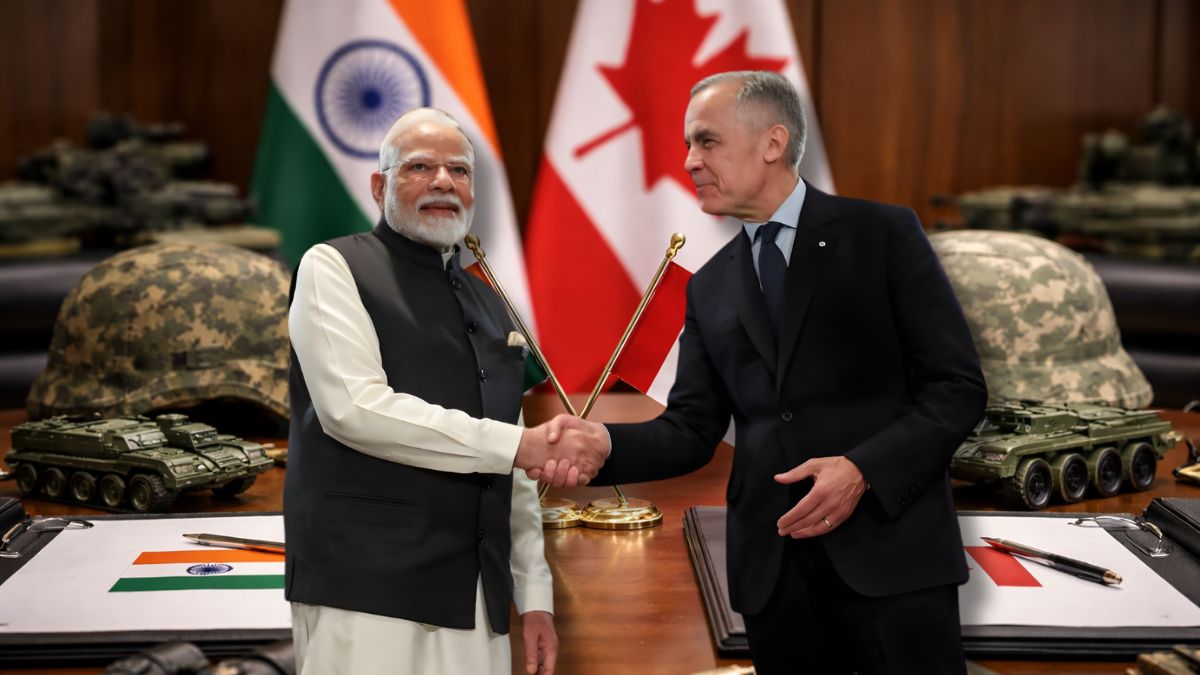
In a significant reset after years of stalled engagement, India and Canada have formally resumed negotiations for a Comprehensive Economic Partnership Agreement (CEPA), signalling a renewed push to deepen economic ties between the two countries. This comes just a few days after a meeting between PM Narendra Modi and his Canadian counterpart Mark Carney on March 2, 2026.
During this meeting, both leaders agreed to fast-track discussions and rebuild trade relations. On the CEPA talks, officials confirm that initial rounds of talks have already begun this month, with further negotiations scheduled in the coming weeks.
First round expected soon, groundwork underway
Commerce Secretary Rajesh Agrawal said that both sides are currently engaged in virtual discussions to finalise the groundwork, with the first formal round of negotiations likely in April or May. Canada’s chief trade negotiator for India, Bruce Christie, recently visited New Delhi, where the Terms of Reference (ToR) for the agreement were finalised.
“Negotiators will engage in initial meetings throughout March, with further rounds planned in the coming months,” a spokesperson for Global Affairs Canada said. Negotiations are focusing on key areas such as non-tariff barriers, customs procedures, sanitary and phytosanitary standards, market access and regulatory frameworks.
Officials describe the process as continuous and fast-paced, reflecting the urgency on both sides.
Ambitious trade targets set for 2030
At the heart of the CEPA is a shared goal to significantly expand bilateral trade. One estimate targets $50 billion in trade by 2030. Another roadmap aims for 70 billion Canadian dollars (Rs 4.65 lakh crore). The agreement is expected to unlock new opportunities in goods, services, and investments, while improving market access for businesses in both countries.
The renewed push for a trade pact comes at a time of global economic uncertainty and shifting supply chains.
For Canada, a CEPA with India is increasingly seen as strategically essential. A report by the Asia-Pacific Foundation of Canada noted that, “A trade agreement with India is no longer optional but strategic,” especially amid US tariff volatility and risks linked to China. For India, the deal aligns with its broader strategy of expanding trade partnerships and securing preferential access to major markets.
A third attempt after years of setbacks
This marks the third attempt by India and Canada to finalise a trade agreement.
2010: CEPA negotiations first launched
2021: Shift to an interim Early Progress Trade Agreement (EPTA)
2023: Talks halted amid diplomatic tensions
Relations deteriorated sharply after Canada alleged a link between Indian agents and the killing of Khalistani separatist Hardeep Singh Nijjar, claims India rejected as “absurd” and “motivated”. The freeze in ties stalled trade discussions until a political reset under Prime Minister Mark Carney, who took office last year.
Diplomatic reset fuels economic engagement
Ties began improving after Carney and Modi met at the G7 Summit in 2025, paving the way for the current revival in negotiations. As part of this renewed engagement, Canada’s Trade Minister Maninder Sidhu has invited Commerce Minister Piyush Goyal to visit Canada, a trade and investment delegation is expected to accompany the visit.
Both sides are working to deepen commercial and strategic cooperation
While negotiations have restarted with momentum, key challenges remain, including regulatory alignment and sensitive trade sectors. Both countries, however, have expressed a shared commitment to conclude the agreement by 2026, with steady progress expected through multiple negotiation rounds this year.