


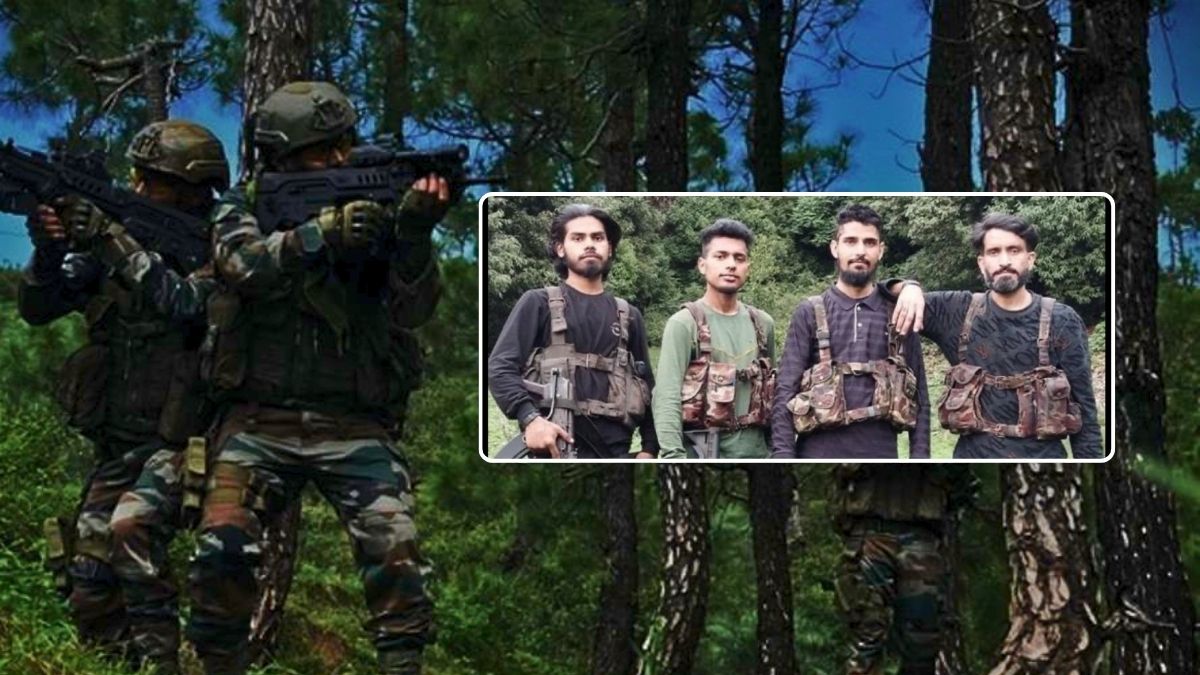
Nearly six months after the April 22 terror attack in Jammu and Kashmir’s Pahalgam that left 26 civilians dead, India’s premier counter-terror agency has closed a critical investigative loop. The National Investigation Agency (NIA) has now filed a comprehensive chargesheet.
NIA’s chargesheet in the Pahalgam terror attack case exclusively details how the attack was planned, directed and executed by Pakistan-based handlers and Lashkar-e-Taiba (LeT) operatives, with local logistical support inside the Valley. The 1,597-page chargesheet, filed before a special NIA court in Jammu, named seven accused.
“NIA, through a meticulous scientific probe spanning the past almost eight months, had traced the conspiracy in the case to Pakistan, which has been unabatedly sponsoring terrorism against India,” the probe agency stated. The chargesheet details how the three Pakistani attackers “stormed a village, asked people their religion, and killed them, which was a clear attempt to incite communal violence.”
The chargesheet, which details Pakistan’s conspiracy, roles of the accused, and supporting evidence in the case, has charged the banned LeT/TRF as a legal entity for its role in planning, facilitating, and executing the Pahalgam attack
What happened in the April 22 Pahalgam terror attack?
On April 22, three heavily armed terrorists opened fire in the Baisaran Valley near Pahalgam, killing 26 civilians, all men. The victims included a local resident and a tourist from Nepal. The attack, carried out in a high-footfall tourist zone, marked one of the deadliest civilian massacres in Kashmir in recent years.
The security forces had had avenged the terrorist attack around 3 months on July 28, 2025, as they neutralised 3 terrorists during an encounter in Srinagar. Indian Army launched its Operation Mahadev acting on intelligence, which led to an intense firefight between the forces and terrorists in Harwan near Dachigam in Jammu and Kashmir.
Those killed included the Pahalgam terror attack mastermind, Suleiman Shah, alias Hashim Musa.
We took the guns seized from the terrorists killed in Operation Mahadev to the lab in Chandigarh overnight, where the ammunition matched. That confirmed their identities even further: Amit Shah
Pahalgam terror attack: Who has Been named in the NIA chargesheet?
The NIA on Monday (December 15, 2025) filed a 1,597-page chargesheet before the Special NIA Court in Jammu against seven accused. These include:
Sajid Jatt, identified as a Pakistan-based handler who coordinated the attack
Three Pakistani terrorists – Faisal Jatt alias Suleman Shah, Habeeb Tahir alias Jibran, and Hamza Afghani – who were later neutralised by security forces during Operation Mahadev
Two local residents – Parvaiz Ahmad Jothar and Bashir Ahmad Jothar – arrested on June 22, 2025, for harbouring the terrorists
The banned terror outfits Lashkar-e-Taiba (LeT) and its proxy The Resistance Front (TRF), arraigned as legal entities
How did the investigation establish Pakistan’s role?
According to the NIA, interrogation of the two arrested local accused proved pivotal. Parvaiz Ahmad Jothar and Bashir Ahmad Jothar disclosed the identities of the attackers and confirmed they were Pakistani nationals affiliated with LeT. Digital forensics, movement reconstruction, and intelligence inputs helped investigators trace the operational chain back to Pakistan-based handlers.
“The chargesheet, which details Pakistan’s conspiracy, roles of the accused, and supporting evidence in the case, has charged the banned LeT/TRF as a legal entity for its role in planning, facilitating, and executing the Pahalgam attack,” NIA said.
Further, NIA chargesheet on Pahalgam terror attack formally names Sajid Jatt as the key handler who facilitated the attack from across the border, reinforcing India’s long-standing position on Pakistan-sponsored terrorism in Jammu and Kashmir.
Why have LeT and TRF been arraigned as organisations?
In a significant legal step, the NIA has arraigned Lashkar-e-Taiba and The Resistance Front as accused entities, holding them directly responsible for planning, facilitating and executing the Pahalgam attack. TRF has repeatedly been flagged by Indian agencies as a front created by LeT to mask Pakistani involvement and project militancy as “local resistance.”
The chargesheet also invokes sections related to waging war against India, underscoring the strategic intent behind the attack rather than treating it as an isolated act of violence.
Operation Mahadev: How it avenged Pahalgam massacre
Operation Mahadev, conducted in July 2025 at Dachigam in Srinagar, led to the neutralisation of the three Pakistani terrorists named in the chargesheet. Their elimination provided investigators with further corroboration of intelligence inputs, weapons trails and cross-border coordination patterns linked to the Pahalgam massacre.
Meanwhile, the legal action now follows India’s calibrated military and diplomatic response after the attack. On May 7, New Delhi launched Operation Sindoor, carrying out precision airstrikes on terrorist infrastructure in Pakistan and Pakistan-occupied Kashmir. The strikes triggered intense cross-border exchanges before Pakistan sought a ceasefire on May 10.
NIA’s chargesheet serves as a detailed evidentiary record of Pakistan-based terror orchestration. It strengthens India’s case at international forums by documenting the role of LeT, its proxy networks, and handlers operating from across the border. The case will now proceed through trial at the NIA Special Court.