


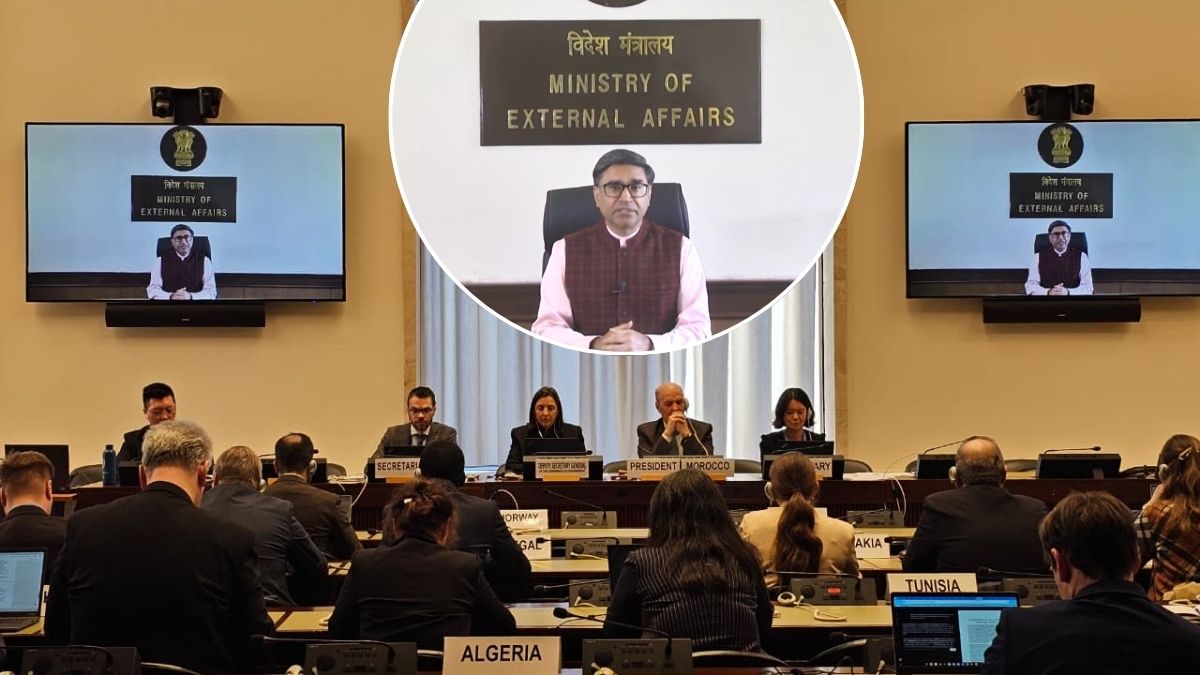
New START, short for the New Strategic Arms Reduction Treaty recently got expired, which is a major setback for global arms control. Highlighting this, Foreign Secretary Vikram Misri pointed out that there is an urgent need to preserve strategic stability and prevent a renewed arms race amid rising global uncertainties.
Amid rising geopolitical tensions and the collapse of key arms control frameworks, Misri on Tuesday (February 24, 2026) issued a strong call for preserving strategic stability and preventing a renewed global arms race. The Foreign Secretary made the remarks while addressing the 2026 High-Level Segment of the Conference on Disarmament in Geneva.
He warned that the international security environment is entering a phase of profound uncertainty, marked by rising military spending, weakening arms-control agreements and disruptive emerging technologies.
New START expiry: Why is India concerned?
A central focus of India’s remarks was the expiration of the New Strategic Arms Reduction Treaty (New START), long considered a cornerstone of global nuclear arms control. Calling its expiry a “significant setback,” Misri said the development has added to global instability at a time when confidence-building measures between major powers are already under strain.
“Preserving strategic stability and preventing an arms race remain vital, more than ever, for global security,” he said, signalling India’s concern that the weakening of bilateral nuclear guardrails between major powers could trigger competitive military build-ups, with ripple effects across regions.
India’s nuclear doctrine: What did New Delhi reaffirm?
Reiterating India’s long-standing nuclear posture, Misri described the country as a responsible nuclear weapon state committed to maintaining a credible minimum deterrent. He reaffirmed India’s adherence to a policy of “no first use” of nuclear weapons, non-use of nuclear weapons against non-nuclear weapon states.
Misri also restated the country’s support for universal, non-discriminatory and verifiable nuclear disarmament through a step-by-step multilateral process. India has backed negotiations on a Fissile Material Cut-off Treaty (FMCT) under the established mandate of the Conference on Disarmament, reinforcing its commitment to structured global arms reduction efforts.
AI in warfare: How crucial is human control?
Beyond traditional arms control, India also drew attention to the growing military implications of emerging technologies, especially artificial intelligence. Foreign Minister Misri noted that rapid advances in science and technology are reshaping warfare, creating new vulnerabilities and intensifying strategic competition.
India has called for a UN system-wide assessment of how such technologies impact global security. On artificial intelligence in the military domain, he stressed that human judgement and oversight must remain central.
“Human judgement and oversight in the use of AI in the military domain is essential to mitigate risks and to ensure compliance with international humanitarian law,” Misri said, clarifying that decisions regarding nuclear weapons would remain firmly under human control.
Outer space and biosecurity: Expanding the disarmament agenda
India broadened the conversation to outer space security, warning against the weaponisation of space. “Outer space should remain a realm for cooperation, not conflict,” Misri said, reiterating support for negotiating a legally binding instrument to prevent an arms race in outer space.
He also highlighted India’s role in hosting the 50th anniversary conference of the Biological Weapons Convention in December 2025, along with capacity-building initiatives in partnership with the UN Office for Disarmament Affairs.
Misri highlights India-AI Impact Summit 2026
Misri referenced the recently concluded India-AI Impact Summit 2026 in New Delhi, which adopted the New Delhi Declaration on AI Impact with participation from over 100 countries. The summit emphasised democratising access to artificial intelligence and leveraging it for development, particularly in the Global South.
Concluding his address, the Foreign Secretary described the Conference on Disarmament as the world’s single multilateral disarmament negotiating forum and urged member states to demonstrate greater political resolve. “India continues to highlight the need for constructive dialogue and engagement,” he said.
“We call on all States to demonstrate the required political will by taking into account the collective security interests of all States.”