


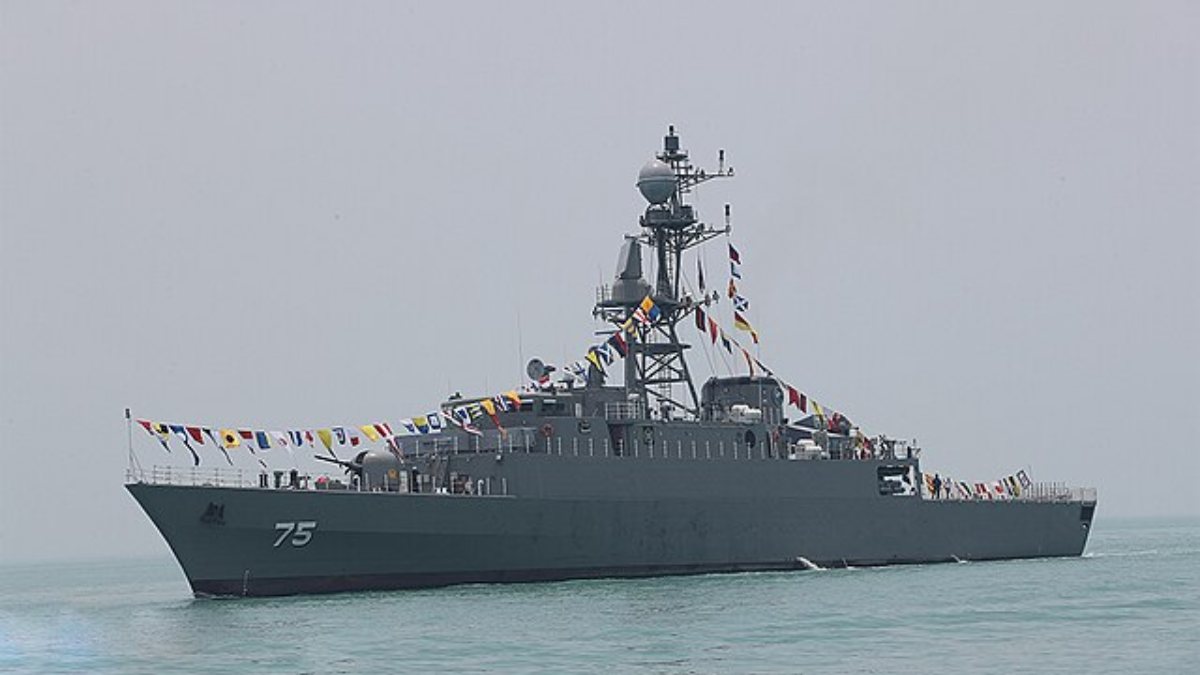
The Indian Navy on Thursday, March 5, said it had launched Search and Rescue operations within hours of receiving information about the sinking of Iranian frigate IRIS Dena on March 4, deploying maritime patrol aircraft, standby aircraft with air-droppable life rafts and two ships to augment efforts led by the Sri Lankan Navy. The Navy said that coordination with Colombo remains ongoing.
The statement comes as the first official response of the Indian Navy after the sinking of IRIS Dena in international waters approximately 20 nautical miles west of Galle, Sri Lanka, on March 4. The vessel, which had participated in MILAN 2026 off India’s eastern coast before departing Visakhapatnam on February 25, was struck by a U.S. submarine in the early hours of the morning.
This comes as the first such sinking of an enemy vessel by an American submarine since the Second World War, U.S. Defense Secretary Pete Hegseth later confirmed. Of an estimated 180 personnel on board, 87 were killed. Thirty-two survivors were recovered from the water and transferred to Karapitiya Teaching Hospital in Galle. The attack came six days after the United States and Israel launched Operation Epic Fury against Iran on February 28, by which point IRIS Dena had been operating in international waters for over a week.
The Timeline
IRIS Dena arrived at Visakhapatnam as a participant in MILAN 2026, the Indian Navy’s biennial multilateral exercise. The sea phase concluded on February 24, according to officials familiar with the details. “The following day, February 25, the Iranian Mowj-class frigate departed the port. Under international maritime law, that departure marked the end of India’s obligations toward the vessel,” a source told RNA.
IRIS Dena’s last recorded port of call was Hambantota, Sri Lanka. After that stop, according to officials, the frigate moved into international waters and remained there for approximately eight days, operating within Sri Lanka’s exclusive economic zone. On February 28, the United States and Israel launched Operation Epic Fury against Iran. IRIS Dena—by then eight days out of any Indian port, in open international waters—was now the vessel of a nation in active, declared hostilities, officials added.
On March 4, at approximately 0508 hours local time, IRIS Dena transmitted a distress call. According to the Indian Navy’s statement, the call was received at MRCC Colombo and reported by the Sri Lankan Navy. The ship was operating 20 nautical miles west of Galle, within the Search and Rescue region under Sri Lankan responsibility. U.S. Defense Secretary Pete Hegseth later confirmed that a U.S. submarine had carried out the strike. Of an estimated 180 personnel on board, 87 were killed.
Thirty-two survivors were taken to Karapitiya Teaching Hospital in Galle. The Indian Navy said that on receipt of the information, it promptly launched a long-range maritime patrol aircraft at 1000 hours on March 4 to augment the search effort. A second aircraft, carrying air-droppable life rafts, was kept on standby for immediate deployment.
INS Tarangini, which was operating in the vicinity, was deployed for rescue efforts and arrived in the search area by 1600 hours—by which time, the Navy noted, SAR operations had already been undertaken by the Sri Lankan Navy and other agencies. INS Ikshak has since sailed from Kochi and continues to remain in the area to search for missing personnel, the statement said. It described the deployment as a humanitarian measure for shipwrecked personnel.